Rubicon’s November 2020 Voter Guide
On Tuesday, November 3, voters across California will vote in an election that is, in a word, monumental, with a long, complicated ballot to match. At stake this year for Californians: a dozen statewide propositions that seek to, among other things, raise or lower taxes; expand voting rights; resurrect affirmative action; change gig worker classification; and tighten criminal sentencing laws.
Here at Rubicon, members of our Participant Advisory Board, staff, and Board of Directors, came together as a Voter Guide Task Force to analyze the state propositions and selected Alameda and Contra Costa County measures through a financial equity and racial justice lens. Members of the Task Force are: Adriana Ponce-Matteucci, Adrienne Kimball, Alisha Semplar, Becky Johnson, Claire Levay-Young, Kalani Siegrist, Paul Leonard, Sarah Williams, Tara Cantu-Nishimoto, Taunita Trotter, and Jane Fischberg.
Quite a few measures on the ballot address systemic racism and economic justice. We break them down for you so you can feel confident that you’re casting your vote to end poverty and oppose inequality.
RUBICON'S ENDORSEMENTS
PROPOSITION 15: YES
Schools & Communities First: Prop 15 asks California voters to raise an estimated $6.4 billion to $11.5 billion in funding for local schools and governments by increasing property taxes on commercial and industrial properties based on current market value instead of their much lower original purchase price. The measure is considered one of the largest revisions of Proposition 13, the landmark 1978 initiative that slashed property taxes and limited how much they could go up, providing instant tax relief but devastating government services. The proposition will maintain existing exemptions for small businesses, homeowners, agricultural lands, and renters.
A multibillion-dollar corrective to a decades-old economic injustice, Prop 15 creates an influx of funding for public schools, community colleges, and government services. Our one concern is ensuring oversight around how the funds are allocated, but as long as there is transparency, we are all for it. We should note that oversight and ensuring that the goals of public spending initiatives are met is an ongoing concern for many of these propositions and local measures.
PROPOSITION 16: YES
Opportunity for All: Proposition 16 would repeal Prop 209, which restricts local and state governments from considering race, sex, color, ethnicity, or national origin in public employment, education, and contracting. If passed, Prop 16 would permit governments to consider those protected categories in order to promote inclusive hiring and admissions programs in California’s public universities, government, and public agencies.
Passed in 1996, Proposition 209 is a regressive measure that has propped up systems of oppression for far too long. Studies show that banning affirmative action led to a marked decrease in Black and Latinx students in the UC system. California is one of only nine states that bans affirmative action, and it is time for us to get on the right side of history and level the playing field for women and people of color. Additionally, all Californians suffer when they are corralled into environments devoid of diverse thoughts and experiences. The evolution of our nation depends on increasing our competency with navigating ourselves and others in multicultural environments. The global economy is here to stay; to remain competitive we all need to practice and be comfortable with diversity, equity, inclusion, and belonging.
Proposition 17: YES
Restore Voting Rights: This state constitutional amendment would allow people on parole for felony convictions to vote after their state or federal prison term ends. The state’s constitution currently prohibits people with felony convictions from voting until both their incarceration and parole are finished. The change, proposed by state lawmakers, would restore voting rights to approximately 40,000 Californians, according to a state Senate analysis.
Denying parolees the right to vote is racist. Black Californians make up about 28% of all prison populations despite only making up 6% of California’s total population; the current law is obviously rooted in Jim Crow-era tactics designed to disenfranchise Black voters. Parolees pay taxes and serve on juries; their disenfranchisement is taxation without representation. Parolees are allowed to vote in 14 other states; once again, California is behind the curve on this one, and it is time for us to get with the program.
PROPOSITION 18: YES
Voting Rights for 17-Year-Olds: This is a constitutional amendment to allow 17-year-olds who will be 18 at the time of the next general election to vote in primary elections and special elections.
This amendment corrects a minor loophole in the system. So many people in the US who are eligible to vote do not; we should not discourage eager voters who are on the cusp of turning 18 from voting in primaries.
PROPOSITION 19: NO
Property Tax Breaks: The ballot measure would change the rules for tax assessment transfers. In California, eligible homeowners can transfer their tax assessments to a different home of the same or lesser market value, which allows them to move without paying higher taxes. Homeowners who are eligible for tax assessment transfers are persons over 55 years old, persons with severe disabilities, and victims of natural disasters and hazardous waste contamination.
After the overwhelming defeat of the eerily similar Prop 5 in 2018, this is the latest attempt by the Association of Realtors to line their pockets by providing property tax breaks for older homebuyers, incentivizing them to move and to buy more expensive properties. Realtor associations have contributed $36,270,000 in support of the proposition. While the measure’s goals of funding fire protection are laudable, these goals can and should be accomplished by more narrowly tailored means that do not create a tax loophole. Rubicon supports investment in our schools and local communities, but we do not believe that broadening tax loopholes is the answer. To recap, Proposition 19 widens the already-existing wealth gap, perpetuates the status quo, and rewards those who seek to “buy a law."
PROPOSITION 20: NO
Rollback on Criminal Justice Reforms: Prop 20 would roll back changes to California’s criminal sentencing laws approved over the past decade, including parts of Prop 57, which made inmates convicted of nonviolent felonies eligible for parole after serving just the term for their primary offense. It would authorize judges to impose felony charges on certain theft or fraud crimes currently chargeable only as misdemeanors. It would also restrict the number of inmates eligible for parole by adding drug, theft and other crimes to the list of violent crimes or sentence enhancements excluded from parole review. Lastly, the measure would require people convicted of drug, theft or domestic violence misdemeanors to submit to DNA collection for the state database.
These are draconian measures proposed, supported, and financed by retrograde politicians and police and sheriff associations, and fed to the public using the same scare tactic “tough on crime” rhetoric that led to the wave of harsh, unjust criminal sentencing laws of 1990s (e.g. Three Strikes). Why, at a time when California’s violent and property crimes rates are still at historic lows, are three police unions the top funders of Prop 20? More “criminals” and longer sentencing means increased unsubstantiated financial gain and power for the criminal justice system and purveyors of private prisons. This is dangerous and irresponsible.
PROPOSITION 21: YES
Local Governments & Rent Control: Prop 21 allows cities and counties to implement rent control for certain residential properties over 15 years old. The initiative's official summary says it would grant exemptions from new rent control policies for individuals who own no more than two homes. The measure is meant to replace the Costa-Hawkins Rental Housing Act, which prohibited rent control for housing that was built after 1995 as well as for units such as single-family homes, town homes and condos. In addition, Prop 21 would limit rent in rent-controlled properties to increase up to 15 percent over a period of three years with the start of a new tenancy.
If you know anything about the Bay Area you know that increasingly high rents have forced families from their homes, devastated communities, and intensified poverty and homelessness. The measure would allow cities more autonomy in establishing measures on rent increases – it would not in itself create rent control laws. This welcome measure to roll back Costa-Hawkins would let cities put limits on rent increases to protect families who are one rent hike away from being driven out of their homes and neighborhoods. Prop 21 is a much-needed step to curb homelessness and slow gentrification.
PROPOSITION 22: NO
Rideshare & Delivery Drivers: Proposition 22 asks voters to classify drivers for ride-share and delivery companies as independent contractors, not employees.
Don’t believe the hype! This slickly packaged proposition is a self-serving attempt by rideshare and delivery companies like Lyft, Uber, and DoorDash to further mistreat and underpay their drivers. By classifying drivers as contractors, these corporations will be freed up to carry out the human rights violations of their dreams. Pay less than minimum wage? Check. Deny unemployment benefits, overtime pay, and sick leave? Check, check, and check. AB 5, which Prop 22 is trying to repeal, guarantees paid family leave, paid sick days, and unemployment insurance—essential protections during a global pandemic—to those classified as gig employees. The sick thing is that ads for the proposition try to sell it as giving drivers the flexibility they want. Hey, Uber – flexibility and human decency aren’t mutually exclusive.
While we are recommending voting against this proposition, some members of our Task Force have depended on gig driving as a source of income, and they brought a different perspective to the table. One committee member liked the flexibility that gig work allowed and wanted to ensure that would still be in place if workers were treated as employees. In addition, gig work is relatively easy to secure compared with other types of jobs, which is especially helpful to people who are facing barriers to employment.
PROPOSITION 25: YES
End Cash Bail: This is a referendum to overturn a 2018 law to replace California’s cash bail system with a new pretrial release system based on public safety and flight risk. The law, SB10, was put on hold after the referendum qualified for the ballot in early 2019. A “Yes” vote on Prop 25 would approve the law taking effect and end cash bail in California, while a “No” vote would keep the current cash bail system the way it is.
The cash bail system is fundamentally unjust—poor people awaiting trial are forced to stay in jail while people of means buy their way out, perpetuating the cycles of poverty and incarceration in disproportionately Black and Brown communities. The bail bond industry has a financial stake in people getting arrested, so a vote for this referendum is a vote against a parasitic business. At the same time, this proposition is far from perfect. We are concerned that the algorithmic assessment tools that will become the primary determinant of pretrial risk are inherently biased against Black and Brown people. With these concerns in mind, while we recommend a “Yes” vote on Prop 25, we urge the legislature to oversee and monitor the outcomes of using these tools and to act swiftly to correct any bias in the assessment process.
ALAMEDA COUNTY MEASURE W: YES
Measure W is an Alameda County-wide half percent general sales tax that will raise $150 million a year for 10 years. Measure W provides funding that Alameda County can use to:
• Provide housing assistance, mental health resources, and substance use treatment for our most vulnerable residents.
• Help people who are at risk of homelessness stay in their homes.
• Increase hygiene and sanitation services.
• Support homeless veterans, seniors and families with services.
• Increase employment opportunities through job training.
• Shelter people experiencing homelessness to reduce COVID19 impacts.
We recommend a Yes vote on this measure. At the same time, we want to ensure that the people who will be directly impacted have input in the decision-making process.
Oakland, California, Police Oversight and Inspector General Charter Amendment: YES
This is an amendment to city charter 604 to strengthen the independence of the Oakland Police Commission by modifying the powers, duties, and staffing of the Oakland Police Commission and the Community Police Review Agency, and creating an Office of Inspector General. A “Yes” vote supports changing the powers, duties, and staffing of the Oakland Police Commission and the Community Police Review Agency and creating the Office of the Inspector General to review policies of the police commission and review agency. A “No” vote opposes changing the powers, duties, and staffing of the Oakland Police Commission and the Community Police Review Agency creating the Office of the Inspector General to review policies of the police commission and review agency.
Oakland’s history of police violence and this historic moment of reckoning make this amendment a resounding YES from us.
Hayward Measures NN and OO: YES
NN - Transient Occupancy Tax
OO - Would amend charter of City of Hayward to eliminate the requirement of being a qualified elector/registered voter to serve on City Council-appointed advisory commissions, and eliminate gender-based designations and titles and instead use neutral, gender-free designations and titles.
Contra Costa County Measure X: YES
This measure will raise an estimated $81 million annually through a 20-year, half½ percent sales tax to support severe insecurities in health, housing, food and other vital needs. Developed through the collaboration of local community-based organizations, hospital and healthcare affiliates, and labor unions, representing essential healthcare, fire and emergency professionals, advocates for interpersonal violence prevention and mental health, early childhood programming and other critical safety net services, the Contra Costa County Needs Assessment is the basis for this campaign.
We support this measure, and once again, we would like to see the people who are directly affected have input and agency.
Richmond Measure U: YES
Analysis by City Finance Director: Measure U would amend the City’s business tax rate structure to authorize the City to tax businesses based on a range of .06% to 5.00% of gross receipts rather than based on the number of employees. Generally, the highest rates will be charged to businesses with the highest gross revenue, with exemptions for specific businesses and activities as identified in the ordinance. If the measure passes, it would provide an estimated $5.950 million annually in new revenue to the City, based on historical sales tax and rental property data. Staff projects that the City would incur software implementation costs as well as annual costs for additional staff support.
We recommend a Yes vote on this measure to reduce the tax burden on small businesses, which are hardest hit by COVID.
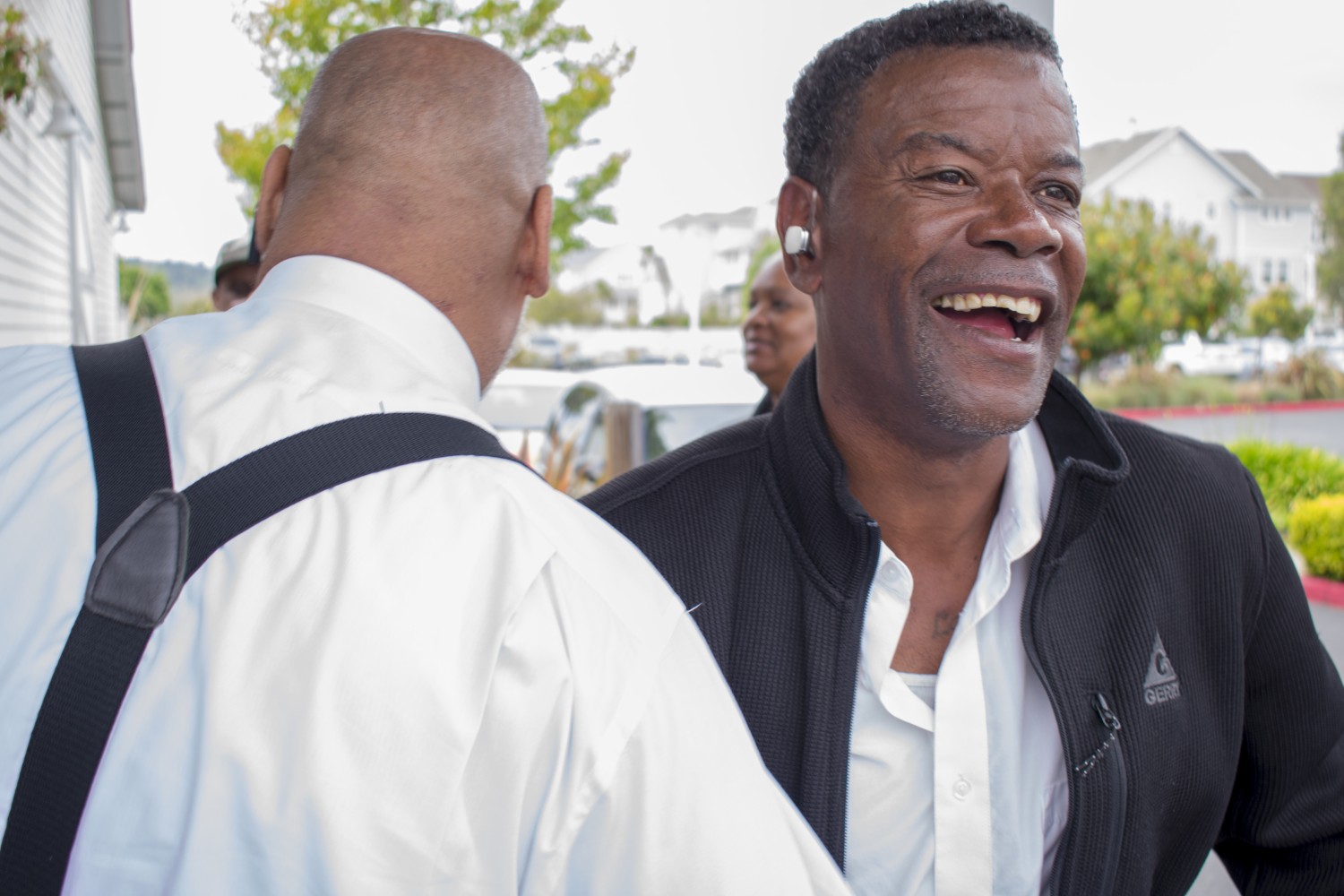 Sometimes, you just need to get away from it all, decompress, and share your thoughts in a safe place.
 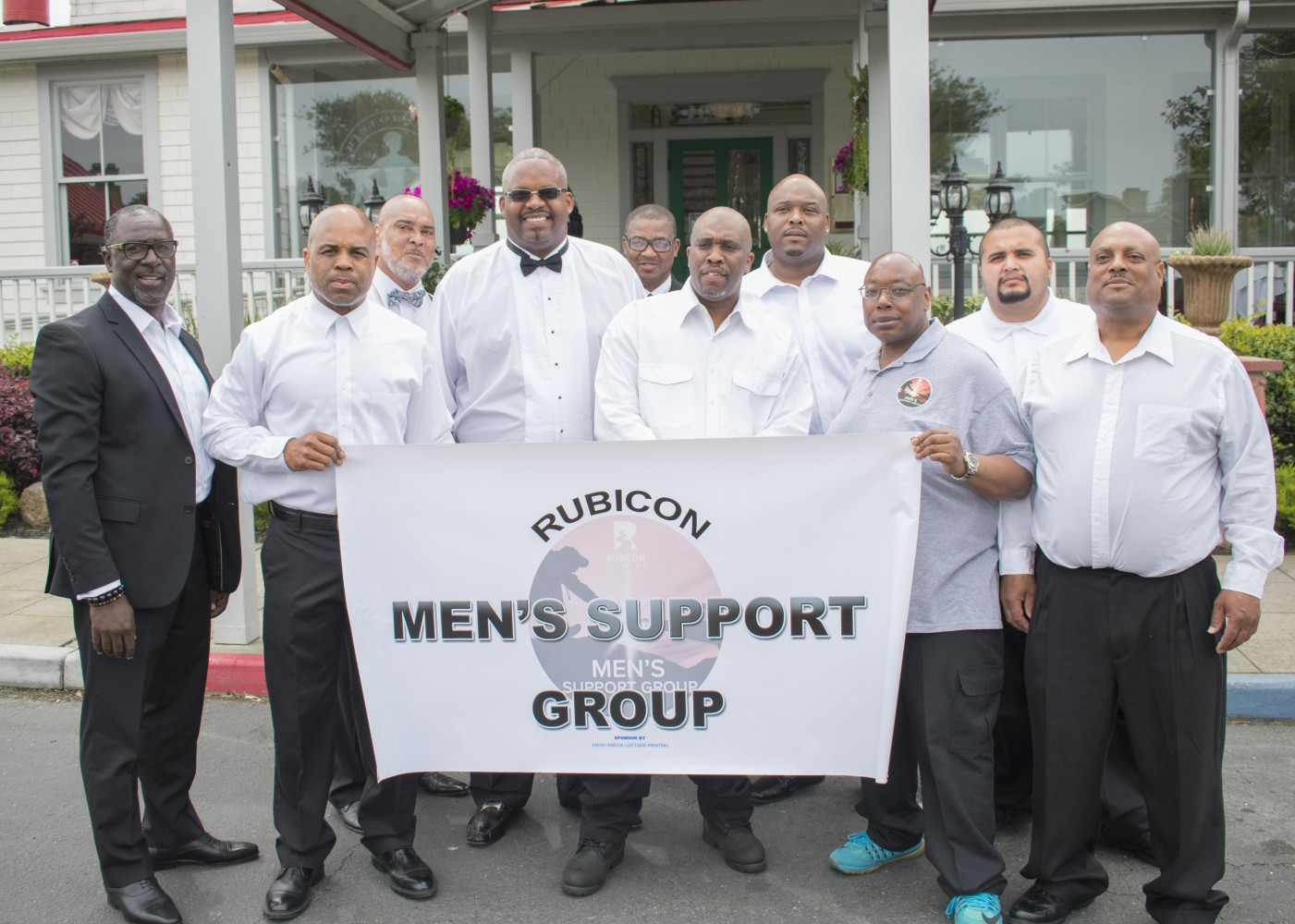 Our Men’s Group provides that crucial social support, as well as a whole host of other opportunities for growth. Each Monday evening, nearly two dozen men convene at our Richmond Headquarters to enjoy a meal, talk about their problems and plan community service projects intended to give back.
 In honor of Mother’s Day, they decided to do something special for the moms of the community who aren’t always provided the opportunity to have a day just for themselves.
 “The food was delicious,” says Yolanda, one of the lucky moms. “Each of the men were so sweet, serving us with a smile. I am so proud of them for organizing such a beautiful event, and for providing all of us with food we may never had a chance to taste!”
 She continued to speak, nearly bringing each of the moms—and men—to tears.
 Rubicon's legal team helps our participants with legal assistance on a wide range of issues to equip them to remove barriers that may stand in their way.