Blog

Blog

The Rubicon Rangers: Tongo Eisen-Martin Fights Oppression and Poverty with the Power of Words

By Ben Rowley August 20, 2018

Source: City Lights Publishers. Image used for editorial purposes only.

The "Rubicon Rangers" series is a first-person account of Rubicon's intern experience, authored by the interns, Jessica, Sandy and Justin, themselves.

A city is a prison, a cigarette is a symbol. Welcome to the unique work of master-poet Tongo Eisen-Martin: a world of imaginative metaphors mixed with cold, hard truth.

A Bay Area native, Tongo Eisen-Martin is an educator, movement worker, and of course, poet. His book, “Heaven is all Goodbyes,” won the 2018 California Book Award for Poetry, and is riddled with hidden stories and imaginative voices, that guide readers and submerge them into his world.

Not only does he write poetry, but he also educates prisoners and takes part in many public literary events. His work often reminds people that there are many issues that might not affect them, but a large proportion of the population have to deal with on a daily basis.

In his books, he doesn’t only describe the way he sees the hidden racial issues and poverty of America through his eyes, but also the way he feels them, experiences them, and the how they affect him and everyone around him. The issues that significantly influence his work the most include poverty, racism, and extrajudicial killings by police. He highlights the burden that comes with being black in America, as well as the struggles of those in poverty.

Often delivering his precise messages through many layers of metaphor, he takes the "ethos approach" of changing people’s minds about the issues that impact Black men. Eisen-Martin speaks from experience and the understanding of someone who has been directly affected by these problems in our communities.

Tongo’s distinct free verse and seemingly all-over-the-place style is easy to read on first glance, but when looked at longer, each poems reveal more and more of what is really being said. The poetry is often written in an original way, where some pages might take three seconds to read. Some sentences take three minutes.

Along with being fun to read, Eisen-Martin’s work also does an excellent job of serving to inform people about racial and poverty issues, inspiring people to fix them, which is what everyone at Rubicon Programs is all about.

As racism and poverty are slowly withered away, we here at Rubicon are happy to be allies with Tongo and his incredibly creative, and idiosyncratic, campaign against racism, hate and poverty. It is because of people like him and our devoted staff here at Rubicon that our country is, hopefully, going to move in the right direction.
Read More

Rubicon, 9 Local Organizations Join Forces to End Unemployment in Contra Costa County

By Rubicon Admin August 14, 2018

FOR IMMEDIATE RELEASE

New Countywide Collaborative Will Expand Access and Quality of Resources for Those in Need of a Job or Career Change

MARTINEZ, CALIF., AUGUST 14, 2018 … Even though the Bay Area job market may feel red-hot, nearly 20,000 Contra Costa residents remain unemployed and are looking for work. To help these individuals find a job or start a new career, ten organizations have partnered with Contra Costa County and its Workforce Development Board (WDBCCC) to create an unprecedented network of service providers.
“The Contra Costa Workforce Collaborative is the first effort of its kind in California,” said Bhupen Amin, Chair of the Workforce Development Board of Contra Costa County. “We’re pooling all of our resources so that unemployed Contra Costans can quickly find a good job or start a new career. Now, it will be easier than ever to access the technical resources, coaching and training necessary to thrive in this evolving job market.”

The effort, called the Contra Costa Workforce Collaborative (CCWC), will help reduce the unemployment rate and put people on a path to prosperity by bringing disparate services together and locating job search resources closer to those who need them.

The CCWC will be coordinated by Rubicon Programs, a nonprofit that works to end poverty in the East Bay, as well as the following CBOs and educational institutions:

These local organizations came together because they have a shared mission, a strong track record of collaborative work, and a desire to provide high impact services to underserved populations.  Each brings a long history of providing high-quality employment and training services, strong connections to the county’s industry sectors and a deep understanding of the unique employer and job-seeker needs in each region of the county.

“Before this collaborative, individuals looking for a job would often have to travel across the county to access services,” says Jane Fischberg, President and CEO of Rubicon Programs, the CCWC’s lead agency. “Now, each of our organizations will offer these resources on-site and within the community, leveraging each of our strengths to bring more to the table.”

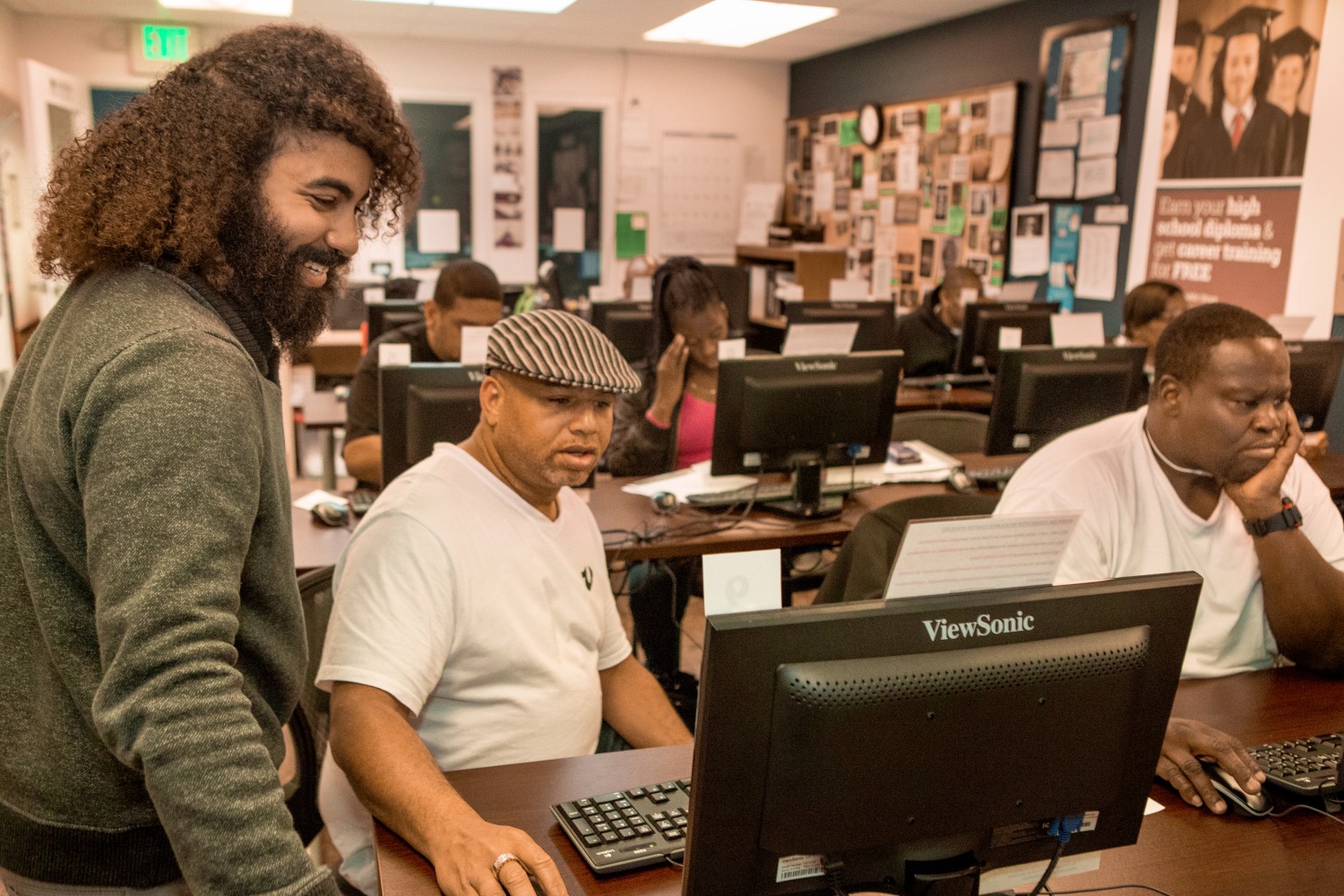
The CCWC will offer intensive support services at an America's Job Center of California (AJCC) in Concord that will be managed by Rubicon Programs, while each of the other nine organizations will offer satellite services and specialized resources in offices located from San Pablo to Brentwood. Participants will be able to access one-on-one counseling, computers and printers, job boards and workshops that will give them a boost in their job search.

“We’re excited to be part of this incredible effort to expand access to these lifeline services,” said Vittoria Abbate, Director of College & Career and Adult Education at Mt. Diablo Unified School District, a founding member of the new collaborative. “We believe that we can accomplish more together and that we’ll be able to make it easier for vulnerable families to get back on their feet, avoiding a fall into long-term, intergenerational poverty.”

The Contra Costa County Board of Supervisors officially approved funding for this new project on August 14, 2018. Each of the ten members of the Contra Costa Workforce Collaborative now offer their new services to unemployed Contra Costa County residents.

# # #

Rubicon Programs is a 501(c)3 nonprofit whose mission is to transform East Bay communities by equipping people to break the cycle of poverty. The organization serves the people of Contra Costa and Alameda counties, and provides services that help low-income individuals enter the workforce and develop fulfilling lives.

CONTACT: Jonathan Bash  |  jonathanb@rubiconprograms.org  |  (925) 335-6784

Read More

The Rubicon Rangers: Shipment Shakeup

By Jessica Tu August 13, 2018

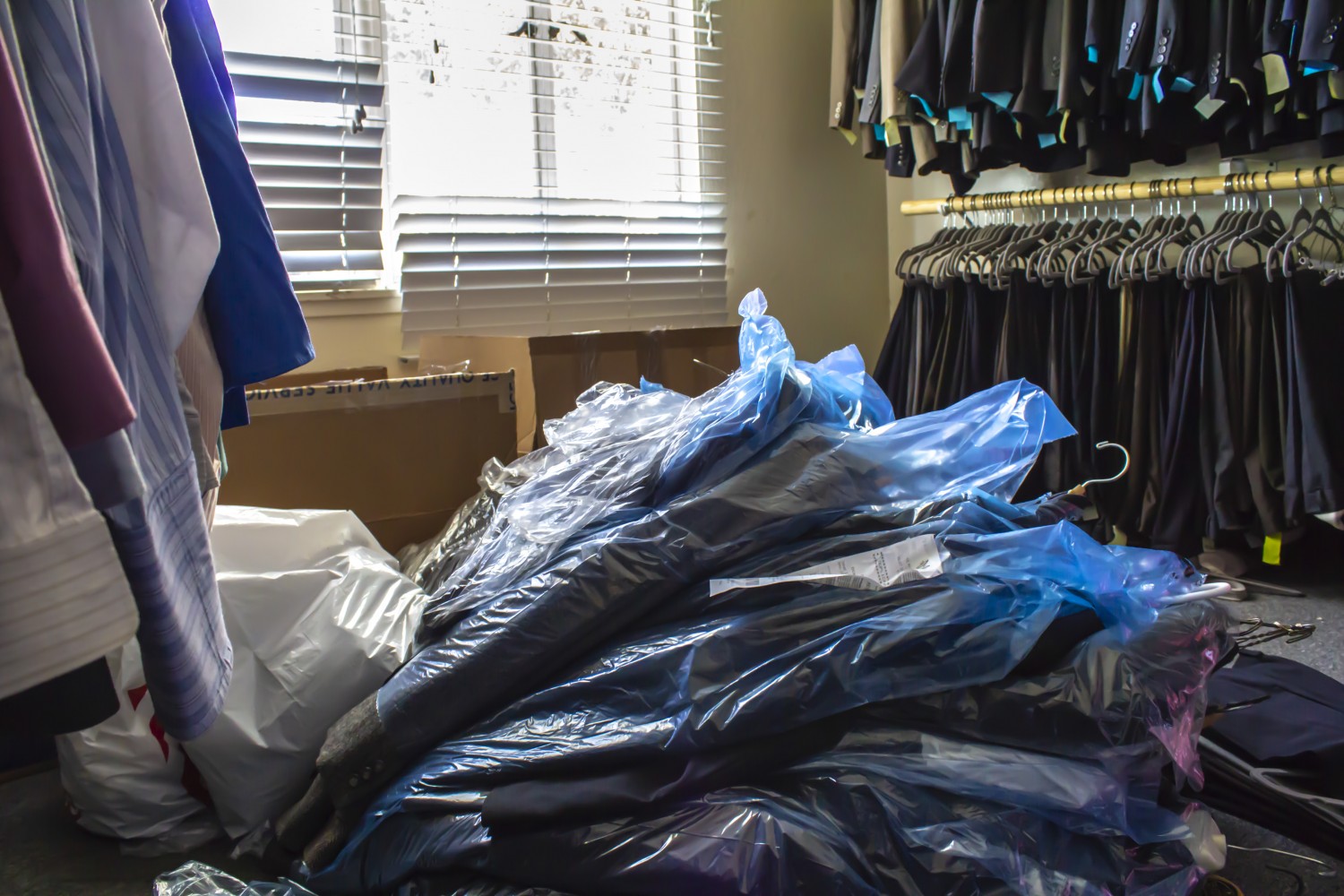
Piles of clothes take up most of the space in the small closet, even after a full day of work.

The "Rubicon Rangers" series is a first-person account of Rubicon's intern experience, authored by the interns, Jessica, Sandy and Justin, themselves.

The brisk air welcomed my face outside. The sky was overcast, and the temperature was lower than I had anticipated. 

"Hopefully it'll warm up. It's only just the morning," I said to Sandy, who had remarked on the gloomy weather.

Luckily, we were not outside for long. The brief walk from the Bissell Office to 101 Broadway led us to warm greetings from Rubicon's mentors in the lobby.  

We continued past them, where we spotted participants attending workshops and impact coaches working with people.  

Finally, we turned the corner and saw the comedic posters that decorate Delia's door.  

Over the past five weeks, the Rubicon Rangers have grown comfortable in our quarters. Familiar faces invite us in and make us feel at home. Delia, the point person and mother of the closet, is one of the people to whom we have grown closest.  

She turned to us and smiled, acknowledging us, asking questions, and taking interest in our lives. 

After a few moments, she handed me the keys to the closet and looked me in the eyes. She announced, "the new shipment came in on Tuesday. I went to see it, and it is big."  

We were soon learned that big was an understatement. 

In true Rubiconian fashion, the beautiful mess of clothes within welcomed us. Two previously empty racks were now filled with suits.  We turned slightly to the right to see the clothes that did not make it to the rack. Bright blue plastic wrapped bundles of suits, pants, and various blazers. Two piles of clothes sprawled across the open floor. A few button-down shirts, also wrapped in plastic, peeked through. Behind the blue mounds were three stacks of boxes. 

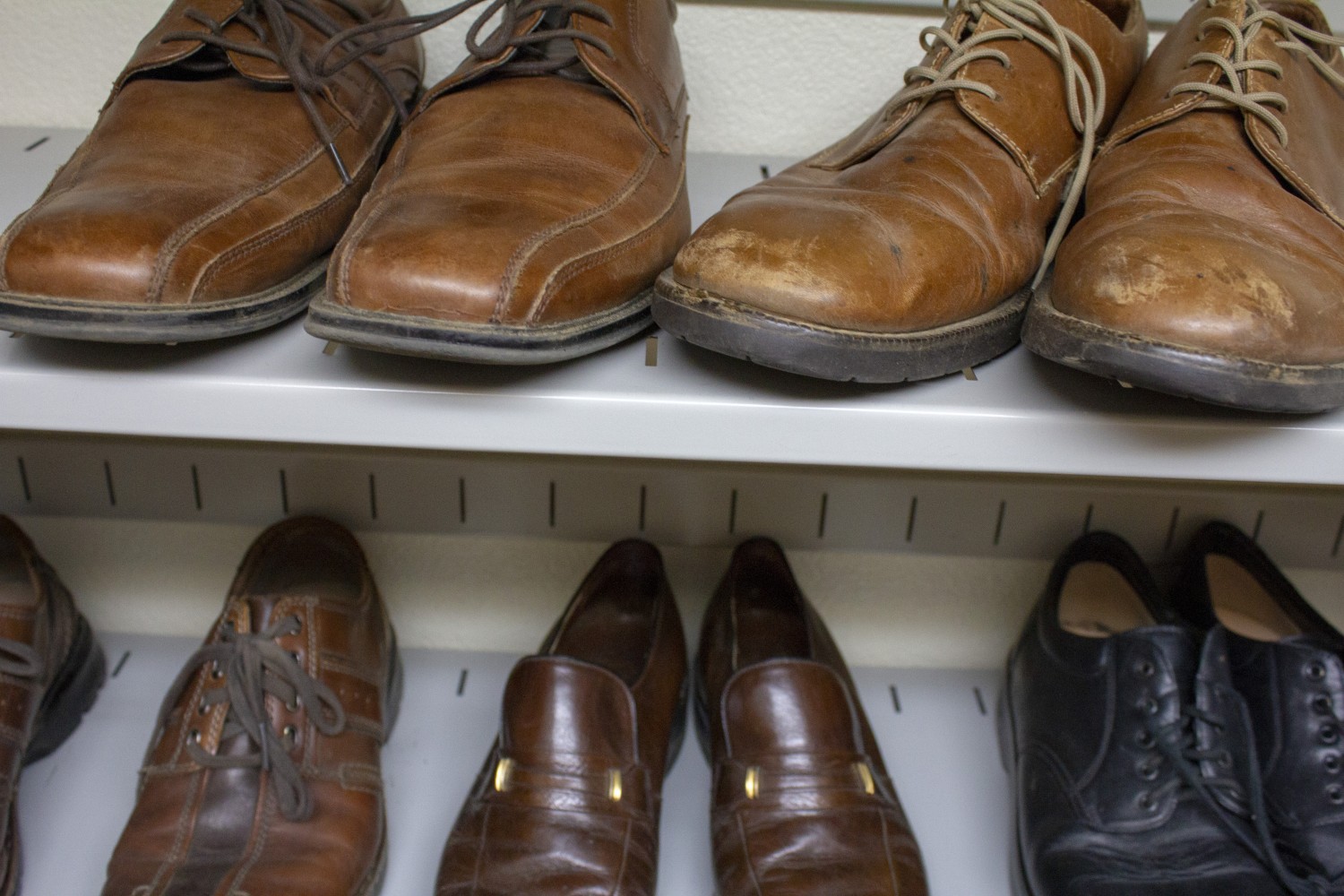
Unsure where to start, I looked around until spotting two shopping bags filled with shoes. Justin, Sandy and I started by organizing our smaller more manageable donation of shoes.

As I grabbed one shoe and found its matching pair, I began to organize the stock by size.  

At Wardrobe for Opportunity, we learned to mark sizes on round office labels and to stick the seal on the back of the shoe. Most shoes have the size marked within the build, whether on the tongue, the sole, or the side.  

As I got into the tedious task of sizing shoes, Sandy worked on the rest of the room.  

Later, I turned around to see one of the racks formerly occupied by suits had been transformed. Now, it solely carried collared shirts. Our stock of men's button-downs went from 15 pieces to a full rack. 

As the day went on, we discovered more hidden treasures. We uncovered bags of ties under one pile, and unboxed packages of womenswear, including bunches of light and silky scarves, under another one.

The generous extravagance of a donation of designer suits and professional attire delighted us. We were excited to be able to supply Rubicon's participants with such beautiful clothes.  

We faced one big issue though: we did not have enough racks for the clothes, and we were anticipating two more shipments, one on August 7th, and another on August 14th.  

For weeks, we had been longing for a larger supply. Giving up slightly outdated items seemed wasteful when the closet was meager. But now, we had the opposite problem.

The new shipment was bittersweet, as we realized the limitations of our project, both temporal and spatial. We have only so much time and so much space to store all of these great things.

By the end of the day, we made visible progress: only one pile and a few boxes remained. The rest of the suits, pants, and blazers had been sorted. All the shoes were organized, and we were able to re-sort shirts and all the women's apparel.  

Yet the newfound uncertainty in our project plan remained. If we cannot find another space, the proposed fitting room may devolve into a storage room as donations stack up.  

The shipment may have disrupted our original, smaller plan, but we are still happy to welcome these valuable clothes into our closet.

The rangers will just have to figure out how to make do in the coming weeks.

Read More

The Rubicon Rangers: Inspiration at the Reentry Success Center

By Sandy Chung July 23, 2018

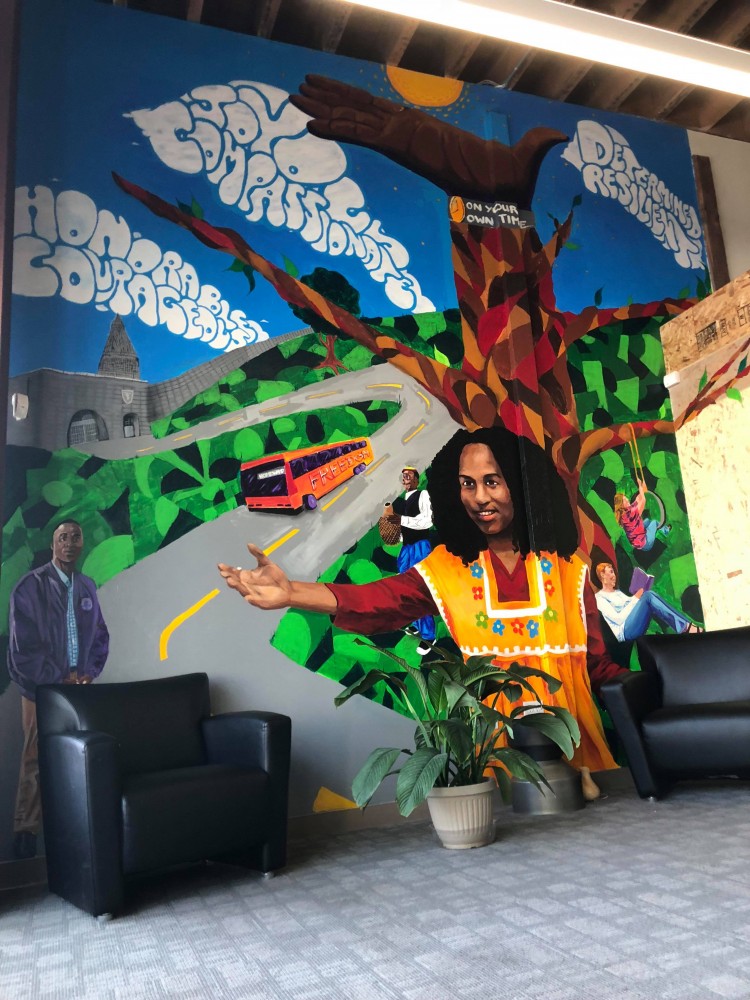
This colorful mural displayed at the Reentry Success Center symbolizes the reentering population of Contra Costa County. The leaves of the tree signify its members’ success. The whole piece presents transition and transformation.

The "Rubicon Rangers" series is a first-person account of Rubicon's intern experience, authored by the interns, Jessica, Sandy and Justin, themselves.

In a word, Rubicon Programs' Reentry Success Center provides guidance, the type of guidance that will make you feel like you have a new lease on life.

Participants in the Center’s 8-week program receive hand-tailored guidance as they work to get reacquainted to life in the community after an experience with the justice system.

At the Center, everyone works intentionally towards the goal of building a better future. Its staff works to break down negative thoughts and raise participants self-esteem, so that participants can gain new motivation that will drive their efforts to accomplish a realistic goal, like getting a good job or getting back in touch with family. Every individual has varying needs that must be met in order for them to reenter society successfully after spending time in the prison system.

When the Rubicon Rangers team of interns walked into the Center, we were first struck by how quiet the environment was. The surroundings were so peaceful that all you could hear were the leaves in the wind outside and the humming of the water dispenser. The space had a distinct startup feel, with open work spaces and modern trimmings.

This tranquility was soon punctured by Dameion, one of the Center’s Reentry Coaches, who walked out with a friendly smile across his face, greeting each participant with a fist bump. Everyone felt welcome and appreciated.

Later, we discovered that the quiet environment is a good sign – it means people are out throughout the Bay Area making appointments or going on a job interview.

A​s a referral agency and reentry service hub, the Center accepts 15 participants every “ALPHA” cohort. The quality of care is significant – the program focuses in on 8 domains which include everything from financial planning to health and wellness. The ALPHA program is only one aspect of the center while there are other types of services offered, including commute support and other resources.

“Some people stay in hell because they are familiar with the streets,” Dameion explained.  “Many people return to a life of crime because that is the easy way out”.

His main goal is to get members to use the skills they acquired in their former life of crime and channel them in a positive way. Using the power of encouragement, he motivates others to push their boundaries and take chances. He hopes to get the reentry resident to be the best they possibly can be and makes sure their action matches their ambition.

The coaches truly want to help every step of the way. To help incentivize each incremental step towards progress, they reward participants 50 dollars each week.

Accomplishments aren’t always earned throughout a lifetime. Continual progress can make life more satisfying.

Today, we got a preview of how a better future is built: one little accomplishment at a time. We’re excited to see what’s next for each of the Center’s participants thanks to this newly acquired growth mindset.

Read More

The Rubicon Rangers: Welcoming Mayor Breed to the Fight to End Poverty

By Ben Rowley July 16, 2018

The "Rubicon Rangers" series is a first-person account of Rubicon's intern experience, authored by the interns, Jessica, Sandy and Justin, themselves.

On June 13th, London Breed became the first African-American woman ever to be elected Mayor of San Francisco. As an intern with an interest in policy and public affairs, I decided to pay close attention to her and her work in Rubicon’s area of expertise: poverty.

Soon after, a press conference was held in which she thanked supporters and other candidates, and took on the city’s problems with an optimistic approach, and a focus on ending poverty.

“It is time that we come together, and work together to solve our most challenging problems,” she said in her post-victory press conference. She promises to help solve issues like homelessness, addiction and many other longstanding problems, including housing.

London grew up in San Francisco dealing with many of these struggles herself. She has stated that she has firsthand experience dealing with many of the issues that low-income San Franciscans have to confront.

In her victory speech, she emphasized a poverty-free future as well as an interest in helping the youth of San Francisco.  Later on MSNBC, Breed continued to highlight the importance of youth getting actively engaged in the community, and talked about her plans for San Francisco’s – and California’s – future.

She made it clear that she likes to focus on people, and said that, “San Francisco is not just beautiful because of its monuments, it’s beautiful because of its people,” furthermore showing that she is not only proud of the city itself, but also of its diverse cultures and all that they can offer.

Mayor Breed often talks about the fact that her success story is an exception, and how she is pushing for that success story to become the norm for today’s youth in San Francisco. Since San Francisco has many large businesses, Breed wants to expose the youth to paid internships, so they can have opportunities and generate income that can help pay for their education.

Another issue that Breed spotlights is homelessness. While she is under the impression that the city is on the right track, there is still a big issue concerning how the city helps people who have a mental illness. She hopes to make changes to state and local laws and provide options for those working through addiction and psychiatric issues. One plan is to open safe injection sites in San Francisco, to help people avoid further medical issues.

To be successful as mayor, London Breed has said that she will need to learn patience, as being impatient is “a natural part of [her] personality.”

Even though a lack of patience may seem like a weakness at first glance, it could prove to be an indispensable quality when it comes to making housing affordable fast and getting other issues related to poverty resolved as soon as possible.

While at Rubicon Programs, I’ve learned that our organization aims to take a leadership role in the fight for a poverty-free Bay Area.

In the coming years, they will work in partnership with Mayor Breed, as well as mayors and nonprofit organizations across the Bay Area, and especially the East Bay, to push for policy changes that end the cycle of poverty. I look forward to being involved with these exciting efforts.

Read More