Step Into Rubicon’s Virtual Classroom
By Greg Reimer December 15, 2021

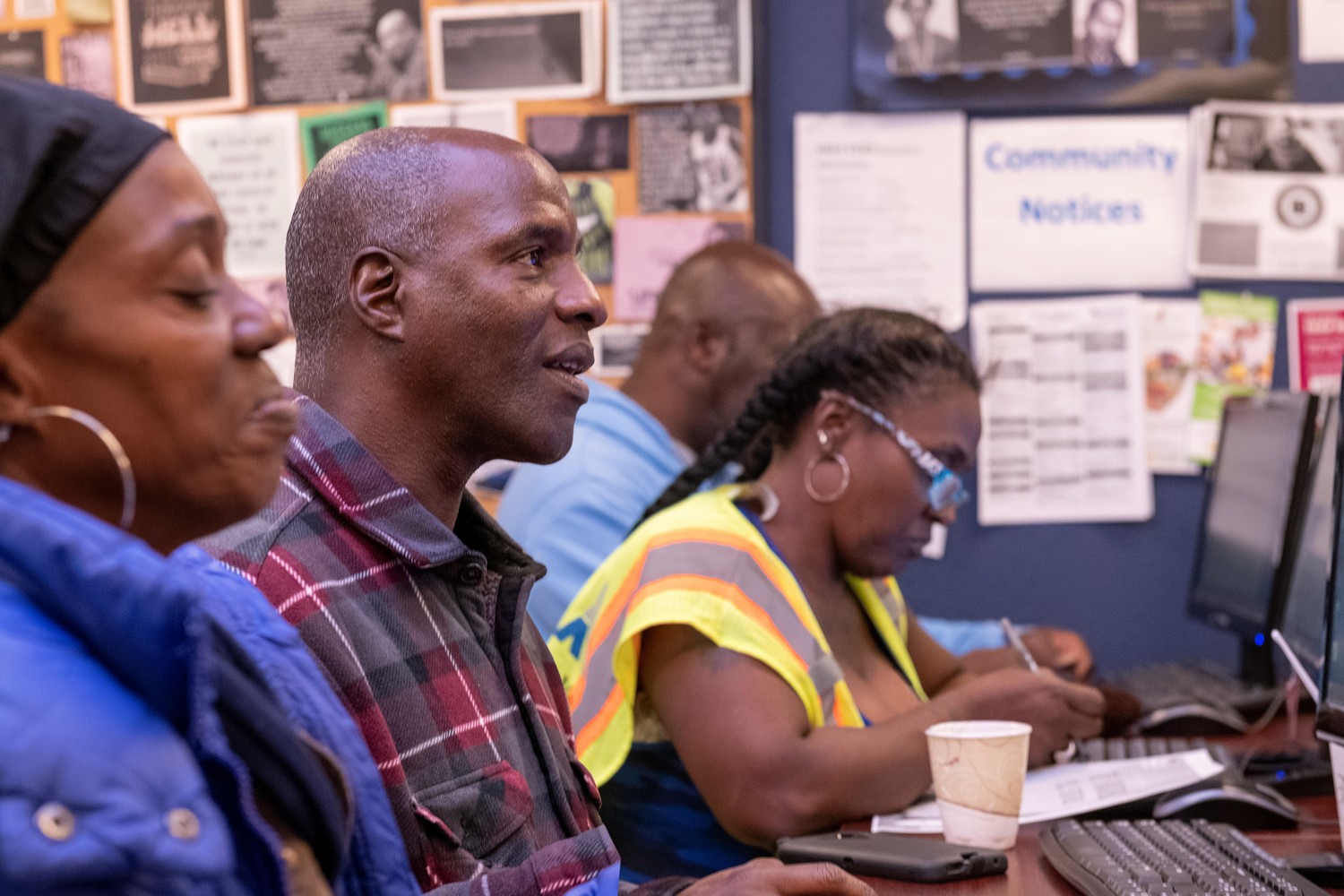
Image: Rubicon participants using computers on-site during a program in 2018. Now, participants can connect to programs online through Zoom and Google Classroom.

With the onset of the COVID-19 pandemic last year, Rubicon was quick to pivot in order to provide our services to as many participants as possible, despite having to close our office doors. One way that Rubicon transitioned to providing virtual services is by utilizing Google Classroom.

If you’re unfamiliar with Google Classroom, it is an online hub that allows users to view content as well as complete assignments. Rubicon has found Google Classroom to be a strong fit to ‘house’ all of our Foundations workshops, which provide information on financial, employment, and wellness skills.

Rubicon also offers our Foundations workshops virtually via live Zoom sessions. However, due to those being at a scheduled time every day, Rubicon realized that offering the information on Google Classroom could expand our reach to more participants, who could complete the workshops on-demand as their schedules allowed. It's also been useful for participants who may miss one or two of the live Zoom workshops, as they can make them up by accessing the information on Google Classroom. “Participants that are working or have children and unable to get child care, are enjoying being able to log on to Google Classroom at their convenience,” says Rubicon Impact Coach Ruben Cantu. Rubicon further supported our participants by providing free laptops and Wi-Fi hotspots to those that needed them to access Google Classroom.

Participant feedback overall has been positive, as many are grateful for the flexibility that Google Classroom’s on-demand access provides. Participant feedback wasn’t always so solid, however; early on, many participants became frustrated because of their lack of familiarity with Google Classroom and their confusion over accessing all of Rubicon’s uploaded workshop material.

Rubicon responded by creating a new employment position, technical assistant, who would serve as a help desk or support line for participants who had questions navigating Google Classroom. And even better, this position is staffed by a few tech-savvy Rubicon participants. James Toalu, one of the technical assistants, explains that “once participants understand how to navigate Google Classroom, they are completing the workshops with ease.”

By having the Foundations workshop material on Google Classroom and offering live workshops via Zoom, Rubicon has been able to maintain providing our valuable services and information to our community during the COVID-19 pandemic. Furthermore, Rubicon’s positive experience with Google Classroom has us believing that it's here to stay. Its on-demand ability makes it so convenient and a better option for many of our participants than scheduled programming. Thus, even when we’re back to offering our workshops fully in-person in the office, the Google Classroom option is likely to remain.

What the future holds is unknown, but what we do know is Rubicon is committed to providing our services and effectively reaching participants, one person and one laptop at a time. 

Read More

Measure X Community Advisory Board Proposes Funding Priorities Aligned with Rubicon’s Work

By Sabrina Paynter October 7, 2021

CONTRA COSTA COUNTY, CALIF., OCTOBER 7, 2021 … The Contra Costa County Measure X Community Advisory Board (CAB) voted last evening to accept a report listing first-year recommended funding priorities for submission to the Board of Supervisors. The list contains five goal areas supported by 43 strategies, many of which are aligned with Rubicon’s comprehensive programs.

Community-based services—including those that Rubicon provides such as mental health support, training and employment, and reentry support—are prioritized strategies in all of the goal areas highlighted in the report. The strategies were each rated as a top priority by at least 51% of voting board members at the September 8, 2021 meeting.

Michelle Stewart, District 5 CAB member and the Antioch Site Manager for Rubicon Programs, says the decisions on how to prioritize the funding recommendations were challenging. “It was really tough, because we had a bumper crop of presentations from numerous people, and it’s very difficult to make these kinds of decisions because everything is important,” Stewart said. “Do you prioritize seniors over children? Do you prioritize a lab for the regional hospital over mental health services? Do you prioritize housing over transportation? It’s all important, and it makes a difference in the quality of life for people and their ability to survive.”

In order to ensure that the CAB heard a sufficient variety of voices in the discussions, a total of 94 subject matter experts, including five from Rubicon, presented on a variety of community needs, issues, and topics during CAB meetings that were held over four months. Members of the public also gave their input by writing in and attending meetings, with some community members appearing at the virtual meetings nearly every week.

Although public attendance at the meetings grew over time, Stewart thinks there are more residents to hear. “We did get a lot of public comments, but we could get a lot more,” Stewart said. “I would have liked to have seen more residents participate and make comments about what is needed in their communities, in their neighborhoods, and what are their concerns.”

The recommendations in the report are not tied to specific dollar amounts. Instead, the CAB assigned rankings to each strategy to help the Board of Supervisors understand the priority levels to determine funding allocations. The rankings are based on the relative popularity of each strategy based on the September 8 vote, with community-based mental health services, establishing a County Office of Racial Equity and Social Justice, expanded comprehensive healthcare for the uninsured, and tenant legal services among the top ten.

Stewart cautions residents not to get discouraged if they don’t see their priorities at the top of the list. “This is just the first year. Just because you weren’t prioritized now doesn’t make you not a priority,” Stewart said. “We’re going to make our recommendations in the next couple of weeks, we’ll have a few weeks off, and then we’re right back at it. So just continue showing up.”

According to the report, Measure X is a countywide, voter-approved half cent tax that is intended “to keep Contra Costa’s regional hospital open and staffed; fund community health centers, emergency response; support crucial safety-net services; invest in early childhood services; protect vulnerable populations; and for other essential county services.” The CAB was established in February 2021 and is made up of 17 members—10 supervisorial district appointees and 7 at-large members—who serve two-year terms with a maximum limit of six years total. The CAB currently meets Wednesdays at 5:00 pm on Zoom.

Read More

The Reentry Success Center: Breaking Barriers to Break Poverty

By Rubicon Admin December 18, 2018

One in three Americans have interacted with the criminal justice system at some point in their lives. This one touchpoint can be life-changing, introducing dozens of new barriers that can follow an individual throughout their life, making it a challenge to get a job, rent a home or raise a child.

These barriers not only hold them back, but their children and the community, perpetuating intergenerational poverty. That’s where the Reentry Success Center (RSC) – a collaboration between Rubicon Programs and community partners – comes in.
 
The RSC is there for those reentering society after incarceration, as well as their families during – and after – their loved one is in prison or jail. While at the Center, staff, volunteers, community members and fellow returning residents work together to help people transition into a good job, put a deposit on an apartment, and reconnect with their friends and family.

“I was released from jail three weeks ago after a ten month sentence at West County,” says Michelle, a new member of the Reentry Success Center. “The Center was talked about a lot while there. I heard so many success stories, so I came here two days after my release.”

Michelle says she knew she needed a support network to get back on her feet. The Center sounded like the perfect fit.

“In jail, we don’t have to talk to each other. You are isolated. You push people away. But you have to work together to move forward in the community,” she says. “We come out uninformed about our rights. We don’t have the direction or structure to do what we need to yet.”

At the Center, she found the structure she was looking for; she soon signed-up for classes that have helped her move forward, including a Life Skills course, a Cognitive Skills class, and Trauma and Grief Therapy sessions. These opportunities have helped her acclimate to the workforce and manage some of the challenges in her personal life.
“My 9-year-old son tells me that I need to communicate better, so for now, I’m focusing on that. I’m also working to collect some of the skills that I need to thrive in my career.”

Another priority is learning how to navigate the job search process with a criminal record. “It’s hard to find a great job or get a career started,” she says. “There are many obstacles. Some employers look at me like a criminal. They put me in a box.”

Luckily, changes to California’s employment laws have made it a bit easier for her to have a fair chance. A.B. 1008, “Ban the Box” legislation signed in 2017 by Governor Jerry Brown, became law after a coalition of formerly incarcerated advocates came together to push for change.

Now, employers are no longer allowed to ask about an applicant’s criminal background until a conditional offer of employment is made, allowing people to show who they really are without preconceived notions and prejudices clouding an employer’s judgement.

“This allows people to sell themselves,” says Lawrence, the Reentry Center’s Volunteer Mentor Coordinator. The law has already helped some employers see the light.  “Now, there are many so-called ‘felon-friendly’ employers out there.”

Getting a job can still be a challenge, but those challenges are often overcome with hard work and dedication. “People have no job history and no references, so we try to take the skills they’ve learned on the street and apply them to today’s job market.”
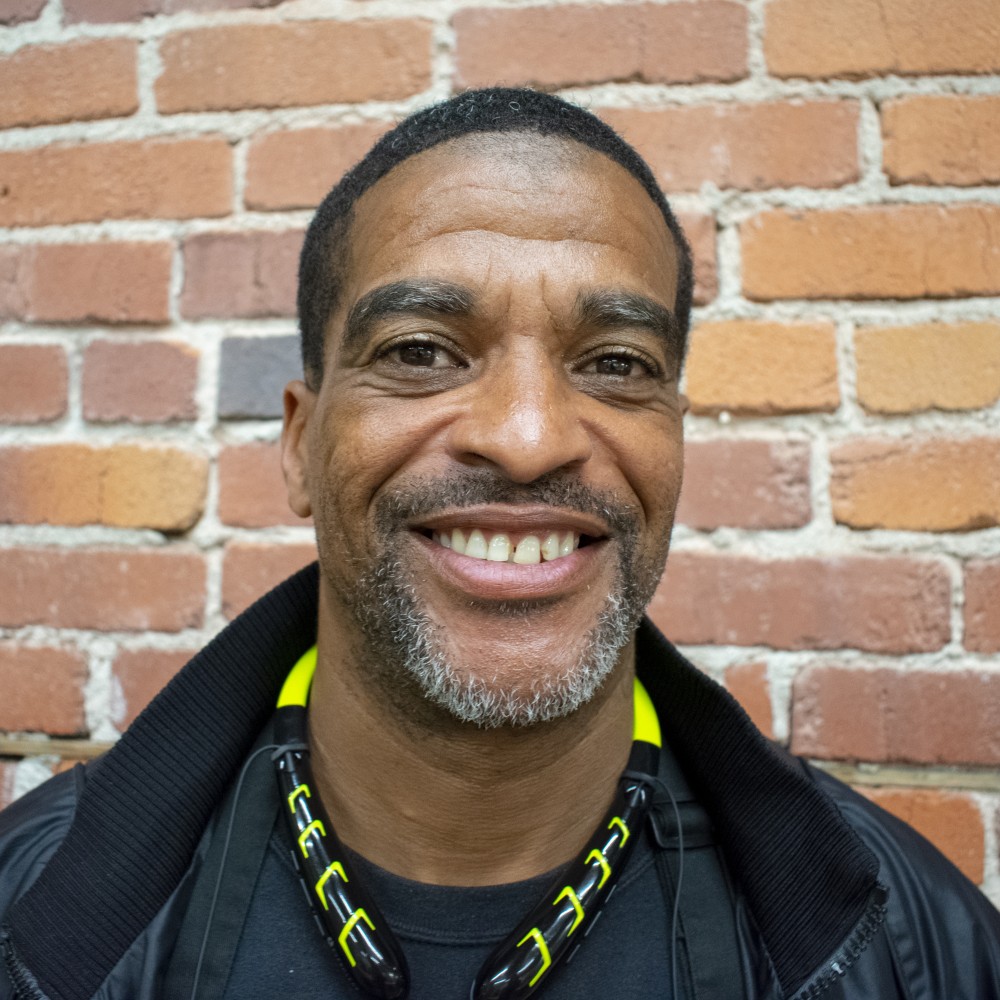
Lawrence recruits and manages volunteers and mentors who help Center members build new careers – and lives. He’s seen many of his friends, family and colleagues go in and out of the system, and knows from experience what they have to do to succeed.

“It’s been documented that what happens in the first 72 hours after release has the greatest impact on whether an individual recidivates,” he says. “That timeframe is critical: You either go to a shelter, go home to your family, or you fall back in with the ‘homies’ who got you into jail in the first place.”

That’s why housing and community support go hand-in-hand during the reentry process.

“We’re fortunate to have a relationship with the probation department. They often bring newly-released individuals to the Center so they can get the resources they need and avoid their old ways.”

Richmond residents also benefit from a fair-chance policy that makes it more difficult for landlords to discriminate against potential tenants with a criminal record.  This increases access to housing, which in turn makes it easier to get and keep a job.

“When you first come home, you often stay at a shelter and get a temp job. But soon enough, you find out your shelter has residency cap – 30 days. How can potential employers contact you if you’re bouncing back-and-forth without a phone or mailing address?”

Having a stable home makes a world of difference. No one knows this better than Tommy, a participant who has completed the Center’s 8-week Alpha Program, a comprehensive curriculum that serves people who are at the highest risk of recidivating. “I’ve been living in shelters so that I can save my wages for a deposit, and now I’m in the process of looking for a permanent place to stay, a studio in Richmond,” he says.

Tommy says that the Alpha Program changed his life, helping make jobs and housing accessible. “I learned to reenter home life and work life. Then, I got a full-time job – just one month after Alpha.”

“It gave me a second chance at a first-class life,” he says.

After nearly a decade in incarceration, Tommy knew there had to be a better way. “Being told what to do, when to eat…letting someone take control of your life…it’s no way to live. I robbed myself of so many opportunities to advance and be happy. But now, I feel different. I look different. I talk different. I’m out of the unemployment line, and that feels great.”

“Everyone has struggles, but when you surround yourself with positivity, you can overcome those struggles,” he says. “I’m so grateful for the Center’s positive environment, all of these positive people, and all of this new information that has brought so many good things into my life.”
Tommy ties most of his success to the people he has kept around him. “I always had emotional support from my family,” he says. “But the Center had my back. They told me I don’t have to go into this alone, and they stayed by my side.”

 “When you get out of jail, it can feel like you are a newborn baby. You’re naked. You have nothing. But you don’t have to see it that way. It’s only temporary. And you don’t have to fall back on your old ways, or with old, negative people.” You have to make a conscious choice.

“I’m an Eagle. And Eagles can fly. There’s a reason Eagles don’t hang out with Turkeys. Turkeys can’t fly. You have to keep people around you that give you strength.”

In other words, he draws energy – and strength – from the Center.

“I’m going to keep coming here until it closes down. And I hope that day never comes.”

Help Rubicon break poverty by donating or explore the full participant journey here.

Read More

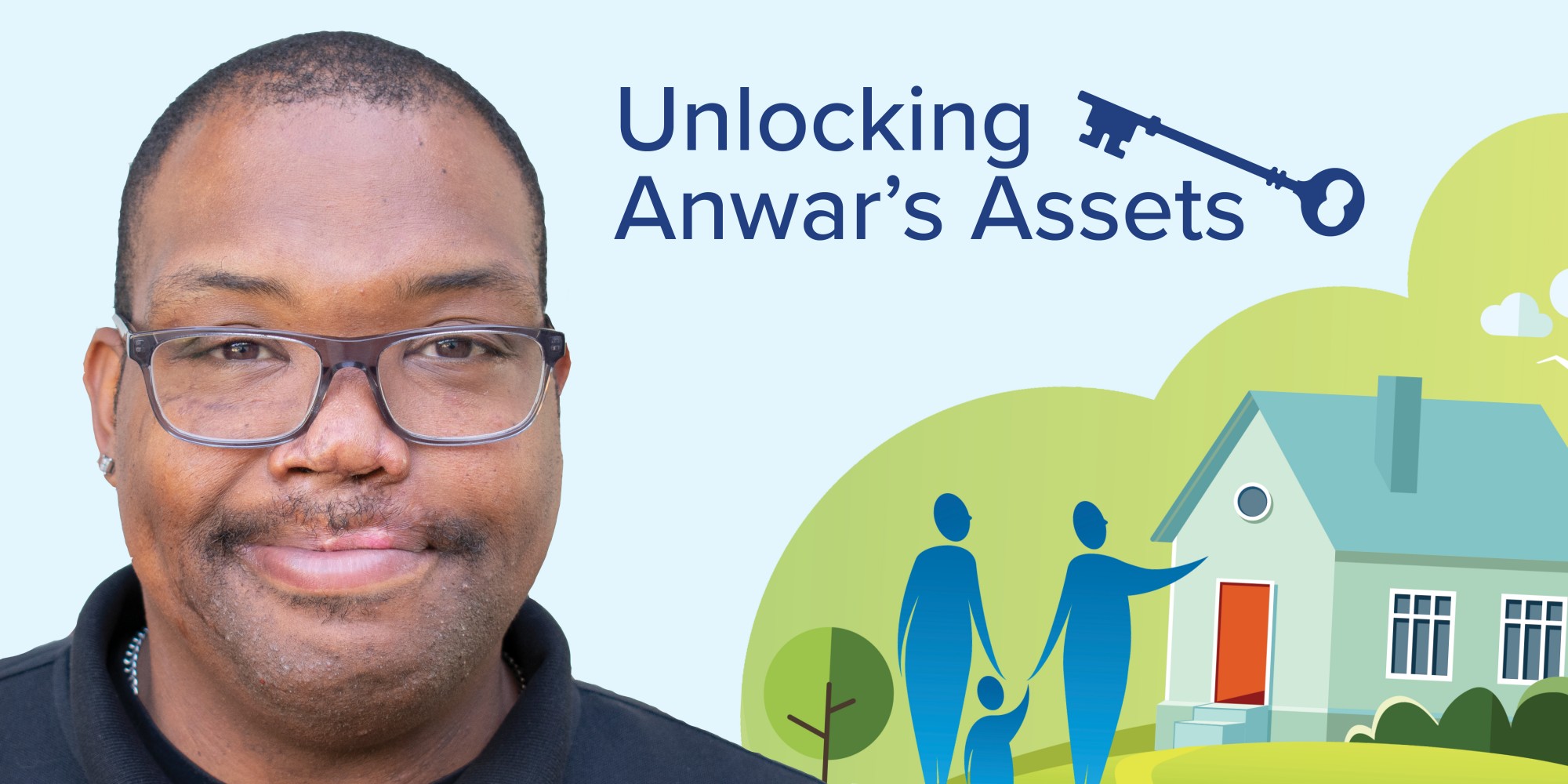
Unlocking Anwar’s Assets, One Month at a Time

By Rubicon Admin December 5, 2018

I was at the end of my rope,” Anwar says with a pensive look in his eyes. “I was looking for jobs. I was even doing well in the interview process. But at the last stage, I just couldn’t get past the background check.”
This recurring roadblock posed a serious challenge to his well-being after an already bumpy couple of years. A workplace accident had triggered a depression that lingered.

“I couldn’t leave the house some days,” he says. “It started to affect my relationships.”

Feelings of worthlessness crept in. He knew he needed to shake that off and try something new. That’s when he made the decision to visit Rubicon Programs.

“I’m willing to do the hard work. I just need a little direction, a little boost. Rubicon assured me that things would come together.”

This gave him the confidence he needed to keep going.

“As soon as I left my first meeting, my Impact Coach, Eric, was texting me to remind me that he’s here to help me out whenever I need it. From there, everything just took off!”

Anwar spent the next few weeks in workshops covering core pathways to change: developing income, building assets, fostering wellness and forging connections. He soon got the boost he needed – advice on how to navigate the job search with a criminal record – and eventually secured a good job with growth potential in the hospitality industry.

“I’m now making the most money I have ever made in my life,” he says. This economic stability finally allowed him to focus on building financial assets and setting the groundwork for a better future.

​To actualize that vision, Anwar met with his Financial Coach, Ken. Together, they checked his credit report.

“I saw everything on my credit report that was bringing down my credit score. We identified things that were going to collections and set-up affordable monthly payments. Then, I applied for a credit card and started using it responsibly. My score then went from very bad to very good!”

Next, with a clean bill of fiscal health in hand, Anwar tackled his transportation challenges.

“My girlfriend and I shared a car that was just one breakdown away from leaving us without any way to get to work.”

What’s worse, Anwar had a backlog of unpaid tickets that snowballed when he couldn’t afford to pay his car registration on time. He had lost his license.

“Rubicon’s lawyers helped me go to court to wipe out all of my tickets – poof, gone! I got my driver’s license back.”

With his license in hand and stellar credit in his back pocket, Anwar worked side-by-side with Ken and Eric to secure a low interest, subsidized car loan. He was approved, and now has a brand new car that provides him with a reliable way to get to work and make a living.

Anwar’s life changed more than he could have imagined in just a few months’ time. But he was still looking toward the future. Using the skills he learned in Rubicon’s Money Management workshop, he created a savings plan and opened a savings account. Ever since, he has been putting away leftover funds at the end of the month.

“I want to buy a home someday. I’m spending a lot on rent. I’d rather pay that money back to myself than throw it away,” he says. “It motivates me to be responsible with my money each month, and save up the 20 percent needed for a down payment. It’s a pride thing – I know it will feel good to own something and I’m willing to work to get there.”

He’s also taking an elective workshop to learn more about finances. “Ken has gotten me interested in saving for retirement. I’d like to learn more about that – but first, I have to save up for a house!”


Anwar is optimistic he’s going to get there. He recently was promoted to be a certified trainer at his workplace, and hopes to continue to rise up the ranks. He’s also taking advantage of every resource Rubicon offers, earning his Hazmat, Occupational Safety and fork lift certifications and licenses.

“I can’t stress enough how grateful I am for Rubicon,” he says. “When I hit rock bottom, I didn’t need a handout. I needed a boost. Rubicon gave me exactly what I need to step out of my comfort zone and change my life.”

What else is next for Anwar?

“Once I buy a house, I’m going to start fostering elderly and disabled animals. I love animals. Absolutely love them.”

Help Rubicon break poverty by donating or explore the full participant journey here.

Read More

#TogetherWeRise

By Rubicon Admin October 27, 2017


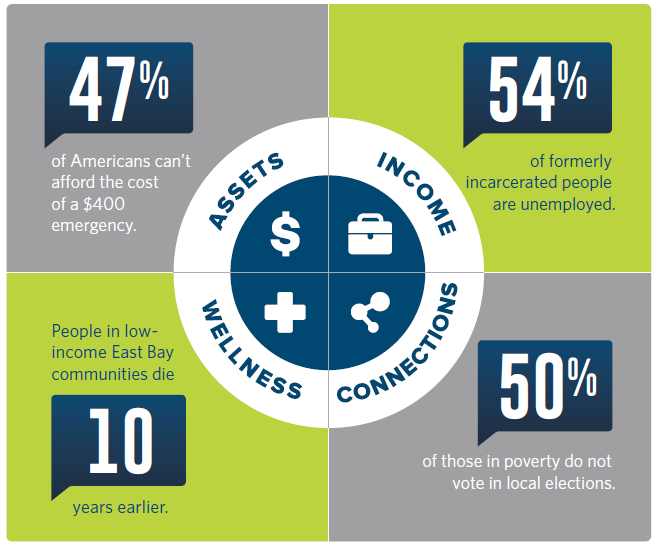
Rubicon Programs transforms East Bay communities by equipping people to break the cycle of poverty. 

We believe that no one service is enough to end intergenerational poverty. People are complicated. They can't be reduced to the least common denominator. 

That's why we provide our participants with three years of coaching and opportunities across four core service areas: income, assets, wellness and connections.
 
First, we help our participants get a job and map a long-term career plan. Then, we show them how to grow their savings, build their credit, set a budget and overcome legal barriers. 
 
But we don't stop with these simple economic solutions. 

Physical and emotional health issues, and limited social networks, also keep people in poverty. That's why we offer tailored wellness services and assistance establishing the community networks necessary to build a career, raise a family, and make positive change.

This holistic, flexible approach allows us to end poverty permanently for more than 1,700 people each year. And we all benefit.

Help us build an East Bay without poverty.

Click here to support others like Mario, Angela and John:

"Thanks to Rubicon, I’ve overcome some serious obstacles. All the workshops – and all the coaches – challenged me and helped me grow, allowing me to use my community connections to get a good job." - Mario

"To look at where I am now is a delightful feeling. I was running from my credit for so long, but now I just want to see it grow." - Angela

"I had headaches and didn’t know why. Now, thanks to Rubicon, I know it's hypertension and I’m able to make it better. Rubicon connected me with everything I needed." - John

Read More