
Blog

Blog

Rubicon Stands with Charlottesville Victims, Against Hate and for a Growing Movement

By Jane Fischberg August 14, 2017

It is our collective responsibility to call out and dismantle injustice and inequity in our fractured system when we see it.  Rubicon Programs remains committed to acting on our responsibility to represent the people we serve and fight for their interests – and what we agree is basic human decency.

I would like to share with you my personal experience and reflections on this past weekend’s blatant show of armed Nazism, white supremacy and unfettered fascism in Charlottesville, and the death and violence that followed.  Frankly, I was horrified and angry.

Last night’s vigils sprang up organically throughout the country, with at least a few right here in the East Bay.  Personally, I attended a gathering in Latham Square in Oakland. So many thoughts ran through my mind. 

People from the ages of 15 to 90 spoke from the heart, and many families brought their young children.  I found high school age speakers to be especially eloquent, expressing both their resolve to be united against hate wherever they see it, and also their hope for the future.

On the other end of the age continuum, someone who attended a vigil in El Cerrito told me about a 93-year-old man who spoke. The man said that he had fought at Iwo Jima, and never thought he would still be struggling against fascism more than 70 years later. He didn’t want to die with the struggle still continuing. 

My friend made a sign, “400,000 US military died fighting fascism during World War II.  Never again.” 

White supremacy is a disease, as well as a system, and it remains a threat.

I then wondered if this immediate and widespread outpouring of anger, grief and dismay by white people was, in part, due to the fact that a white life was lost. Would the national response have been the same if Heather Heyer were black or brown?

Toward the end of the vigil, Oscar Grant’s uncle spoke, introducing himself as Uncle Bobby, and asked how many of us at the vigil had been there eight years before, when his unarmed nephew was shot dead by a BART police officer.

I was one of those who was not.  Only about a quarter of the crowd raised their hands.  

Nonetheless, he found comfort in this, and did not express bitterness. He took this as a sign of advancement. The number of people who are aware of the deep, gnarled roots of systemic racism in America has multiplied exponentially. People are talking about it and acting to end it.

Unfortunately, our nation still has a ways to go. Hundreds of white men are still marching with swastikas on their arms and torches in their hands. Our President remains silent. And more complicated issues like poverty and implicit bias remain ever-present.

We should hold onto Uncle Bobby’s words and embrace his message of hope.

The nation is awakening.  Let’s shine a light on injustice and fight for change one heart and mind at a time.
Read More

East Bay Times: Landmark settlement offers some relief from crushing traffic ticket fines

By Rubicon Admin August 14, 2017

By TAMMERLIN DRUMMOND | Bay Area News Group
August 14, 2017

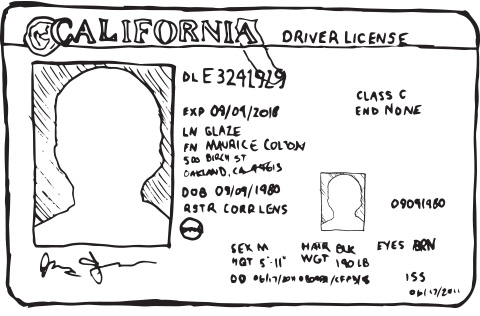
Jesse Austin, a 39-year-old Antioch resident, owed more than $1,800 in unpaid tickets stemming from a traffic stop last September in Benicia. He couldn’t pay that high an amount on the $800 he earned every two weeks at a store that sold men’s grooming products. When he didn’t pay or show up in court, Solano County put a hold on his driver’s license. That in turn, he said, stopped him from getting a job as a delivery driver, better-paying work that he had done in the past.

“Not having a license has really hindered my earning ability,” said the father of six who works as a bicycle messenger in San Francisco. “You have to have one for a lot of jobs.”

Last week, Solano County Superior Court agreed to a first of its kind settlement in California that offers low-income people like Austin some relief from crushing traffic ticket debt and penalties that so often lead to a license suspension. The county now must notify drivers about alternatives to paying the full amount. Qualifying low-income residents are able to fill out a declaration of financial need and ask to pay in installments, seek a fine reduction or request community service. It’s also retroactive, which means drivers can petition the court for financial relief to get a license suspension lifted. The new policy applies to non-criminal violations.

“When you suspend a person’s license there is supposed to be a finding of willfulness,” said Sarah Williams, a staff attorney with Rubicon Programs, a Contra Costa County-based nonprofit that led a coalition of Bay Area legal aid organizations in filing a class action lawsuit last year.  “When someone doesn’t pay a ticket that doesn’t mean it’s willful if they can’t afford to pay it.”

Story continued at www.eastbaytimes.com.

Read More

Landmark Rubicon Lawsuit Settled, Paves Way for Fair Treatment of Low-Income Drivers

By Rubicon Admin August 8, 2017

Solano County adopts model policies that lessen the burden of traffic fines and fees           


San Francisco, CA - A settlement was reached today in the first lawsuit in California to challenge the suspension of driver’s licenses as a means of collecting unpaid traffic fines. The lawsuit was originally filed on June 15, 2016 against Solano County Superior Court, challenging the court’s practice of suspending the driver’s licenses of people who could not afford the astronomical price of traffic tickets.

“Having to choose between food and a traffic fine is not a choice at all," said Jane Fischberg, President and CEO of Rubicon Programs, a plaintiff in the suit. “This settlement gives us hope that we are finally moving away from unjust systems that criminalize poverty. We applaud the Solano Court’s good faith effort to make the system more equitable – so that everyone in our communities has an opportunity to achieve economic mobility."

Prior to the lawsuit, the Court routinely failed to notify traffic defendants of their right to demonstrate they were low-income and unable to pay the fines – which the suit alleged was unlawful. The Court also lacked a mechanism for low-income drivers to seek a reduction in the fine or an alternative to payment based on their poverty.

Today, the parties filed a settlement that achieves the goals of the lawsuit. Under the terms of the settlement, the Court will notify every traffic defendant of their right to be heard regarding their “ability to pay.” The Court will update all notifications to traffic defendants, including its website, the oral advisements provided by traffic court judges, and the “notice of rights” handout given to all traffic defendants. The new notices explain the traffic defendants’ rights to ask the Court for a lower fine, a payment plan, or community service if they are indigent.

Further, the Court agreed to change its procedures for assessing a defendant’s ability to pay. For traffic defendants who are homeless, receive public benefits or are low income, the Court has agreed to consider alternative penalties that do not involve payment of a monetary fine – such as community service.

"We hope that Solano's reforms will be a model for other counties to follow," said Rebekah Evenson, Director of Litigation and Advocacy at Bay Area Legal Aid. "We laud the Solano County Superior Court and Presiding Judge Fracchia for working with us to reform their traffic system in a way that treats low-income drivers fairly and equitably."

“We appreciate that the governor and legislature recently put an end to the harmful practice of using license suspension to punish low-income people who can’t afford to pay costly tickets,” said Christine Sun, Legal Director at the ACLU of Northern California. “Now we’d like to see counties across California follow Solano County’s example and address the exorbitant traffic fines and fees structure that plunges people into a cycle of poverty.”

A 2017 study by the Lawyers’ Committee for Civil Rights of the San Francisco Bay Area, "Paying More for Being Poor: Bias and Disparity in California’s Traffic Court System," showed that Californians pay some of the highest fines and fees in the country—which can devastate the lives of Californians with lower incomes.

People of color also bear a disproportionate amount of this burden. The study’s Bay Area data revealed that African-Americans are four to sixteen times more likely to be booked into county jail on a charge related to inability to pay a citation. Because of over-policing in communities of color and racial profiling, African-American and Hispanic individuals are more likely to receive traffic tickets than are white and Asian individuals and are far more likely to be cited solely for driving with a license that was suspended for failure to pay or appear in traffic court.

The lead plaintiff in the suit, Rubicon Programs v. Superior Court, is Rubicon Programs, a nonprofit that provides comprehensive employment, career, financial, legal and health & wellness services to thousands of low-income people across the Bay Area. Additional plaintiffs in the suit include the ACLU of Northern California, and Henry Washington, a low-income Hayward resident whose license was suspended because he could not pay a “fix-it” ticket. Plaintiffs were represented by:

Read the final settlement here.

Media Contacts:


Sarah Williams, Attorney, swilliams@rubiconprograms.org or (510) 412-1763

Jonathan Bash, Communications Manager, jonathanb@rubiconprograms.org or (510) 231-3993


Linda Kim, Bay Area Legal Aid, Lkim@baylegal.org or (510) 250-5218

Bethany Woolman, ACLU of Northern California, bwoolman@aclunc.org or (415) 621-2493

Read More

Trading the Dark Side for the Light Side: Mario’s Story

By Rubicon Admin August 7, 2017

Mario, a member of Rubicon Programs' July 2016 cohort, always intended to live a good life, but the things he wanted always seemed out of reach. Entering adulthood in a resource-deprived community, Mario felt that the only viable path to success came from “the dark side.”

“I got caught up dealing drugs,” he says.  He was able to make enough to pay the bills and get what he thought he wanted. “I was feeling pretty content. But I began to stagnate, physically, mentally and spiritually. And in the end, I became my own best customer.”

He spent more than a decade in and out of jail, fell behind on his child support and lost touch with his family. When he hit rock bottom, his life until then came into focus, and he thought about all the time he lost not being a productive citizen. That day, he made a decision to learn from his mistakes, grow as a person and embrace the “light side, the good side.”

His neighbor, a former Rubicon client, suggested he look into Rubicon Programs. At first he was skeptical, “what could happen in just a few weeks?” But soon, he crossed the threshold and realized that he could turn his life around, and that Rubicon’s staff would be sticking with him for the foreseeable future.

“All the workshops challenged me and helped me grow. Each day I chipped off a bit of the block of what they offered. I met with all of the coaches. Jessica stayed on me and made sure I followed through. Mr. Alexander, Pat, Reggie, Max, Dalia, Ken, Porschea, Lila, even the office staff, all were instrumental to my success. ”

Now, one year later, Mario works with LiUNA!, the laborers union in San Francisco. The job, which he secured after capitalizing on a few community connections — including one with Aboriginal Blackmen United (ABU), a local labor advocacy group — earns $30 an hour.

He now has enough to move closer to his mother and his kids, own a reliable car and save for a rainy day, while also enjoying the good things in life. He has paid off his child support, rebuilt relationships and found stability for the first time in decades. In particular, his strengthened relationship with his mother, Mary, has helped him thrive. "I couldn't have done this all without her support. She believed in me when few people did."

He’s proud of the work that he does, building public parks, sidewalks and hospitals. And he hopes to continue to grow in his career. He plans to learn how to use new types of modern equipment and develop brand new skills in his field. “I want to be a real asset to a company,” he says.

He also wants to give back. He’s joined Rubicon’s Men’s Group, where he meets every week to share his success with new participants. “I’m glad I am able to be an inspiration to others.” He tells everyone he runs into, especially if they’re down on their luck, “go over to Rubicon.”

He says that he keeps coming back because it keeps him focused, and keeps him grounded. “I’ve been able to get everything I need with Rubicon. And if they don’t have it, they know how to help me find it.”

“I’m proud that I am able to be where I am at this stage in my life. I’ve overcome some serious obstacles. It’s been a struggle. But I’ve conquered them all, thanks to Rubicon.”

Help us break poverty by donating today.

Read More

Statement: Rubicon Programs Stands Against ACA Repeal

By Rubicon Admin June 27, 2017

RICHMOND, CALIF. — "No health care bill should be written in darkness. Don't be distracted. Don't get complacent. The U.S. Senate is counting on the American people to lose their focus and let them slip a terribly unpopular piece of legislation past us.

If we don't fight, 22 million people will lose their lifeline and tens of thousands will die.

We in the Bay Area must fight back, we must call our own representatives to tell them to stand strong against this repeal. And we must call, tweet and email every Republican who is on the fence.

Rubicon Programs, and our allies combating poverty throughout the Bay Area, stand strong against this legislation – legislation that will increase profits for big business and roll back the historic health gains for low-income people brought by the Affordable Care Act.

We also stand together to guarantee the right to health care here in California. Until we have a single-payer program, our current system will continue to extend the cycle of poverty and promote human suffering."

Jane Fischberg

CEO and President, Rubicon Programs

Read More