Blog

Blog

The California Propositions: What Happened and Where Do We Go From Here?

By Rubicon Author November 18, 2020

In the aftermath of the November 2020 election, Californians are taking a hard look at the results of the state’s ballot propositions. Definitive conclusions are not easy to draw, but for advocates of racial equity, workers’ rights, and housing affordability, the disappointment is undeniable.  

Of the nine propositions about which Rubicon made strong recommendations, seven went in the opposite direction.  Three of those are Proposition 16, which would have restored affirmative action, Proposition 25, which would have ended cash bail, and Proposition 22, the high-profile measure funded by gig companies to the tune of $200 million. Propositions 16 and 25, which we supported, did not pass. Proposition 22, which we opposed, did pass, clearing the path for corporations to remake labor laws at the expense of workers.  

At the same time, there were significant wins for criminal justice reform. Proposition 17, which will give people on parole for felony convictions the right to vote, passed, and Proposition 20, which would have increased penalties for certain misdemeanors, failed, suggesting that there is support for racial justice when it is tied to criminal justice reform.   

It is a complex set of proposition outcomes. To get an understanding of what these outcomes signify, in the coming weeks, we will be talking to experts about what happened, what it all means, and next steps in the fight to make California a more equitable place for all. First up, Proposition 16. Why did a measure that would have reversed the ban on affirmative action fail, even in deep blue California in a year defined by our country’s reckoning with racism?  

For Lisa Holder, Counsel with the Equal Justice Society, it is important to look at all of the propositions collectively.  Proposition 16 didn’t fail on its own. It was in good company with other progressive measures that didn’t pass, including, 15, 21, 22, and 25.  For Holder, much of it comes down to how one tells one’s story. “We know that the right is better at messaging,” she says. Specifically, they are better at “co-opting the message of the left.” In the case of Proposition 16, that meant sowing division between and among Asian Americans and Pacific Islanders and other minority groups and, more generally, creating “false narratives in order to divide us.” Oppoonents seized an opportunity to create a wedge between minority groups who are considered "model minorities" and others. 

Looking ahead, Holder says that in order for affirmative action to pass, advocates need to be preemptive in their messaging and to build an intersectional coalition with more linguistic inclusion.  

They also need more time. There just wasn’t enough time for people to understand the proposition, which was put on the ballot in June by state lawmakers.   

Holder says she did see signs of hope, particularly among young people. “University of California students were a tremendous source of energy,” she says. At the same time, there is no denying that the failure of Proposition 16 was a blow. “The disappointment gives us the insight that liberals have not moved along as swiftly toward progressivism as we would have hoped,” she says.   

Even with that disappointment, she does see an open-ness among Californians to reimagining ourselves as more inclusive. 
 
Holder says we must keep organizing. Keep communicating. Keep exposing the narratives of the right as “a mechanism used to divide us.”  And most of all, “stay committed to transformation and the notion that we can reimagine our society.” 

Next up, we look at Proposition 25. 
Read More

Rubicon Celebrates Milestones with Virtual Stepping Stones Ceremony

By Rubicon Author November 6, 2020

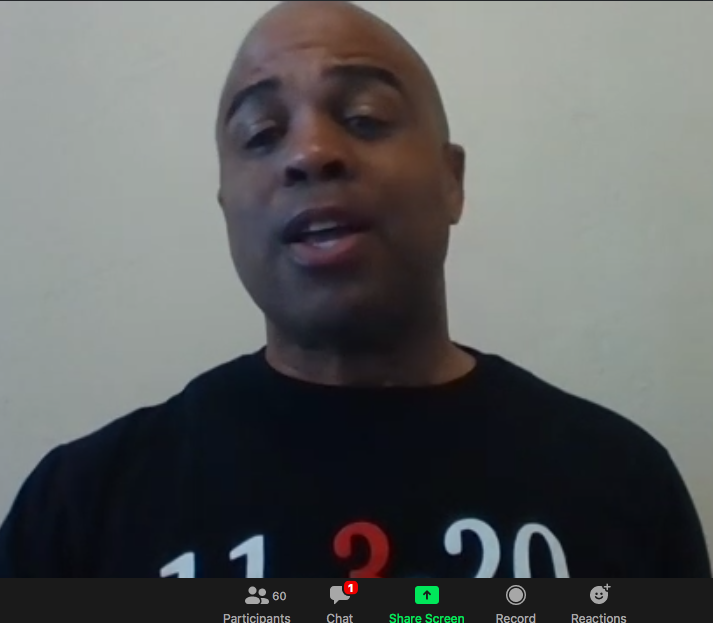
Last week Rubicon held a Stepping Stones ceremony over Zoom – our second-ever virtual milestone celebration (The Reentry Success Center also recently held an Alpha Step Ahead ceremony over Zoom). Neither distance nor the occasional technological snafu could dull the palpable sense of joy as participants shared some of their recent highlights, from completing the Foundations Workshops to securing housing to earning promotions in the workplace. These are the moments that remind us why we love doing what we do. 

During the ceremony, four participants marked completion of the Foundations Workshops, while eight others were recognized for achieving significant personal and professional milestones. Impact Coach John Cunningham emceed the event with his signature oratory prowess. 

John Cunngingham emceeing the virtual celebration 

As always, a highlight of the event was hearing from participant speakers who discussed their perspectives on the impact Rubicon has had on their lives. Monique Swain, who is just three classes away from earning a degree in Early Childhood Education, shared that “Ru” taught her, among other things, patience, networking skills, and, perhaps most significantly, how to use her verbal acuity for the good of others. “I can build people up with my words,” she said, adding that “Rubicon has become the family I always wanted.” 

Read More

How to Vote in the 2020 Election

By Rubicon Author October 26, 2020

How to Vote in the 2020 Election

Important Dates:

  • October 30, 2020 – November 2, 2020: Early Voting, sites and times vary.
  • November 3, 2020: Election Day, Polls are open 7:00am-8:00pm.

What If I Missed the Voter Registration Deadline?

If you missed the October 19, 2020 deadline to register to vote, you may still be eligible to register and vote through Same Day Voter Registration (i.e. Conditional Voter Registration).  Participants can request a one-on-one consultation with Rubicon attorneys for any questions.

More information about Same Day Voter Registration can be found here.

How Do I Vote in Contra Costa County?

Vote-By-Mail

  • Follow the instructions to mark your ballot in blue or black pen, place your ballot in the postage-paid return envelope, and sign and seal the envelope.
  • Mail your ballot with USPS. Your ballot must be postmarked on or before Election Day and received within 17 days of the election. We recommend that you mail your ballot ASAP to avoid delays in being counted.

Official Ballot Box Drop-Off

  • Follow the instructions to mark your ballot in blue or black pen, place your ballot in the postage-paid return envelope, and sign and seal the envelope.
  • Confirm an official ballot box location near you, here
  • Drop your ballot off on or before election day. Ballot boxes will be available 24/7 from October 5th - November 3rd at 8:00pm.

In-Person Voting

  • Regional Early Voting Sites are open Friday, October 30th (11am-7pm); Saturday, October 31st (9am-5pm); and Monday, November 1st (11am-7pm). Information about early voting sites can be found here.
  • If you plan to vote on election day, find your designated polling place here.  More information about voting on election day can be found here.

How Do I Vote in Alameda County?

Vote-By-Mail

  • Follow the instructions to mark your ballot in blue or black pen, place your ballot in the postage-paid return envelope, and sign and seal the envelope.
  • Mail your ballot with USPS. Your ballot must be postmarked on or before Election Day and received within 17 days of the election. We recommend that you mail your ballot ASAP to avoid delays in being counted.

Official Ballot Box Drop-Off

  • Follow the instructions to mark your ballot in blue or black pen, place your ballot in the postage-paid return envelope, and sign and seal the envelope.
  • Confirm an official ballot box location near you, here.
  • Drop your ballot off on or before election day. Ballot boxes will be available 24/7 from October 5th-November 3rd at 8:00pm.

Alameda County Ballot Drop Stop

  • There is a drive-through ballot drop-off option available throughout the county. Information about locations and times of the Drop Stop can be found here.

In-Person Voting

  • Accessible Voting Locations are open Saturday, October 31st (9am-5pm); Sunday, November 1st (9am-5pm); Monday, November 2nd (9am-5pm); and Tuesday, November 3rd (7am-8pm).  Information about Accessible Voting Locations can be found here and here.

How Do I Make Sure My Vote Was Counted?

Once you have voted, we highly recommend that you track the status of your ballot through Where’s My Ballot, here

Once you’ve signed up you will receive notices via email, text, or voice message from the county elections office letting you know the status of your ballot, including:

  • When a complete ballot has been received;
  • Whether the complete ballot has been accepted, or, if it is not accepted, the reasons the ballot was not accepted and instructions for how a voter can fix or “cure” the ballot with a deadline to return the ballot to the county;
  • When your ballot has been counted.

If you are notified that your ballot was not accepted or that there was an issue with your signature, and you need help resolving the issue, please contact a Rubicon attorney.  

To see where Rubicon stands on some of the important issues affecting California this November, including state and local propositions, see our Voter Guide here.

Read More

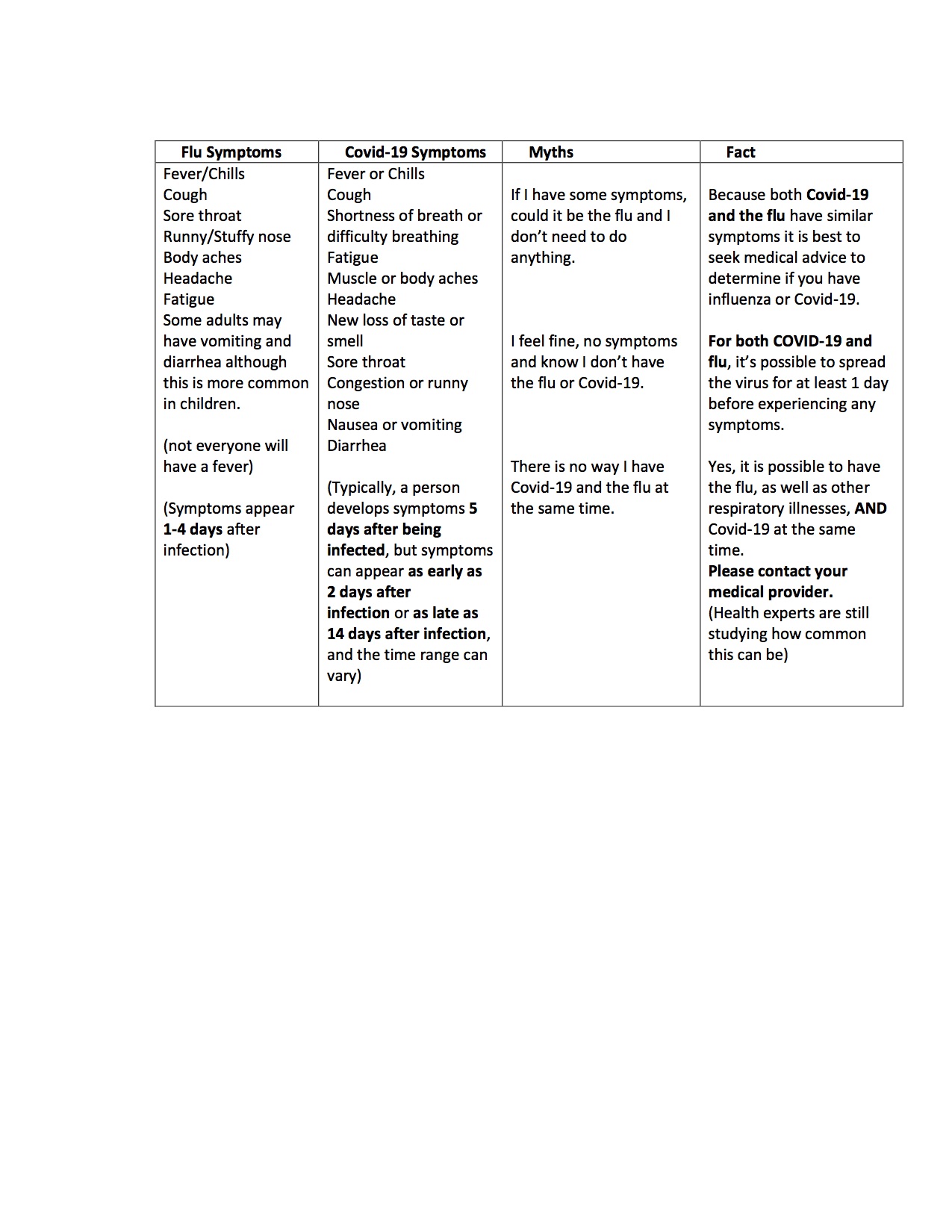
The Flu and Covid-19: What You Should Know

By Rubicon Author October 19, 2020

Are you worried about Flu Season & Covid-19?

With the ongoing circulation of the coronavirus and the start of flu season, an influenza vaccination of individuals 6 months and older can not only reduce the prevalence of illnesses cause by the flu, it can also cut down on confusing symptoms that might be confused for the those of the coronavirus. 

The CDC recommends that everyone 6 months of age and older should get an annual vaccination, with rare exception.

A vaccination is particularly important for people who are at high risk of developing serious flu complications.

The CDC especially recommends the Flu Vaccination for the following groups:

  • Individuals ages 6 months-18 years;
  • Individuals age 50 years and older;
  • Adults & Children who have chronic pulmonary illness including asthma, cardiovascular illness, renal, hepatic, neurological, hematologic, or metabolic disorders (diabetes), HIV or any immunosuppression illness;
  • Women who are or will be pregnant during the influenza season;
  • Residents of nursing homes and long-term care facilities;
  • Native Americans/Alaska Natives;
  • Individuals with a body mass index of 40 and above;
  • Persons who live with or care for persons at higher risk for influenza.

Where to get a flu shot:

  • Free flu shot clinics
  • Kaiser members can call the Kaiser Flu Hotline: 1-800-573-5811
  • Contra Costa Health Plan members have access to their Walk-in Flu Clinics beginning October, or call 1-800-495-8885 for a Treatment Nurse appointment.
  • Alameda Alliance members call 1-888-604-4636

If you are uninsured or your insurance does not cover immunizations call 1-510-267-3230

For more info:

https://www.cdc.gov/flu/index.htm
https://cchealth.org/flu/vaccination.php
http://www.acphd.org/media/505057/flu-immunization-clinics-20200913-eng.pdf
https://mydoctor.kaiserpermanente.org/ncal/cold-and-flu/prevention#/feelbetter


The Flu and Covid-19: Myths and Facts: 


Read More

Go Vote! A November 2020 Voting Primer

By Rubicon Author October 8, 2020

Are you ready to vote in November? Welcome to Rubicon's one-stop shop for everything Election 2020. Learn your rights. Find out how to register. Learn where Rubicon stands on local issues. We've got you covered! 

Voter Eligibility and Registration Information

Important Dates:

  • October 5, 2020: Counties will begin mailing vote-by-mail ballots
  • October 19, 2020: Last day to register to vote
  • November 3, 2020: Election Day, Polls are open 7:00 a.m. - 8:00 p.m.

Am I Allowed to Vote?

In California, you are able to vote if you are:

  • 18 years or older on Election Day
  •  A U.S. Citizen
  • A resident of California
  • You are not currently in prison or currently on parole for a felony conviction. That means that formerly incarcerated individuals, individuals in jail, and individuals on probation CAN vote.

You have a right to vote if you are a registered voter, even if your name is not on a voter list. You will vote using a provisional ballot, and your vote will be counted if election officials determine you are eligible to vote.

More information for individuals with a criminal history:

How Do I Register to Vote? 

Step 1: Check to see if you are already registered to vote online here

You will need to enter some personal information:

  • Name
  • Date of birth
  • Drivers license
  • Last 4 digits of social security number

Step 2: If you are not already registered, you can register online here

You will need to enter some personal information:

  • Name
  • Date of birth
  • Drivers license
  • Last 4 digits of your social security number

If you do not include this information when you register, you will need to send a photocopy of some personal identification to your county elections official before the election. Examples include:

  • Passport
  • Official California identification card
  • Student identification card
  • Recent utility bill
  • County Voter Information Guide you received from your county elections office
  • Another document sent to you by a government agency

As a part of registering to vote, you are given the option to become a “permanent vote-by-mail voter,” which means you will automatically receive a ballot in the mail before each election.

If you need to request a paper voter registration application you can obtain a paper voter registration application at your county elections office, library, DMV, or USPS. You must complete and either post-mark or hand-deliver it to your county elections office at least 15 days before the election (October 19th). To request a voter application be mailed to you, please call (800) 345-8683.

More information on how to fill out a California Voter Registration Card here

Step 3: Track your vote-by-mail ballot at Where’s My Ballot here

A voter who has signed up will receive notices via email, text, or voice message from the county elections official regarding the status of the voter’s vote-by-mail ballot, including:

  • When the ballot has been delivered
  • The date that the voter’s ballot is expected to be delivered to the voter
  • If the voter’s ballot is returned as undeliverable to the county elections official by the USPS
  • When the voter’s completed ballot has been received by the county
  • Whether the voter’s completed ballot has been accepted or a reason why the ballot could not be accepted and instructions of steps the voter can take in order to have the ballot accepted
  • The deadline for the voter to return his or her ballot if the county has not received a voter’s completed ballot by specified dates as determined by the county elections official

To see where Rubicon stands on some of the important issues affecting California this November, including state and local propostions, see our Voter Guide here

Read More