Paying it Forward: Bobby’s Story

By Rubicon Admin November 21, 2019

Bobby has been involved with Rubicon since 2017 as a participant, mentor, and active member of the Participant Advisory Board. Bobby has served on interview panels and strategic plan work groups to provide feedback to the organization and seeks any and all opportunities to give back.

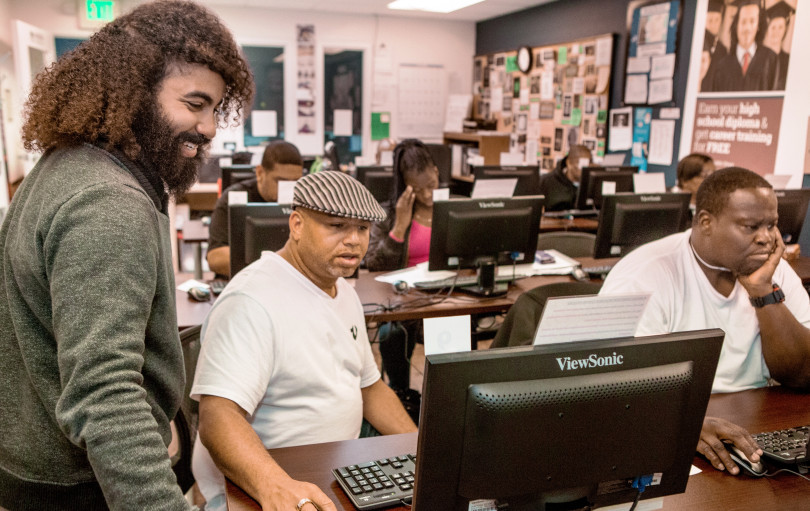
Bobby recently visited Rubicon to speak to Job Club members about ACE Hardware, where he has been employed for the past two years. ACE is a background-friendly employer – it assesses job candidates based on their qualifications without regard to past criminal justice involvement -- and it is recruiting for multiple positions in the East Bay. Bobby talked about his role at ACE and was generous in offering tips to participants who were interested in applying -- everything from how to communicate with the hiring manager to the typical clientele at local stores. He was relatable, honest, supportive, encouraging, and ready to advocate for anyone from Rubicon.

Following a line of participants who asked Bobby to review their resumes and put in a good word for their applications, Bobby predicted that at least 1-2 would have a job that same day! He said he could see it on their faces that they were ready for the opportunity: “They’re eager, they ask questions, and they’re ready to take it to the next level.”

When asked what brought him to Job Club, Bobby said “paying it forward makes me happy. This program helped me, and I am at a place now where I have the opportunity to be of help. It all starts with one person, and I want to be that person for somebody.”

Growing up on a horse ranch in Oakley, California, Bobby learned a lot of valuable skills; he taught himself how to be handy, and he also learned to communicate well with people from backgrounds different than his own.

Before coming to Rubicon Programs, Bobby knew how to get a job, and he had done it before. He had the skills to be successful on his own; he was resourceful, insightful, and eager to share his experiences. What was missing at the time he initially came to Rubicon, according to Bobby, was confidence.

Coming out of incarceration, Bobby was unsure of himself and his future prospects. His involvement with the system left him feeling like there was no room for mistakes, and that everyone was expecting perfection. Bobby was looking for someone to relate to, someone who could help build his confidence and see what was possible for his future.

“I’m a people-person, I get along well with people, but Rubicon staff were different. They are everyday people…they made the workshops interesting and fun, and they kept it real -- 100% honest, and I respect that.”

Bobby began working with his Impact Coach, Sam, during his participation in Rubicon’s foundations workshops. The Impact Coach serves as the primary relationship for each participant, providing support and guidance through the duration of their work with Rubicon. At Rubicon, we believe that the relationship is the intervention, and the intervention is the relationship. As Bobby put it, “when someone believes in you, you believe in yourself.”

Bobby quickly emerged as a leader in his cohort. Shortly after completing the two-week intensive workshops, Bobby worked with his Employment Coach to search for a job and secured a position at ACE Hardware. Within his first year of employment, Bobby was promoted to a supervisory position.

When asked what he likes most about his job at ACE, Bobby responded, “I like the customers. I have a gift that people radiate to me; they really like talking to me.”

Bobby described one particular customer, an older woman, who came into the store right after Bobby left to take his lunch break. She insisted on only dealing with Bobby and waited the full hour until he returned, eager for him to help her.

Another customer who visited the store asked for Bobby by name. She explained that her sister recently got some help with a landscaping project. “Her lawn looks gorgeous!” she exclaimed. “She told me I had to come and see you.”

“It gives me a really good feeling to help someone and to see them smile,” said Bobby.

Bobby’s own experience and successes enable him to see the same great potential in the participants walking through Rubicon’s doors today. As Bobby described one participant whom he already connected to a job opportunity, he said “I take chances on people. In prison, you work hard and you don’t show up late. Once you have a real job, you already know how to get work done and the value of getting paid for it.”

As a leader on Rubicon’s Participant Advisory Board (PAB), Bobby assists with developing the agenda for monthly meetings, facilitating meetings, recruiting his peers to the PAB, and setting a positive example for all new members. Rubicon’s Connections Manager said, “Bobby has set his sights on reaching back to assist participants with developing skill sets that they had not focused on developing before.”

When Rubicon set out to develop and refine our Theory of Change, Bobby was invited to the table to contribute his ideas. Bobby shared his experiences and the positive impact that Rubicon’s model had on his life; he vocalized the needs of his peers and ways that the program model could further assist program participants on their road to success.

Reflecting on his future, Bobby shared that “having the right supports and someone to push you makes the difference.” Rubicon was that difference for Bobby, and now he is the difference for so many others.

As he got up to leave, Bobby paused and then reached into his pocket and pulled out a smooth, clear stone. “They gave me this stone at my Rubicon Stepping Stones Ceremony. I carry it with me every day, everywhere I go – it’s a reminder to take everything one step at a time.”

Read More

Making the Most of Change: Marthe’s Story

By Rubicon Admin December 27, 2018

Breaking poverty takes multiple strategies – and an affinity for change. There is no one-size-fits-all solution.

That’s why Rubicon Programs has developed multiple approaches tailored to meet the needs of individuals, and of different East Bay communities.

In Oakland and Hayward, Rubicon offers job placement and career development services to those working to rise out of unemployment. Marthe is one of these individuals, and she’s striving to break poverty, make change and accomplish the goals she’s set for her life in a new land.

“I escaped violence in my home country of Cameroon,” Marthe says. “My family – my daughter, my grandson, and my sisters, nephews and nieces – brought me to Hayward.”

In Cameroon, Marthe was a nurse in a large hospital. She helped people. She made them well again.

“I like to take care of people,” she says. “I’ve been doing that my whole life. It makes me happy.”

Unfortunately, her back can no longer take the long hours on her feet, picking up patients and moving heavy equipment. She has come to the realization that she’s going to have to make a career change to start earning a living in her new home.

“Before Rubicon, I had been going to adult school to learn English, all while taking care of my grandson, she says. “Then, when I got here, I met with Ms. Celeste. She listened to me and connected me with my Career Advisor, Amabella.”

Marthe and Amabella soon went over her work history and strengths, and talked over her career options. Marthe wanted to continue helping people, but she had to find a workplace that could accommodate her back issues.

Together, they arrived at a solution: a new(ish) career in phlebotomy. As a phlebotomist, she could do similar work – drawing blood from patients – while staying off of her feet.

To become a phlebotomist though, she would need to learn the latest office technology, take phlebotomy classes and get certified.

“I don’t really have much experience with computers,” she adds. “So, I’ve been taking basic computer classes here every Thursday. I’m learning Outlook and Excel.”

All of these courses and certifications take time. In the meantime, she would still need to pay her bills.

Marthe and the Rubicon team decided to first focus on getting her into a more accessible job for the near future, as a caregiver, taking care of children with disabilities. Recently, she has begun applying for positions in this new field.

Amabella has helped her prepare her resume, and has taught her interview skills, as well as tips on how to ace a phone interview. They’ve done mock interviews and she has received one-one-one coaching sessions that have strengthened her soft skills and improved her confidence.

“Amabella makes me feel comfortable,” she says. “I can tell her anything. I can share anything.”

In other words, she meets her where she is.

“Since my first day, I have worried about my accent. But she assured me that it isn’t an issue. She’s an immigrant, too. She knows what I’m going through.”

Marthe is beyond grateful for all of this support.

“I feel more confident. I’m getting over the anxiety of it all.”

Amabella always says, “You’re going to win in that interview!” And it is that enthusiasm that keeps Marthe going as she tackles this sometimes daunting process.

“I’ve never taken care of children with disabilities,” she says. “But I’m eager to learn. And I’m optimistic for the future.”

Help Rubicon continue to break poverty by donating or explore the full participant journey here.

Read More

The Reentry Success Center: Breaking Barriers to Break Poverty

By Rubicon Admin December 18, 2018

One in three Americans have interacted with the criminal justice system at some point in their lives. This one touchpoint can be life-changing, introducing dozens of new barriers that can follow an individual throughout their life, making it a challenge to get a job, rent a home or raise a child.

These barriers not only hold them back, but their children and the community, perpetuating intergenerational poverty. That’s where the Reentry Success Center (RSC) – a collaboration between Rubicon Programs and community partners – comes in.
 
The RSC is there for those reentering society after incarceration, as well as their families during – and after – their loved one is in prison or jail. While at the Center, staff, volunteers, community members and fellow returning residents work together to help people transition into a good job, put a deposit on an apartment, and reconnect with their friends and family.

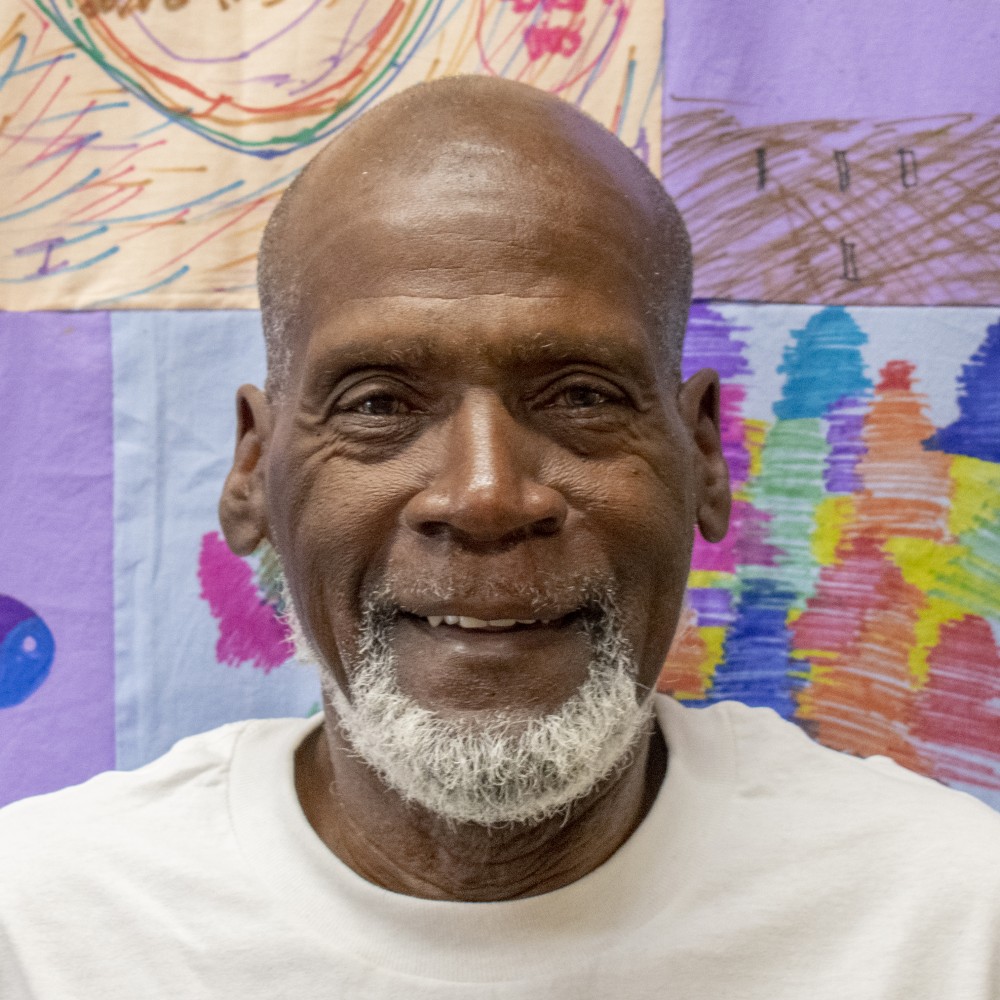
“I was released from jail three weeks ago after a ten month sentence at West County,” says Michelle, a new member of the Reentry Success Center. “The Center was talked about a lot while there. I heard so many success stories, so I came here two days after my release.”

Michelle says she knew she needed a support network to get back on her feet. The Center sounded like the perfect fit.

“In jail, we don’t have to talk to each other. You are isolated. You push people away. But you have to work together to move forward in the community,” she says. “We come out uninformed about our rights. We don’t have the direction or structure to do what we need to yet.”

At the Center, she found the structure she was looking for; she soon signed-up for classes that have helped her move forward, including a Life Skills course, a Cognitive Skills class, and Trauma and Grief Therapy sessions. These opportunities have helped her acclimate to the workforce and manage some of the challenges in her personal life.
“My 9-year-old son tells me that I need to communicate better, so for now, I’m focusing on that. I’m also working to collect some of the skills that I need to thrive in my career.”

Another priority is learning how to navigate the job search process with a criminal record. “It’s hard to find a great job or get a career started,” she says. “There are many obstacles. Some employers look at me like a criminal. They put me in a box.”

Luckily, changes to California’s employment laws have made it a bit easier for her to have a fair chance. A.B. 1008, “Ban the Box” legislation signed in 2017 by Governor Jerry Brown, became law after a coalition of formerly incarcerated advocates came together to push for change.

Now, employers are no longer allowed to ask about an applicant’s criminal background until a conditional offer of employment is made, allowing people to show who they really are without preconceived notions and prejudices clouding an employer’s judgement.

“This allows people to sell themselves,” says Lawrence, the Reentry Center’s Volunteer Mentor Coordinator. The law has already helped some employers see the light.  “Now, there are many so-called ‘felon-friendly’ employers out there.”

Getting a job can still be a challenge, but those challenges are often overcome with hard work and dedication. “People have no job history and no references, so we try to take the skills they’ve learned on the street and apply them to today’s job market.”
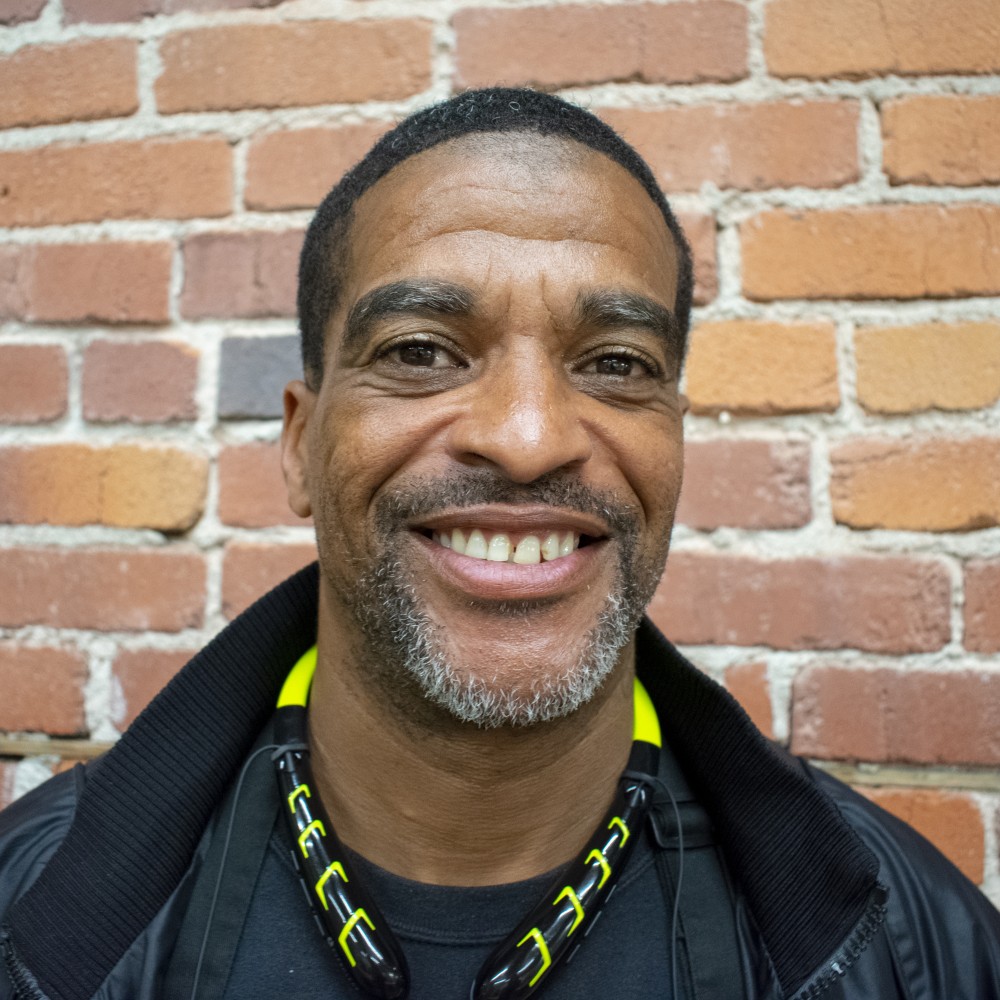
Lawrence recruits and manages volunteers and mentors who help Center members build new careers – and lives. He’s seen many of his friends, family and colleagues go in and out of the system, and knows from experience what they have to do to succeed.

“It’s been documented that what happens in the first 72 hours after release has the greatest impact on whether an individual recidivates,” he says. “That timeframe is critical: You either go to a shelter, go home to your family, or you fall back in with the ‘homies’ who got you into jail in the first place.”

That’s why housing and community support go hand-in-hand during the reentry process.

“We’re fortunate to have a relationship with the probation department. They often bring newly-released individuals to the Center so they can get the resources they need and avoid their old ways.”

Richmond residents also benefit from a fair-chance policy that makes it more difficult for landlords to discriminate against potential tenants with a criminal record.  This increases access to housing, which in turn makes it easier to get and keep a job.

“When you first come home, you often stay at a shelter and get a temp job. But soon enough, you find out your shelter has residency cap – 30 days. How can potential employers contact you if you’re bouncing back-and-forth without a phone or mailing address?”

Having a stable home makes a world of difference. No one knows this better than Tommy, a participant who has completed the Center’s 8-week Alpha Program, a comprehensive curriculum that serves people who are at the highest risk of recidivating. “I’ve been living in shelters so that I can save my wages for a deposit, and now I’m in the process of looking for a permanent place to stay, a studio in Richmond,” he says.

Tommy says that the Alpha Program changed his life, helping make jobs and housing accessible. “I learned to reenter home life and work life. Then, I got a full-time job – just one month after Alpha.”

“It gave me a second chance at a first-class life,” he says.

After nearly a decade in incarceration, Tommy knew there had to be a better way. “Being told what to do, when to eat…letting someone take control of your life…it’s no way to live. I robbed myself of so many opportunities to advance and be happy. But now, I feel different. I look different. I talk different. I’m out of the unemployment line, and that feels great.”

“Everyone has struggles, but when you surround yourself with positivity, you can overcome those struggles,” he says. “I’m so grateful for the Center’s positive environment, all of these positive people, and all of this new information that has brought so many good things into my life.”
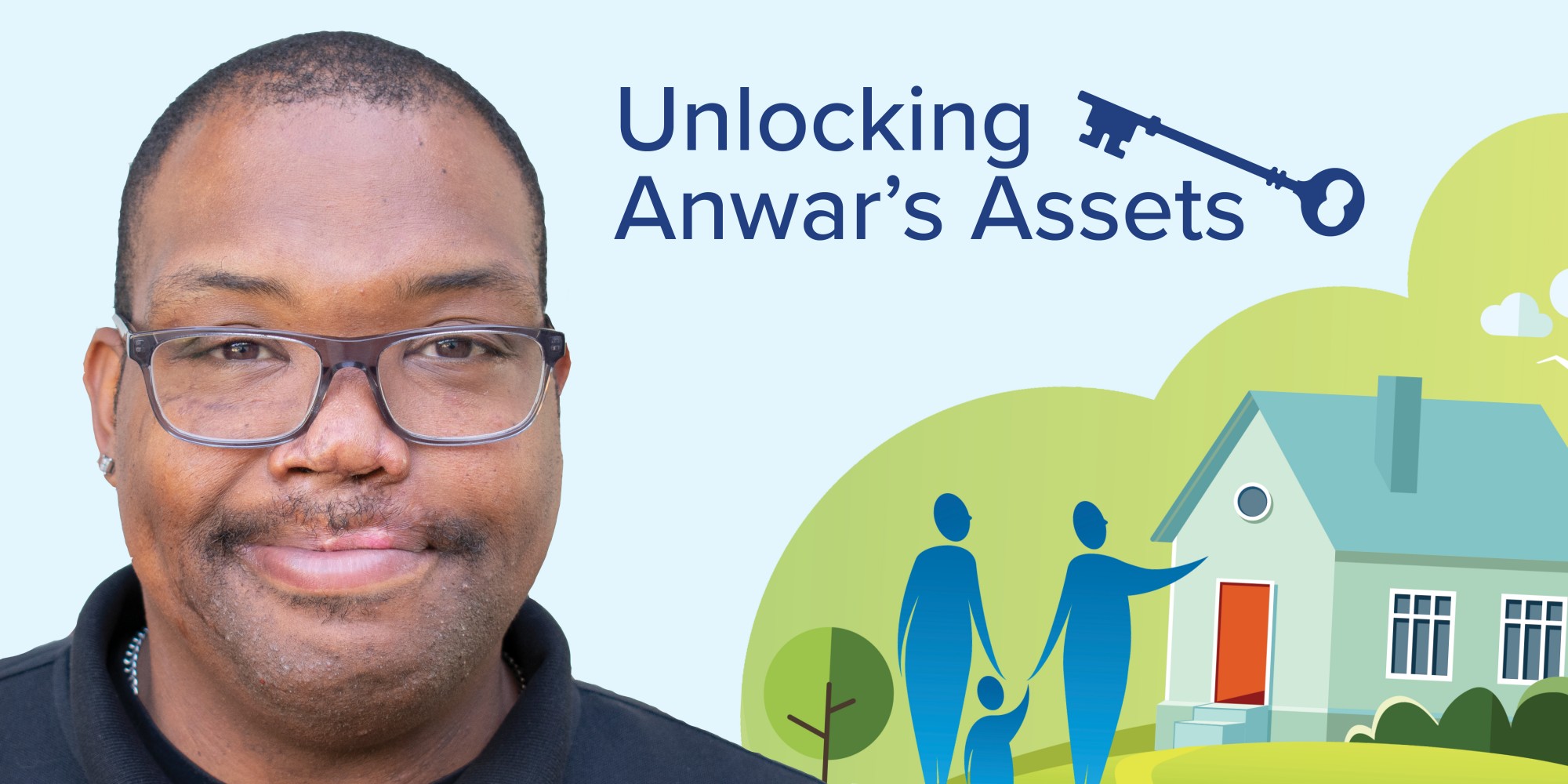
Tommy ties most of his success to the people he has kept around him. “I always had emotional support from my family,” he says. “But the Center had my back. They told me I don’t have to go into this alone, and they stayed by my side.”

 “When you get out of jail, it can feel like you are a newborn baby. You’re naked. You have nothing. But you don’t have to see it that way. It’s only temporary. And you don’t have to fall back on your old ways, or with old, negative people.” You have to make a conscious choice.

“I’m an Eagle. And Eagles can fly. There’s a reason Eagles don’t hang out with Turkeys. Turkeys can’t fly. You have to keep people around you that give you strength.”

In other words, he draws energy – and strength – from the Center.

“I’m going to keep coming here until it closes down. And I hope that day never comes.”

Help Rubicon break poverty by donating or explore the full participant journey here.

Read More

Unlocking Anwar’s Assets, One Month at a Time

By Rubicon Admin December 5, 2018

I was at the end of my rope,” Anwar says with a pensive look in his eyes. “I was looking for jobs. I was even doing well in the interview process. But at the last stage, I just couldn’t get past the background check.”
This recurring roadblock posed a serious challenge to his well-being after an already bumpy couple of years. A workplace accident had triggered a depression that lingered.

“I couldn’t leave the house some days,” he says. “It started to affect my relationships.”

Feelings of worthlessness crept in. He knew he needed to shake that off and try something new. That’s when he made the decision to visit Rubicon Programs.

“I’m willing to do the hard work. I just need a little direction, a little boost. Rubicon assured me that things would come together.”

This gave him the confidence he needed to keep going.

“As soon as I left my first meeting, my Impact Coach, Eric, was texting me to remind me that he’s here to help me out whenever I need it. From there, everything just took off!”

Anwar spent the next few weeks in workshops covering core pathways to change: developing income, building assets, fostering wellness and forging connections. He soon got the boost he needed – advice on how to navigate the job search with a criminal record – and eventually secured a good job with growth potential in the hospitality industry.

“I’m now making the most money I have ever made in my life,” he says. This economic stability finally allowed him to focus on building financial assets and setting the groundwork for a better future.

​To actualize that vision, Anwar met with his Financial Coach, Ken. Together, they checked his credit report.

“I saw everything on my credit report that was bringing down my credit score. We identified things that were going to collections and set-up affordable monthly payments. Then, I applied for a credit card and started using it responsibly. My score then went from very bad to very good!”

Next, with a clean bill of fiscal health in hand, Anwar tackled his transportation challenges.

“My girlfriend and I shared a car that was just one breakdown away from leaving us without any way to get to work.”

What’s worse, Anwar had a backlog of unpaid tickets that snowballed when he couldn’t afford to pay his car registration on time. He had lost his license.

“Rubicon’s lawyers helped me go to court to wipe out all of my tickets – poof, gone! I got my driver’s license back.”

With his license in hand and stellar credit in his back pocket, Anwar worked side-by-side with Ken and Eric to secure a low interest, subsidized car loan. He was approved, and now has a brand new car that provides him with a reliable way to get to work and make a living.

Anwar’s life changed more than he could have imagined in just a few months’ time. But he was still looking toward the future. Using the skills he learned in Rubicon’s Money Management workshop, he created a savings plan and opened a savings account. Ever since, he has been putting away leftover funds at the end of the month.

“I want to buy a home someday. I’m spending a lot on rent. I’d rather pay that money back to myself than throw it away,” he says. “It motivates me to be responsible with my money each month, and save up the 20 percent needed for a down payment. It’s a pride thing – I know it will feel good to own something and I’m willing to work to get there.”

He’s also taking an elective workshop to learn more about finances. “Ken has gotten me interested in saving for retirement. I’d like to learn more about that – but first, I have to save up for a house!”
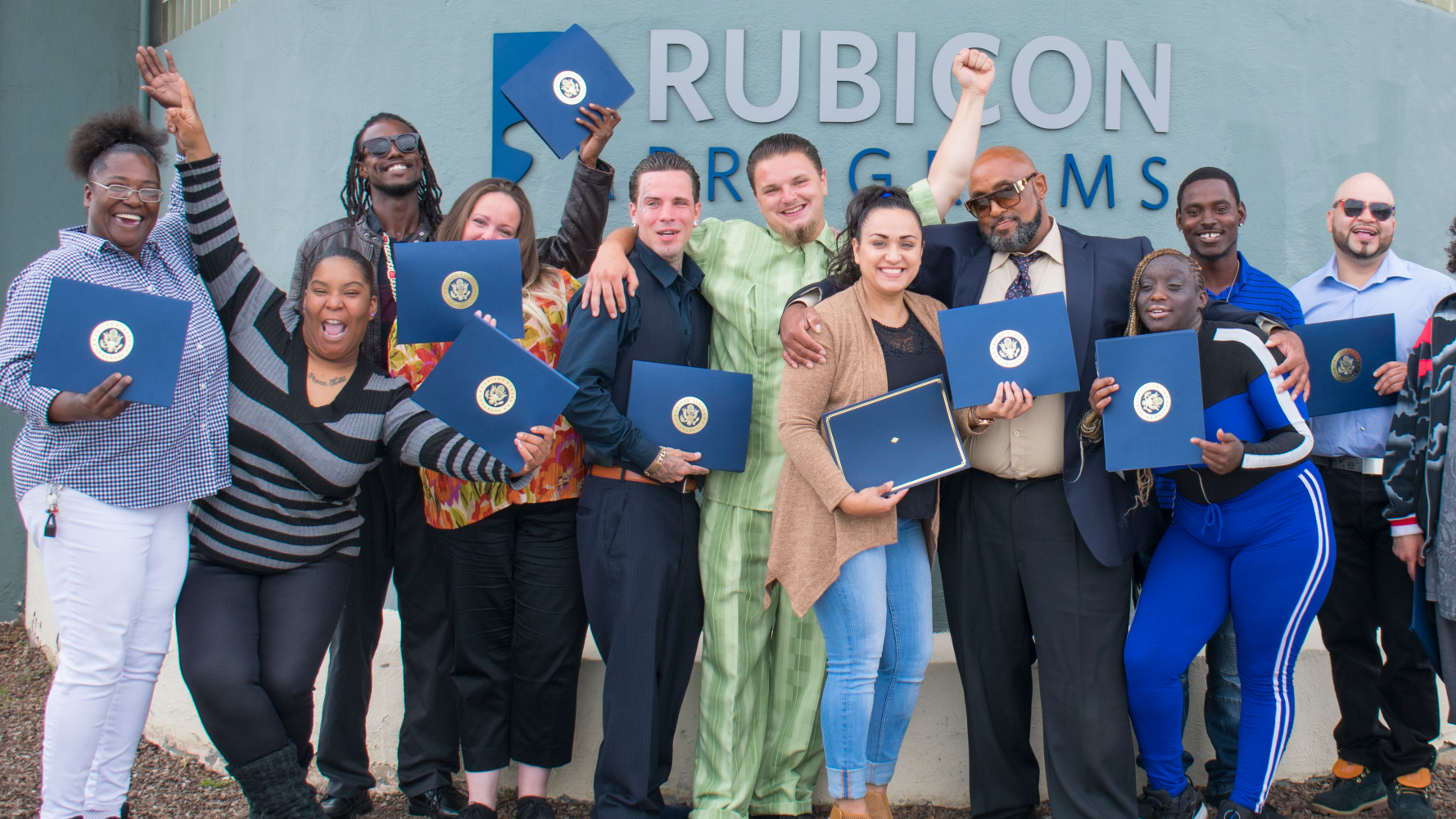
Anwar is optimistic he’s going to get there. He recently was promoted to be a certified trainer at his workplace, and hopes to continue to rise up the ranks. He’s also taking advantage of every resource Rubicon offers, earning his Hazmat, Occupational Safety and fork lift certifications and licenses.

“I can’t stress enough how grateful I am for Rubicon,” he says. “When I hit rock bottom, I didn’t need a handout. I needed a boost. Rubicon gave me exactly what I need to step out of my comfort zone and change my life.”

What else is next for Anwar?

“Once I buy a house, I’m going to start fostering elderly and disabled animals. I love animals. Absolutely love them.”

Help Rubicon break poverty by donating or explore the full participant journey here.

Read More

‘Cooking Matters’ in the Food Desert

By Rubicon Admin June 19, 2018

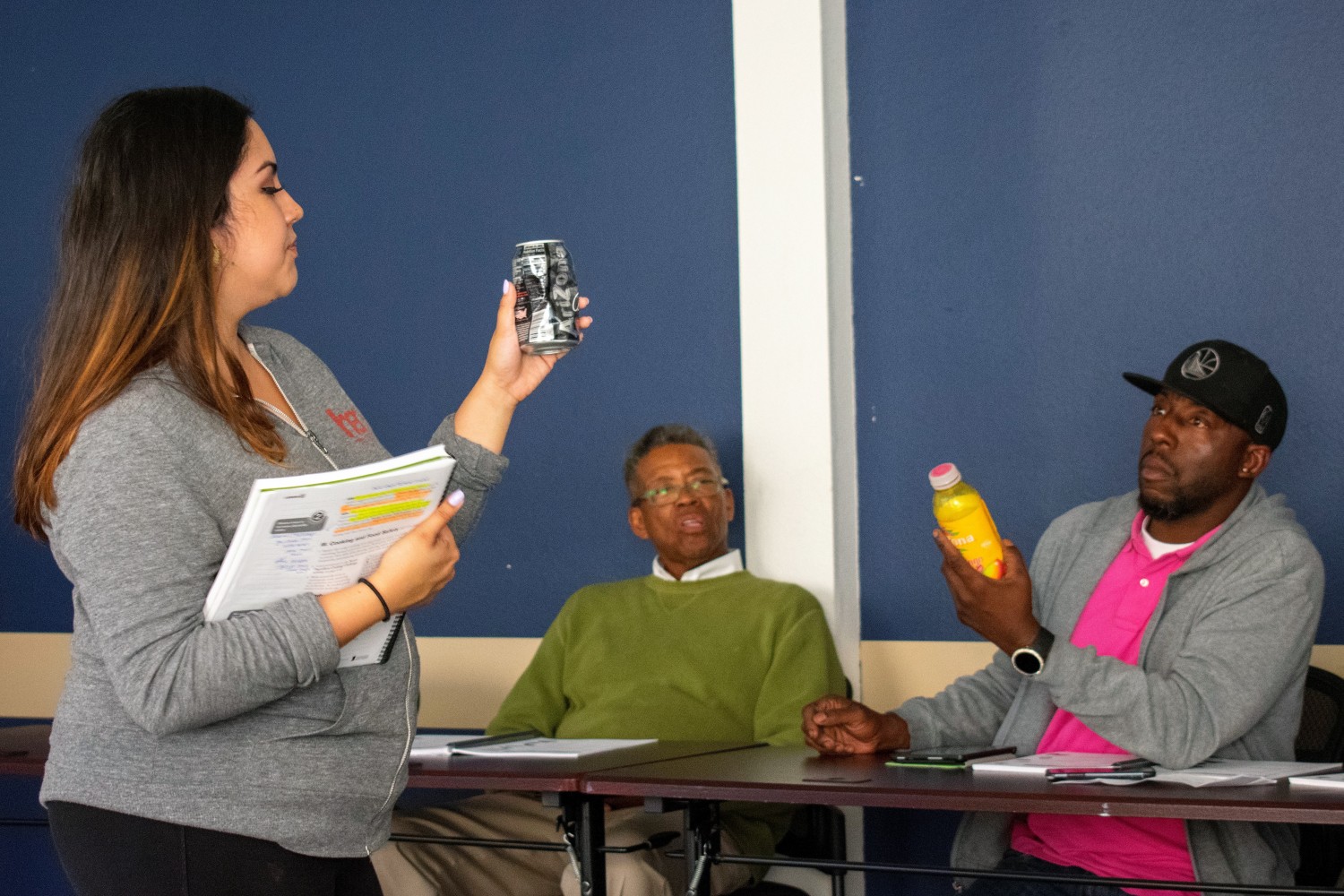
Exzavier looks intently at a tall can of flavored Iced Tea, examining the nutrition facts label and other minute details. He puts it back down, opting not to open it.
“Heck no. That’s no good,” he declares. “75 grams of sugar? No way – I don’t want diabetes.” The rest of the class nods in agreement.

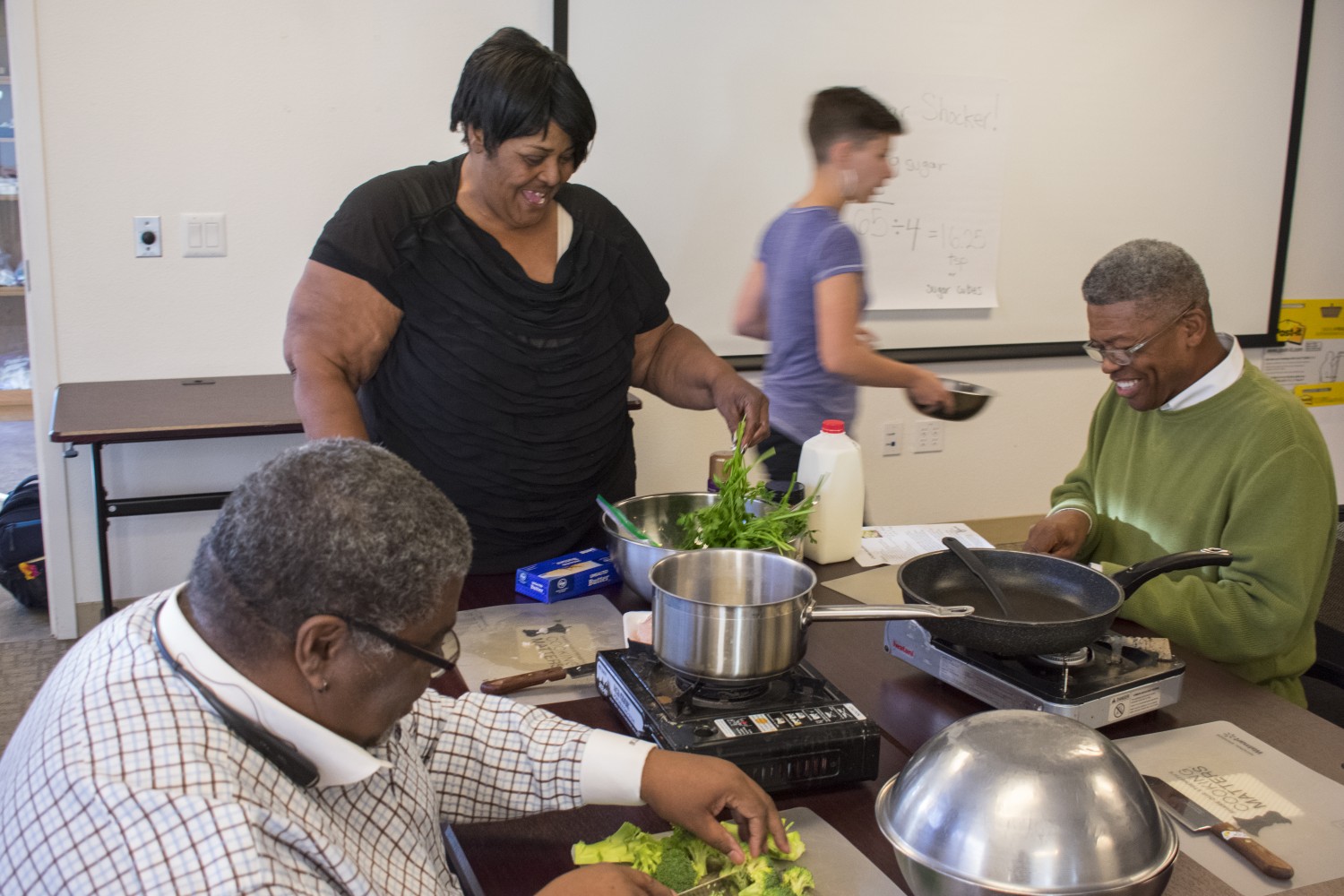
In lieu, they all proceed to make their own “spa waters” and “Fauxitos” with fresh mint, lime and sparkling spring water – all zero calories and half the price.

Soon after, one of the other course participants asks, “Wait…there’s no sugar in this? Are you sure?” The instructor, Alexis Gutierrez, responds, “I told you it was good!”

Just six weeks before, Exzavier and his fellow classmates hadn’t heard of spa water, let alone Fauxitos.

Many of them reported that soda is cheap and easy to access at the local liquor store, as is fast food. They also mentioned that food expenses are rising, exhausting their budgets. What’s worse, they were often feeling hungry and low-energy after eating a typical meal.

In response, Rubicon Programs, an East Bay-based nonprofit that works to end poverty, enrolled them in their new “Cooking Matters” class, an extensive course offered in conjunction with 18 Reasons, another organization that aims to help low-income communities make quick, healthy, affordable, delicious meals every day.

Kimi Barnes, Rubicon’s Health Resource Manager, made the initial connection.
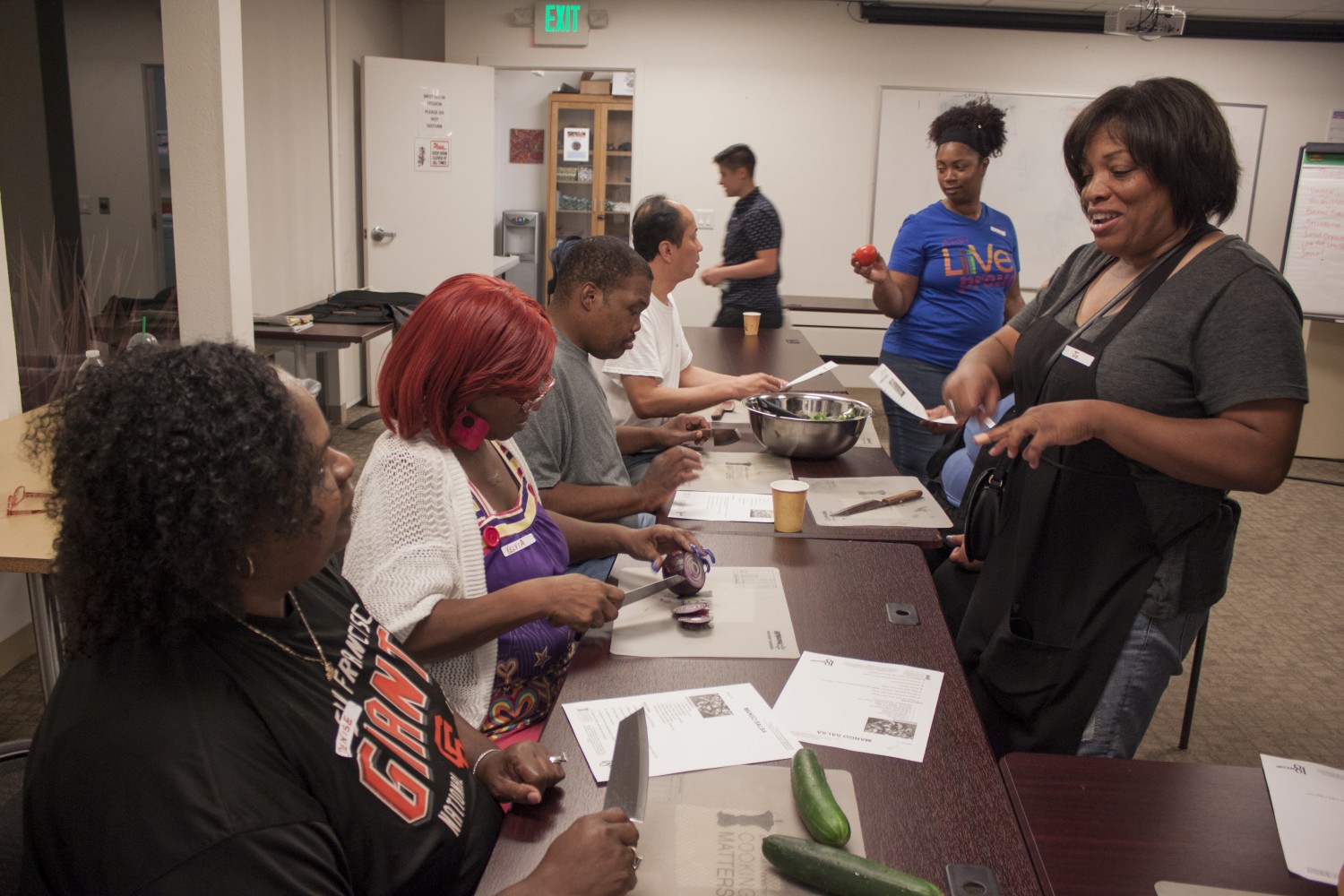
“Our participants were tired of hearing ‘save money, set a budget,’ without concrete information on how to lower the cost of their largest expenditure on top of rent: food,” she says. “They also made it clear that their number one health goal has always been to eat better, so we thought, ‘why not create a cooking class that shows them how to accomplish all these goals?’”

Kimi soon bumped into the folks at 18 Reasons, who already had an entire curriculum and team ready to roll. She and their leadership were both on the same page, so the two organizations agreed to partner-up.

Clara Obstfeld, a coordinator of the course, began working with Kimi to offer the class to Rubicon participants.

“There are so many challenges for people in poverty trying to navigate the food system,” Clara says. “Misconceptions around labels, marketing terms, and what truly is healthy are so common, and time is a limited resource for many of them, making it hard to make informed choices – especially on a tight budget.”

The Cooking Matters course tackles all of these problems in two distinct ways: by teaching practical cooking and shopping skills, and tying those skills to all the information a consumer needs to cook a healthy, low-cost meal.

To maximize the course’s impact, they customize each course with direction from the class and the community – all the recipes are rooted in the students’ interests and cultural preferences. In fact, many of the educators and cooking instructors are from the neighborhood, and know what works.

“In a typical class, we spend the first half on a nutrition lesson – identifying whole grains and counting calories, for example,” Clara says. “Then we have a Chef’s lesson that puts those facts into action.” Participants learn to cook using toaster ovens and portable stoves, as well as develop sous-chef skills like proper knife technique and measurement skills.
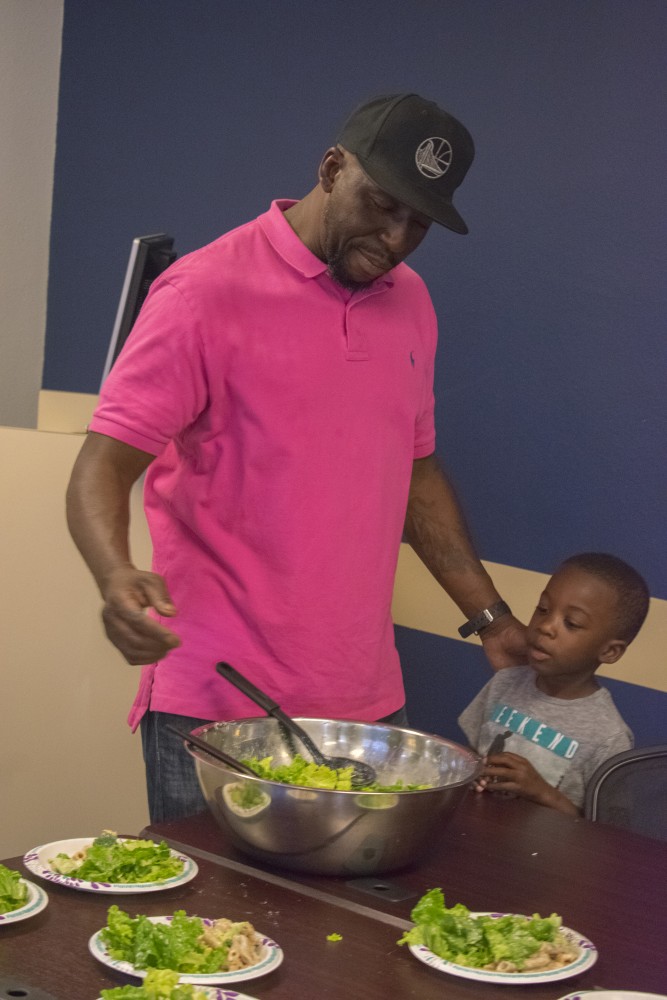
The instructors also provide special assignments to the participants, including a “$10 Challenge” in which participants are asked to buy all the ingredients necessary for a balanced meal for the whole family, all while spending no more than $10. Some contestants prepare recipes from the class, like Fresh Veggie Quesadillas or Low-Fat Chicken Alfredo. Others invent creative new combinations with their newfound culinary instincts.

One participant, Luc, is a fan of seafood and was able to beat the challenge five-fold, making 5 delicious meals at $2 each: sautéed kale, honey-garlic roasted zucchini and smoked sardines – all made in a toaster oven or on a portable burner. He soon fell down the proverbial rabbit-hole, discovering his passion for cooking. After graduation, he continued his culinary education by transferring to The Bread Project, where he learned how to bake in a commercial setting, ultimately launching a new career in baking.

Meanwhile, other participants have improved their home lives in many ways thanks to the class.

Exzavier and his wife Doris, another participant, were both enrolled in the most recent workshop series offered by Rubicon Programs. Both are working with Rubicon to strengthen their careers, build a strong economic foundation, and improve their family’s health and wellness.

“We did the class together as a family – Kimi took care of my five-year-old son Sirod while we focused on cooking – and it was a great experience,” he says. “We reconnected and discovered a new activity for us to bond over. Now, each night, everyone is excited to eat together, even my older kids. We share more at the dinner table. We talk with each other more. We congregate more.”
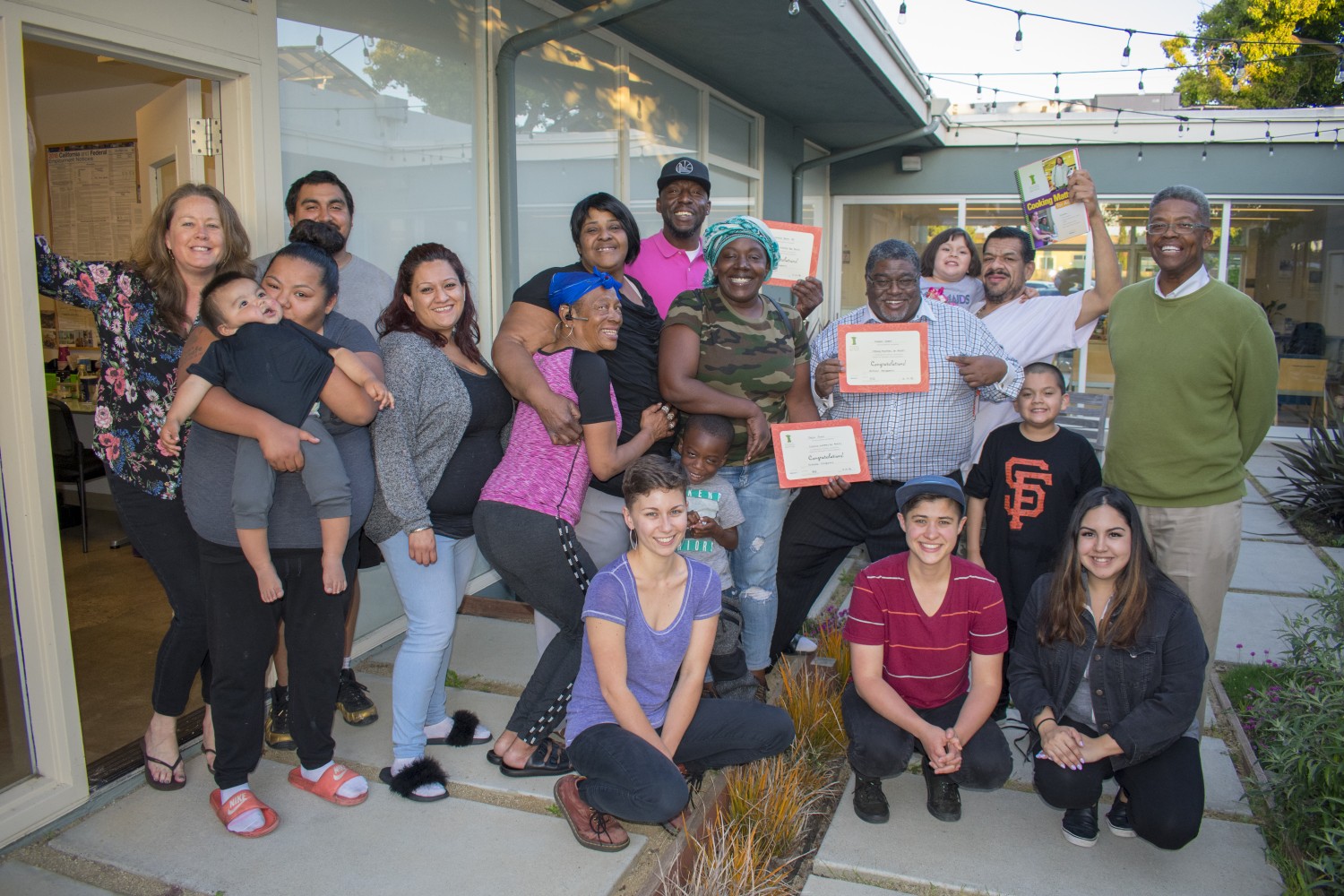
“We also are able to do more with less. We buy healthier and always bargain shop.”

Kimi is proud of the work Rubicon and 18 Reasons has done with the course, but she also says that there is much more work to do changing the food system.

“It’s not all about education,” she says. “People aren’t stupid. The issue is access. The choices we all make are limited by the options we have. If the only options within walking distance of your home are a liquor store and a Drive-Thru, what choice do you really have?”

She says that more equitable urban planning, incentives for grocery stores to move into low-income neighborhoods, and increased access to community gardens, farmer’s markets and other avenues to fresh food will all hopefully move the needle.

But until then, she, Clara, and her team will continue to chip away at the problem one family at a time.

Luc ​kily, the strategy appears to be working.

​“This class changed my life,” Exzavier explains. “After our first meal, I actually felt full. I no longer felt tired. Honestly, I felt like I could go back to work at 8 o’clock at night. I have so much more energy now – when I wake up in the morning, I feel like I’m on fire!”

Your support can help Rubicon continue to bring courses like Cooking Matters to those in need.  Donate today.


Read More