Weighing Risk Through an Equity Lens

By Rubicon Author July 17, 2020

Rubicon is carefully monitoring COVID infection rates and weighing risk factors to determine when to return to work sites. It’s a complicated decision, to say the least, but Rubicon is taking this unprecedented moment in history as another opportunity to put our commitment to being an antiracist organization into action.

Along with guidelines and data from the Center for Disease Control (CDC), the World Health Organization, (WHO) and county health authorities, Rubicon has added to our return-to-site indicators a measure that adjusts for the heightened vulnerability of our participant community due to social determinants of health, including race, income level, and the related prevalence of working in essential services. 

This adjustment was a natural step for an organization that “takes an equity lens to everything we do,” said Adrienne Kimball, Rubicon’s Chief Talent Officer. Kimball was studying the county indicators for her work on the committee that is determining when to return to site when she noticed something alarming: “These indicators are not for the people we serve.” She was unsurprised by the oversight. “We know that Black, Brown, and poor people are not usually centered in general population indicators, stats, or recommendations.”

According to the CDC, “long-standing systemic health and social inequities have put some members of racial and ethnic minority groups at increased risk of getting COVID-19.” Nationwide African Americans are five times more likely, and Latinx Americans are four times more likely to contract the virus than are white Americans. In addition, low-income communities and communities of color are at a higher risk of severe illness if infected.

Kimball said she did not have to sell the rest of her committee members on the idea of the equity buffer. They quickly added .5% to the WHO-recommended return-to-site community infection thresholds. Kimi Barnes, Rubicon’s Special Projects Manager, said that in addition to the equity buffer, she is looking at micro-populations in her data analysis. For example, “it’s not what’s happening in Contra Costa County; it’s what’s happening in Richmond. We have a commitment to what’s happening in our communities.” 

Rubicon recently put a hold on tentative plan to bring some staff back to job sites the week of June 15 due to recent spikes in infection levels across Contra Costa and Alameda Counties, as well as the fact that both counties are now on the State’s Watch List of counties that are not meeting State threshold criteria for the specific indicators. No new date has been set. Rubicon will continue to prioritize participant and employee health in our decision making.   

Read More

Health, Healthcare, and Socioeconomic Barriers Related to COVID-19

By Rubicon Author May 13, 2020

Written by: Jasmine Penney

Historically, communities of color have always faced disparities when it comes to healthcare and the socioeconomic ladder. When enacted, the Affordable Care Act (ACA) was put in place to tackle some of those issues. Unfortunately, even with laws like the ACA in place, minority communities still continue to lack the necessary resources that are needed to combat (1) shorter lifespans, (2) common diseases, (3) and limited access to quality healthcare (due to both availability and financial restrictions).

During COVID-19, we continue to see the effects of both the failed healthcare system and economic system for communities of color. According to an aritcle from the Kaiser Family Foundation, in states such as Louisiana and Illinois, blacks make up between 32%-39% of the total population, yet are 56%-70% of the confirmed deaths due to COVID-19. Let that sink in: sounds pretty familiar to statistics related to the criminal justice system.

By watching the news and looking at data, it is clear that this outbreak has presented financial burdens on many families all around the country, and the world. However, the amount of minority families facing challenges on multiple tiers continues to be disproportionate. The first reason is due to the socioeconomic barriers that continue to keep minorities at the bottom of the ladder, and how that has played a role during the COVID-19 pandemic. Something else we have to take into consideration is the fact that the uninsured have a hard time accessing care or testing: people of color make up a large portion of the uninsured population. Lastly, we also have to look at the effects of COVID-19 on individuals with preexisting health conditions, and how minorities are the main carriers of a lot of common diseases such as heart disease, high blood pressure, etc.

Socioeconomic Barriers

While we can jump right into healthcare disparities since the virus is a health-related issue, it is just as important to acknowledge the disparities as it relates to socioeconomic status in minority communities. For people in the service industries, COVID-19 has forced their hours to be reduced, jobs eliminated, and in some cases, businesses closed. Additionally, for anyone who works in essential service industries such as grocery stores, they have a higher risk of contracting the virus due to the amount of people they come in contact with on a daily basis. Nearly 25% of Blacks and Hispanics are employed in service industries, compared to Whites at 16%. Over 25% of Blacks, Hispanics, and American Indian & Alaskan Natives already have an income that puts them below the poverty line, so losing a job or getting their hours reduced puts them at a greater risk of not being able to pay bills or feed their families (KFF); Less than 17% of Whites face this issue.

One of the ways we have been told to combat attracting COVID-19 is to eat more immune-boosting foods, and take immune-boosting vitamin supplements. However, if your income is being lessened, you may not be able to afford those vital items and instead settle for the whopping number of fast food restaurants that are so heavily saturated in your neighborhood. It makes us question exactly where minorities are supposed to catch a break.

Still related to socioeconomic hardships, we also have to consider living situations when it comes to vulnerability to COVID-19. In cities such as New York, the virus was so contagious due to crowded living environments. In other industrial areas, immune systems are already triggered due to the constant release of toxic fumes into the environment. In fact, some of those chemical plants are located right here in the Bay Area. People of color make up 56% of the population in urban cities, while Whites make up the majority in rural and suburban areas. Something else to note: 38%-41% of Blacks, Hispanics, and Asians live near multi-familiy units, where Whites only make up 23% of the folks who live in those kinds of environments. Like the cases in New York, living in close proximity to one another has caused a major influx in COVID-19 cases due to them not having space between one home to the next (NY Times). 

What About the Uninsured and Individuals with Pre-existing Health Conditions?

Not only do minority communities deal with socioeconomic barriers, but they are also less likely to have health insurance. This presents a problem with COVID-19 because they have a hard time getting testing. Although Congress passed legislation for free testing even if you don’t have health insurance, communities of color still face challenges because they are unaware where they should go to get tested since they don’t visit the doctor often. Additionally, they may be unaware that testing is free, and also wouldn’t be able to afford the necessary care if they were to test positive for coronavirus. 

Different minority groups have many underlying health issues that are common within their racial groups. We learned early on when the pandemic broke out that the folks most vulnerable to this infection would be those with preexisting conditions such as diabetes, heart disease, asthma, lung disease, and those with immune-compromised systems due to HIV/AIDS and cancer treatment. Blacks and American Indian & Alaskan Natives are as much as 2x more likely to  have conditions such as heart attacks, asthma, and diabetes compared to Whites. For the youth, Black and Hispanic children are more likely to become obese compared to their White counterparts (KFF). If these all fall in-line with the most susceptible to the virus, where does that leave our minority communities?

Call to Action

As community service members, it is our job to aid in the advancement of minorities when it comes to health, healthcare, and socioeconomic barriers. We see the effects every day and have first-hand experience of the negative impact it has on the individuals we serve. These stats are not just here to showcase information, but to paint a picture of the constant uphill battle that communities of color continue to face. Once the vision is painted, we are then challenged to do something to help the issue and to help take the burden off those in our own backyards. Let’s continue to band together, and fight the good fight. Our communities need us now more than ever!
 

Read More

Let’s Talk About Equitable Wellness

By Rubicon Author April 29, 2020

Written by: Jasmine Penney

I first want to start off by sending many good wishes to you and your families during this pandemic. Despite what is going on around us, let’s continue to look out for one another and build community.

April is National Minority Health Month. 

According to the National Institute on Minority Health and Health Disparities, this month-long event was created as an “effort to raise awareness about health disparities that continue to affect racial and ethnic minority populations.” Although we are currently in a nationwide shelter-in-place due to COVID-19, there are still ways to advance this month’s theme of “Active & Healthy” and promote emotional and mental wellness right inside of our homes. In fact, the Office of Minority Health and the US Department of Health and Human Services provides information on different ways we can all participate in the #ActiveandHealthy campaign, while still adhering to social-distancing guidelines.

What causes health inequities?

Health inequity stems from root causes that I have organized into three clusters:

  1. Structural inequities that organize the distribution of power and resources differentially across lines of race, gender, class, sexual orientation, gender expression, and other dimensions of individual and group identity.
  2. The unequal allocation of power and resources—including goods, services, and societal attention—which results in unequal social, economic, and environmental conditions also referred to as the determinants of health.
  3. Unconscious bias in healthcare settings. Many non-medical factors influence medical decisions, including: a patient’s style of dress; race, ethnicity, or gender; insurance status;  and the clinical setting (i.e. what is perceived as “bad neighborhood” vs. “good neighborhood”). Evidence shows that medical conclusions can be based just as much on who a person is as on the symptoms they present. This is especially dangerous in healthcare, where decisions can mean life or death.

Faced with these challenging external factors, if people of color could get the time off to see a medical professional, many may choose to ignore or hide symptoms in order to protect their physiological safety. They are then left with the long-term cumulative effects of structural inequity and not seeking help. 

So, if someone needs help, where are they supposed to go? Who are they supposed to trust? This is where Rubicon can be a positive social connection.

Wellness is a vital piece of Rubicon’s culture and program model. Rubicon works on interventions targeting root causes because we know those interventions hold the greatest promise for advancing health equity.  Additionally, we know that each of us is our own best advocate, and that together we can advance equitable community wellness.

I plan to continue sharing wellness information with our community, even beyond National Minority Health Month to help keep us all connected, healthy, and resilient during this pandemic, and beyond. I invite you to learn more about the #ActiveandHealthy campaign, so we can all be a part of the national change and learn about what we can do to battle inequities and support our health.

I look forward to hearing about how this information helps you in your day-to-day routine, and most importantly, learning and making strides as a community.  

To Your Wellness!


Next Up: Health, Healthcare, and Socioeconomic Barriers Related to COVID-19

Read More

The Reentry Success Center: Breaking Barriers to Break Poverty

By Rubicon Admin December 18, 2018

One in three Americans have interacted with the criminal justice system at some point in their lives. This one touchpoint can be life-changing, introducing dozens of new barriers that can follow an individual throughout their life, making it a challenge to get a job, rent a home or raise a child.

These barriers not only hold them back, but their children and the community, perpetuating intergenerational poverty. That’s where the Reentry Success Center (RSC) – a collaboration between Rubicon Programs and community partners – comes in.
 
The RSC is there for those reentering society after incarceration, as well as their families during – and after – their loved one is in prison or jail. While at the Center, staff, volunteers, community members and fellow returning residents work together to help people transition into a good job, put a deposit on an apartment, and reconnect with their friends and family.

“I was released from jail three weeks ago after a ten month sentence at West County,” says Michelle, a new member of the Reentry Success Center. “The Center was talked about a lot while there. I heard so many success stories, so I came here two days after my release.”

Michelle says she knew she needed a support network to get back on her feet. The Center sounded like the perfect fit.

“In jail, we don’t have to talk to each other. You are isolated. You push people away. But you have to work together to move forward in the community,” she says. “We come out uninformed about our rights. We don’t have the direction or structure to do what we need to yet.”

At the Center, she found the structure she was looking for; she soon signed-up for classes that have helped her move forward, including a Life Skills course, a Cognitive Skills class, and Trauma and Grief Therapy sessions. These opportunities have helped her acclimate to the workforce and manage some of the challenges in her personal life.
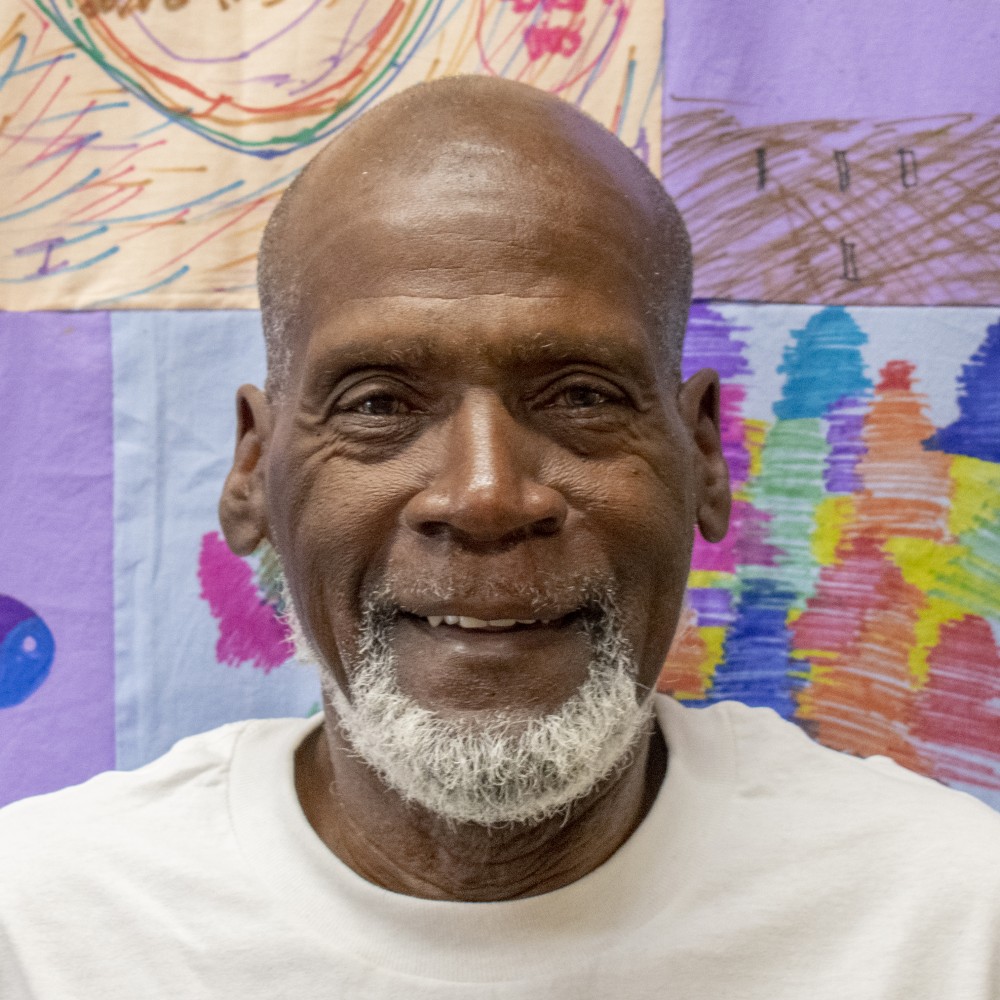
“My 9-year-old son tells me that I need to communicate better, so for now, I’m focusing on that. I’m also working to collect some of the skills that I need to thrive in my career.”

Another priority is learning how to navigate the job search process with a criminal record. “It’s hard to find a great job or get a career started,” she says. “There are many obstacles. Some employers look at me like a criminal. They put me in a box.”

Luckily, changes to California’s employment laws have made it a bit easier for her to have a fair chance. A.B. 1008, “Ban the Box” legislation signed in 2017 by Governor Jerry Brown, became law after a coalition of formerly incarcerated advocates came together to push for change.

Now, employers are no longer allowed to ask about an applicant’s criminal background until a conditional offer of employment is made, allowing people to show who they really are without preconceived notions and prejudices clouding an employer’s judgement.

“This allows people to sell themselves,” says Lawrence, the Reentry Center’s Volunteer Mentor Coordinator. The law has already helped some employers see the light.  “Now, there are many so-called ‘felon-friendly’ employers out there.”

Getting a job can still be a challenge, but those challenges are often overcome with hard work and dedication. “People have no job history and no references, so we try to take the skills they’ve learned on the street and apply them to today’s job market.”
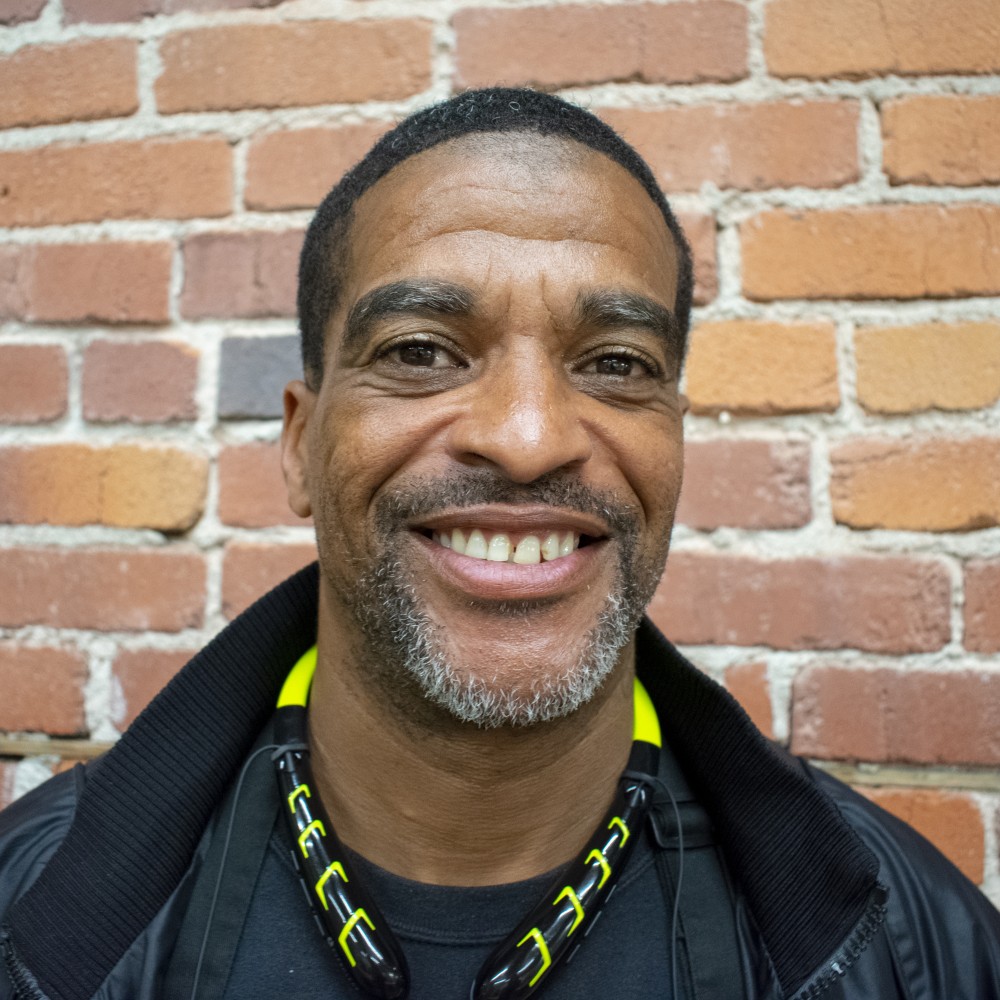
Lawrence recruits and manages volunteers and mentors who help Center members build new careers – and lives. He’s seen many of his friends, family and colleagues go in and out of the system, and knows from experience what they have to do to succeed.

“It’s been documented that what happens in the first 72 hours after release has the greatest impact on whether an individual recidivates,” he says. “That timeframe is critical: You either go to a shelter, go home to your family, or you fall back in with the ‘homies’ who got you into jail in the first place.”

That’s why housing and community support go hand-in-hand during the reentry process.

“We’re fortunate to have a relationship with the probation department. They often bring newly-released individuals to the Center so they can get the resources they need and avoid their old ways.”

Richmond residents also benefit from a fair-chance policy that makes it more difficult for landlords to discriminate against potential tenants with a criminal record.  This increases access to housing, which in turn makes it easier to get and keep a job.

“When you first come home, you often stay at a shelter and get a temp job. But soon enough, you find out your shelter has residency cap – 30 days. How can potential employers contact you if you’re bouncing back-and-forth without a phone or mailing address?”

Having a stable home makes a world of difference. No one knows this better than Tommy, a participant who has completed the Center’s 8-week Alpha Program, a comprehensive curriculum that serves people who are at the highest risk of recidivating. “I’ve been living in shelters so that I can save my wages for a deposit, and now I’m in the process of looking for a permanent place to stay, a studio in Richmond,” he says.

Tommy says that the Alpha Program changed his life, helping make jobs and housing accessible. “I learned to reenter home life and work life. Then, I got a full-time job – just one month after Alpha.”

“It gave me a second chance at a first-class life,” he says.

After nearly a decade in incarceration, Tommy knew there had to be a better way. “Being told what to do, when to eat…letting someone take control of your life…it’s no way to live. I robbed myself of so many opportunities to advance and be happy. But now, I feel different. I look different. I talk different. I’m out of the unemployment line, and that feels great.”

“Everyone has struggles, but when you surround yourself with positivity, you can overcome those struggles,” he says. “I’m so grateful for the Center’s positive environment, all of these positive people, and all of this new information that has brought so many good things into my life.”
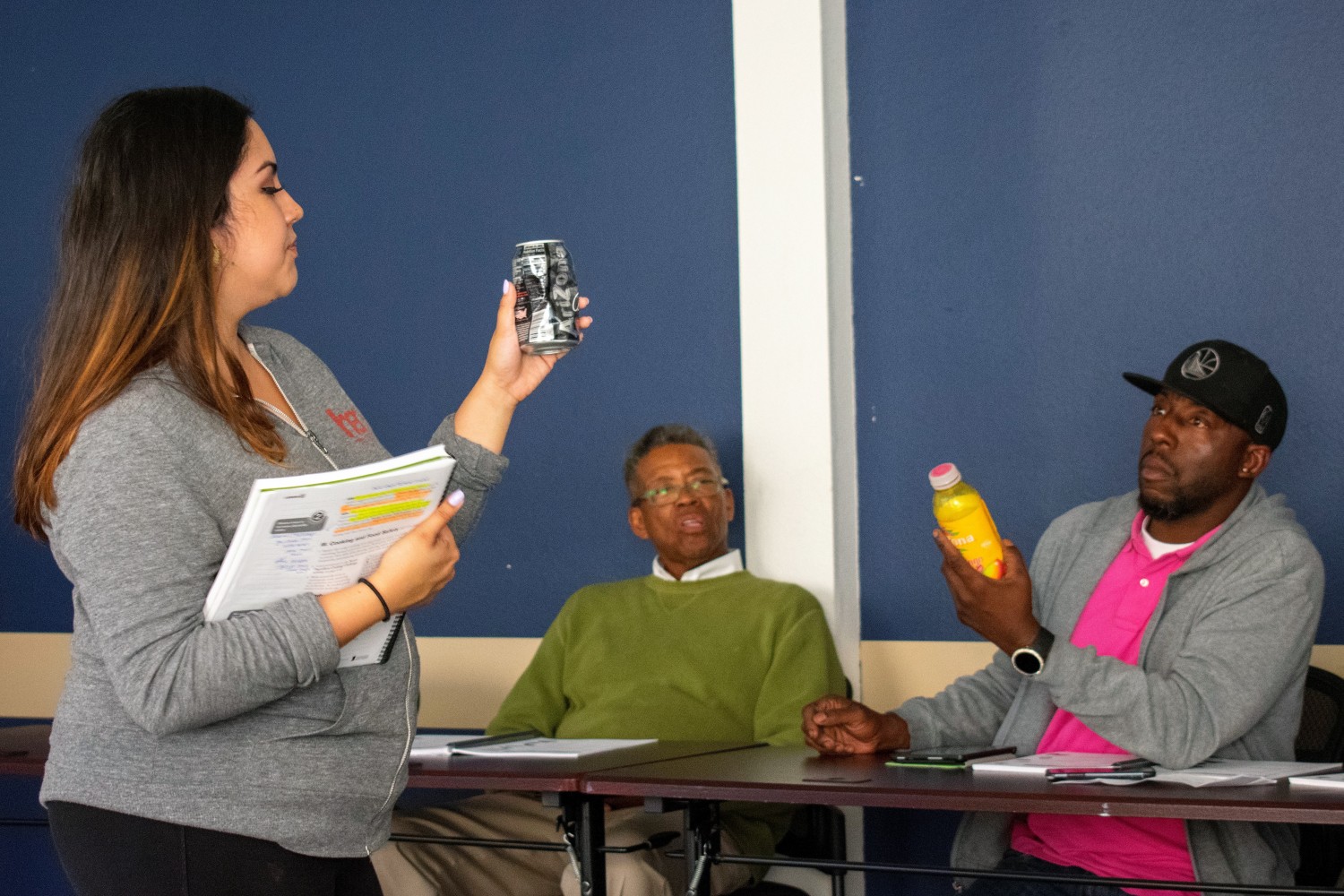
Tommy ties most of his success to the people he has kept around him. “I always had emotional support from my family,” he says. “But the Center had my back. They told me I don’t have to go into this alone, and they stayed by my side.”

 “When you get out of jail, it can feel like you are a newborn baby. You’re naked. You have nothing. But you don’t have to see it that way. It’s only temporary. And you don’t have to fall back on your old ways, or with old, negative people.” You have to make a conscious choice.

“I’m an Eagle. And Eagles can fly. There’s a reason Eagles don’t hang out with Turkeys. Turkeys can’t fly. You have to keep people around you that give you strength.”

In other words, he draws energy – and strength – from the Center.

“I’m going to keep coming here until it closes down. And I hope that day never comes.”

Help Rubicon break poverty by donating or explore the full participant journey here.

Read More

‘Cooking Matters’ in the Food Desert

By Rubicon Admin June 19, 2018

Exzavier looks intently at a tall can of flavored Iced Tea, examining the nutrition facts label and other minute details. He puts it back down, opting not to open it.
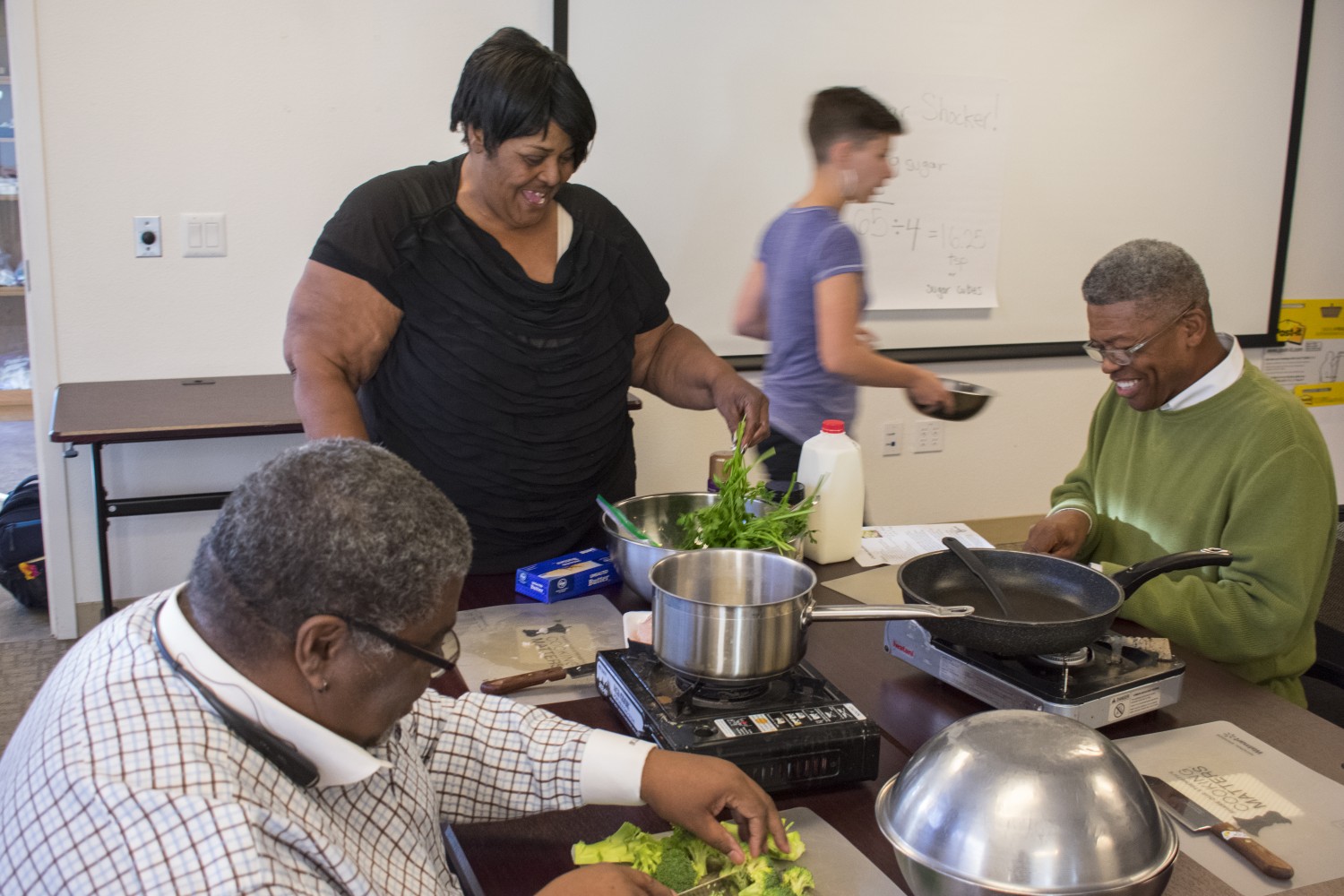
“Heck no. That’s no good,” he declares. “75 grams of sugar? No way – I don’t want diabetes.” The rest of the class nods in agreement.

In lieu, they all proceed to make their own “spa waters” and “Fauxitos” with fresh mint, lime and sparkling spring water – all zero calories and half the price.

Soon after, one of the other course participants asks, “Wait…there’s no sugar in this? Are you sure?” The instructor, Alexis Gutierrez, responds, “I told you it was good!”

Just six weeks before, Exzavier and his fellow classmates hadn’t heard of spa water, let alone Fauxitos.

Many of them reported that soda is cheap and easy to access at the local liquor store, as is fast food. They also mentioned that food expenses are rising, exhausting their budgets. What’s worse, they were often feeling hungry and low-energy after eating a typical meal.

In response, Rubicon Programs, an East Bay-based nonprofit that works to end poverty, enrolled them in their new “Cooking Matters” class, an extensive course offered in conjunction with 18 Reasons, another organization that aims to help low-income communities make quick, healthy, affordable, delicious meals every day.

Kimi Barnes, Rubicon’s Health Resource Manager, made the initial connection.
“Our participants were tired of hearing ‘save money, set a budget,’ without concrete information on how to lower the cost of their largest expenditure on top of rent: food,” she says. “They also made it clear that their number one health goal has always been to eat better, so we thought, ‘why not create a cooking class that shows them how to accomplish all these goals?’”

Kimi soon bumped into the folks at 18 Reasons, who already had an entire curriculum and team ready to roll. She and their leadership were both on the same page, so the two organizations agreed to partner-up.

Clara Obstfeld, a coordinator of the course, began working with Kimi to offer the class to Rubicon participants.

“There are so many challenges for people in poverty trying to navigate the food system,” Clara says. “Misconceptions around labels, marketing terms, and what truly is healthy are so common, and time is a limited resource for many of them, making it hard to make informed choices – especially on a tight budget.”

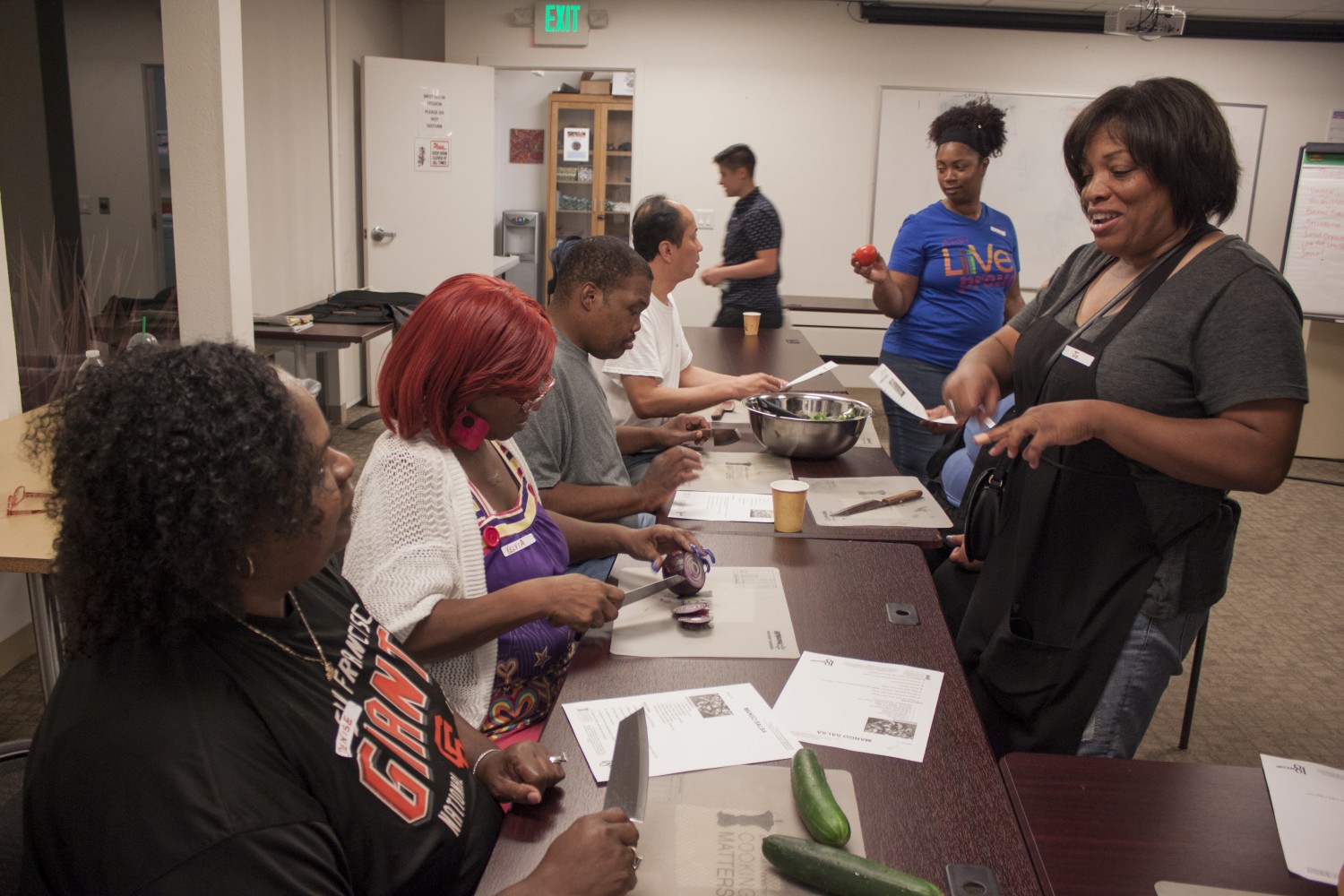
The Cooking Matters course tackles all of these problems in two distinct ways: by teaching practical cooking and shopping skills, and tying those skills to all the information a consumer needs to cook a healthy, low-cost meal.

To maximize the course’s impact, they customize each course with direction from the class and the community – all the recipes are rooted in the students’ interests and cultural preferences. In fact, many of the educators and cooking instructors are from the neighborhood, and know what works.

“In a typical class, we spend the first half on a nutrition lesson – identifying whole grains and counting calories, for example,” Clara says. “Then we have a Chef’s lesson that puts those facts into action.” Participants learn to cook using toaster ovens and portable stoves, as well as develop sous-chef skills like proper knife technique and measurement skills.
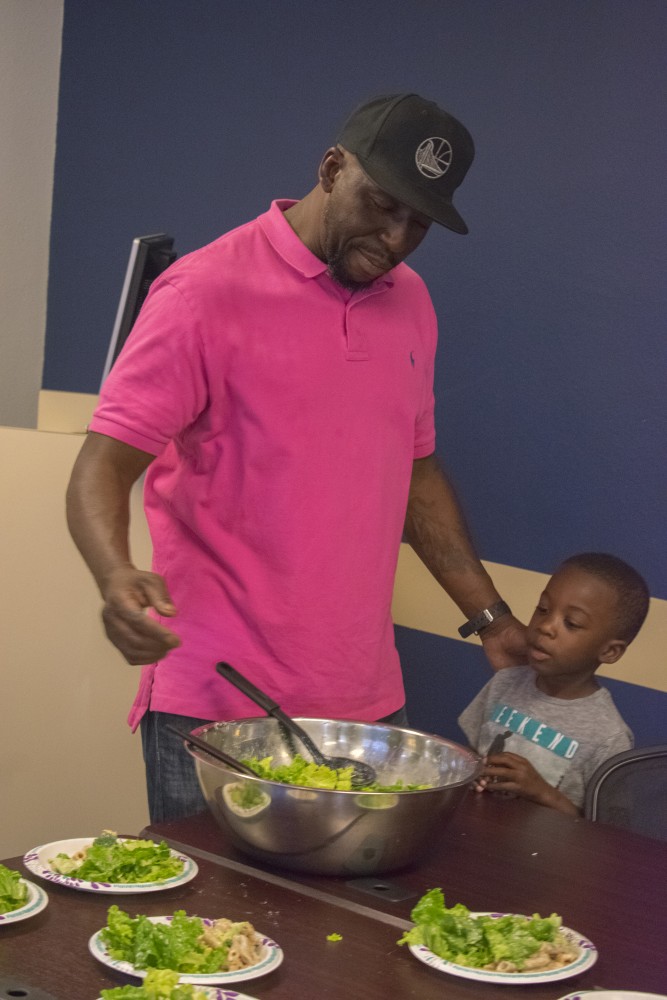
The instructors also provide special assignments to the participants, including a “$10 Challenge” in which participants are asked to buy all the ingredients necessary for a balanced meal for the whole family, all while spending no more than $10. Some contestants prepare recipes from the class, like Fresh Veggie Quesadillas or Low-Fat Chicken Alfredo. Others invent creative new combinations with their newfound culinary instincts.

One participant, Luc, is a fan of seafood and was able to beat the challenge five-fold, making 5 delicious meals at $2 each: sautéed kale, honey-garlic roasted zucchini and smoked sardines – all made in a toaster oven or on a portable burner. He soon fell down the proverbial rabbit-hole, discovering his passion for cooking. After graduation, he continued his culinary education by transferring to The Bread Project, where he learned how to bake in a commercial setting, ultimately launching a new career in baking.

Meanwhile, other participants have improved their home lives in many ways thanks to the class.

Exzavier and his wife Doris, another participant, were both enrolled in the most recent workshop series offered by Rubicon Programs. Both are working with Rubicon to strengthen their careers, build a strong economic foundation, and improve their family’s health and wellness.

“We did the class together as a family – Kimi took care of my five-year-old son Sirod while we focused on cooking – and it was a great experience,” he says. “We reconnected and discovered a new activity for us to bond over. Now, each night, everyone is excited to eat together, even my older kids. We share more at the dinner table. We talk with each other more. We congregate more.”
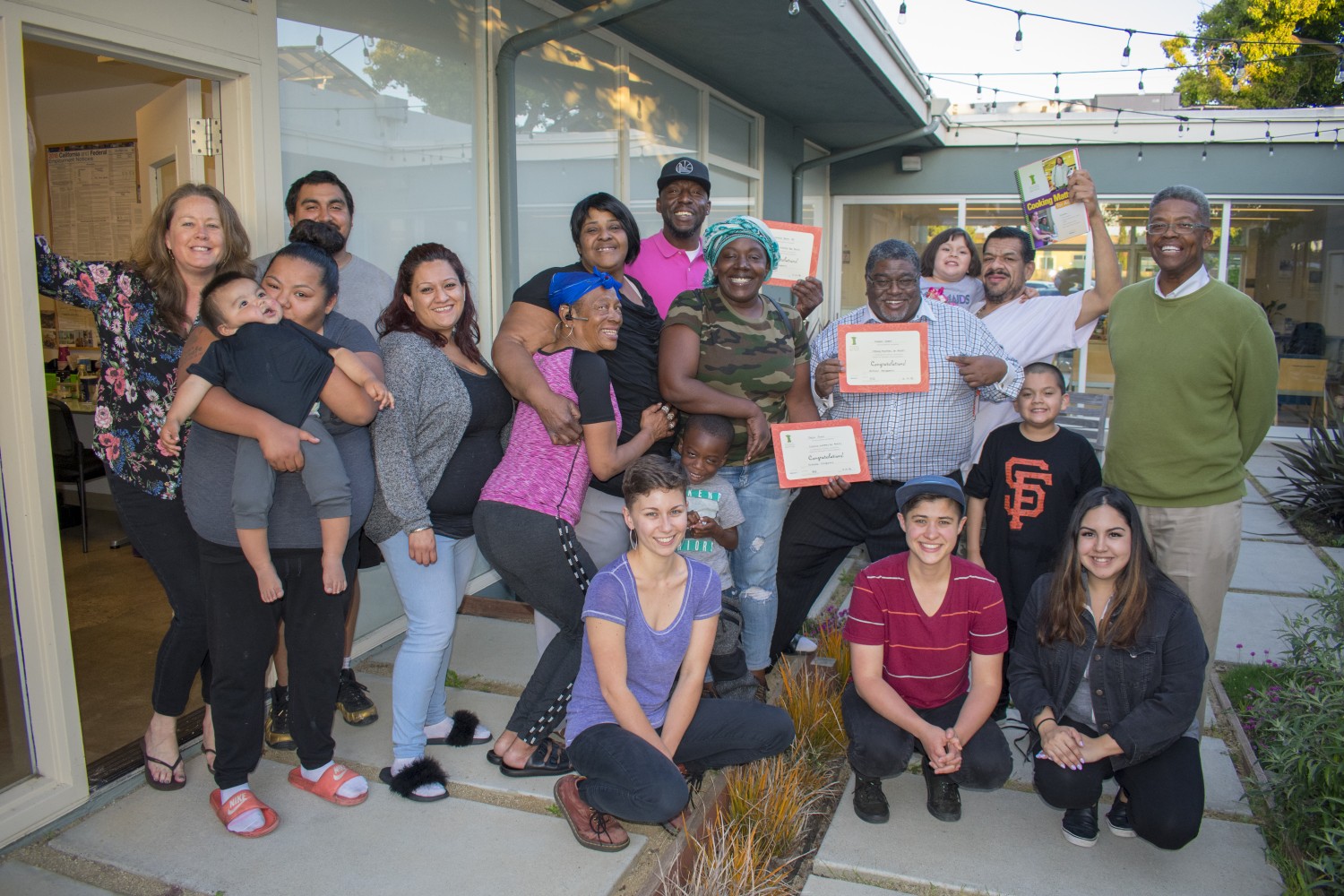
“We also are able to do more with less. We buy healthier and always bargain shop.”

Kimi is proud of the work Rubicon and 18 Reasons has done with the course, but she also says that there is much more work to do changing the food system.

“It’s not all about education,” she says. “People aren’t stupid. The issue is access. The choices we all make are limited by the options we have. If the only options within walking distance of your home are a liquor store and a Drive-Thru, what choice do you really have?”

She says that more equitable urban planning, incentives for grocery stores to move into low-income neighborhoods, and increased access to community gardens, farmer’s markets and other avenues to fresh food will all hopefully move the needle.

But until then, she, Clara, and her team will continue to chip away at the problem one family at a time.

Luc ​kily, the strategy appears to be working.

​“This class changed my life,” Exzavier explains. “After our first meal, I actually felt full. I no longer felt tired. Honestly, I felt like I could go back to work at 8 o’clock at night. I have so much more energy now – when I wake up in the morning, I feel like I’m on fire!”

Your support can help Rubicon continue to bring courses like Cooking Matters to those in need.  Donate today.


Read More