The Reentry Success Center: Breaking Barriers to Break Poverty

By Rubicon Admin December 18, 2018

One in three Americans have interacted with the criminal justice system at some point in their lives. This one touchpoint can be life-changing, introducing dozens of new barriers that can follow an individual throughout their life, making it a challenge to get a job, rent a home or raise a child.

These barriers not only hold them back, but their children and the community, perpetuating intergenerational poverty. That’s where the Reentry Success Center (RSC) – a collaboration between Rubicon Programs and community partners – comes in.
 
The RSC is there for those reentering society after incarceration, as well as their families during – and after – their loved one is in prison or jail. While at the Center, staff, volunteers, community members and fellow returning residents work together to help people transition into a good job, put a deposit on an apartment, and reconnect with their friends and family.

“I was released from jail three weeks ago after a ten month sentence at West County,” says Michelle, a new member of the Reentry Success Center. “The Center was talked about a lot while there. I heard so many success stories, so I came here two days after my release.”

Michelle says she knew she needed a support network to get back on her feet. The Center sounded like the perfect fit.

“In jail, we don’t have to talk to each other. You are isolated. You push people away. But you have to work together to move forward in the community,” she says. “We come out uninformed about our rights. We don’t have the direction or structure to do what we need to yet.”

At the Center, she found the structure she was looking for; she soon signed-up for classes that have helped her move forward, including a Life Skills course, a Cognitive Skills class, and Trauma and Grief Therapy sessions. These opportunities have helped her acclimate to the workforce and manage some of the challenges in her personal life.

“My 9-year-old son tells me that I need to communicate better, so for now, I’m focusing on that. I’m also working to collect some of the skills that I need to thrive in my career.”

Another priority is learning how to navigate the job search process with a criminal record. “It’s hard to find a great job or get a career started,” she says. “There are many obstacles. Some employers look at me like a criminal. They put me in a box.”

Luckily, changes to California’s employment laws have made it a bit easier for her to have a fair chance. A.B. 1008, “Ban the Box” legislation signed in 2017 by Governor Jerry Brown, became law after a coalition of formerly incarcerated advocates came together to push for change.

Now, employers are no longer allowed to ask about an applicant’s criminal background until a conditional offer of employment is made, allowing people to show who they really are without preconceived notions and prejudices clouding an employer’s judgement.

“This allows people to sell themselves,” says Lawrence, the Reentry Center’s Volunteer Mentor Coordinator. The law has already helped some employers see the light.  “Now, there are many so-called ‘felon-friendly’ employers out there.”
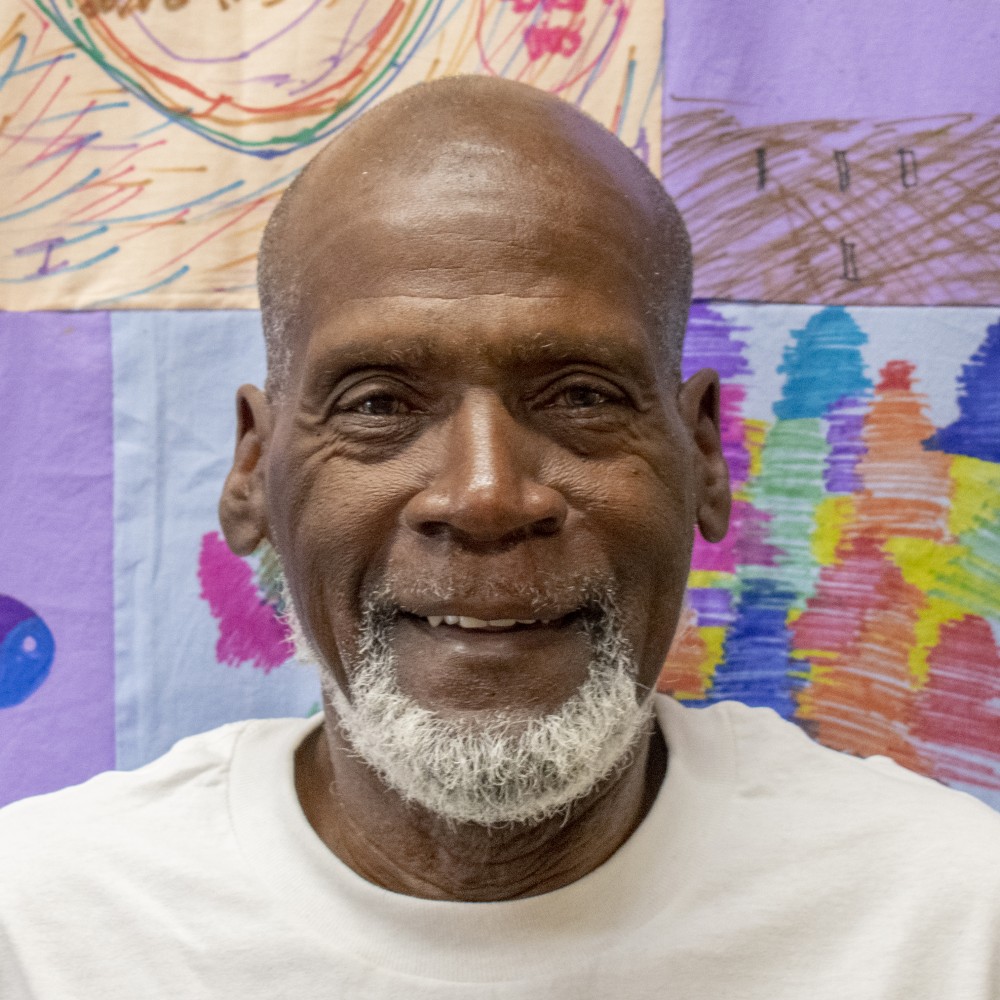
Getting a job can still be a challenge, but those challenges are often overcome with hard work and dedication. “People have no job history and no references, so we try to take the skills they’ve learned on the street and apply them to today’s job market.”

Lawrence recruits and manages volunteers and mentors who help Center members build new careers – and lives. He’s seen many of his friends, family and colleagues go in and out of the system, and knows from experience what they have to do to succeed.

“It’s been documented that what happens in the first 72 hours after release has the greatest impact on whether an individual recidivates,” he says. “That timeframe is critical: You either go to a shelter, go home to your family, or you fall back in with the ‘homies’ who got you into jail in the first place.”

That’s why housing and community support go hand-in-hand during the reentry process.

“We’re fortunate to have a relationship with the probation department. They often bring newly-released individuals to the Center so they can get the resources they need and avoid their old ways.”

Richmond residents also benefit from a fair-chance policy that makes it more difficult for landlords to discriminate against potential tenants with a criminal record.  This increases access to housing, which in turn makes it easier to get and keep a job.

“When you first come home, you often stay at a shelter and get a temp job. But soon enough, you find out your shelter has residency cap – 30 days. How can potential employers contact you if you’re bouncing back-and-forth without a phone or mailing address?”

Having a stable home makes a world of difference. No one knows this better than Tommy, a participant who has completed the Center’s 8-week Alpha Program, a comprehensive curriculum that serves people who are at the highest risk of recidivating. “I’ve been living in shelters so that I can save my wages for a deposit, and now I’m in the process of looking for a permanent place to stay, a studio in Richmond,” he says.

Tommy says that the Alpha Program changed his life, helping make jobs and housing accessible. “I learned to reenter home life and work life. Then, I got a full-time job – just one month after Alpha.”

“It gave me a second chance at a first-class life,” he says.

After nearly a decade in incarceration, Tommy knew there had to be a better way. “Being told what to do, when to eat…letting someone take control of your life…it’s no way to live. I robbed myself of so many opportunities to advance and be happy. But now, I feel different. I look different. I talk different. I’m out of the unemployment line, and that feels great.”
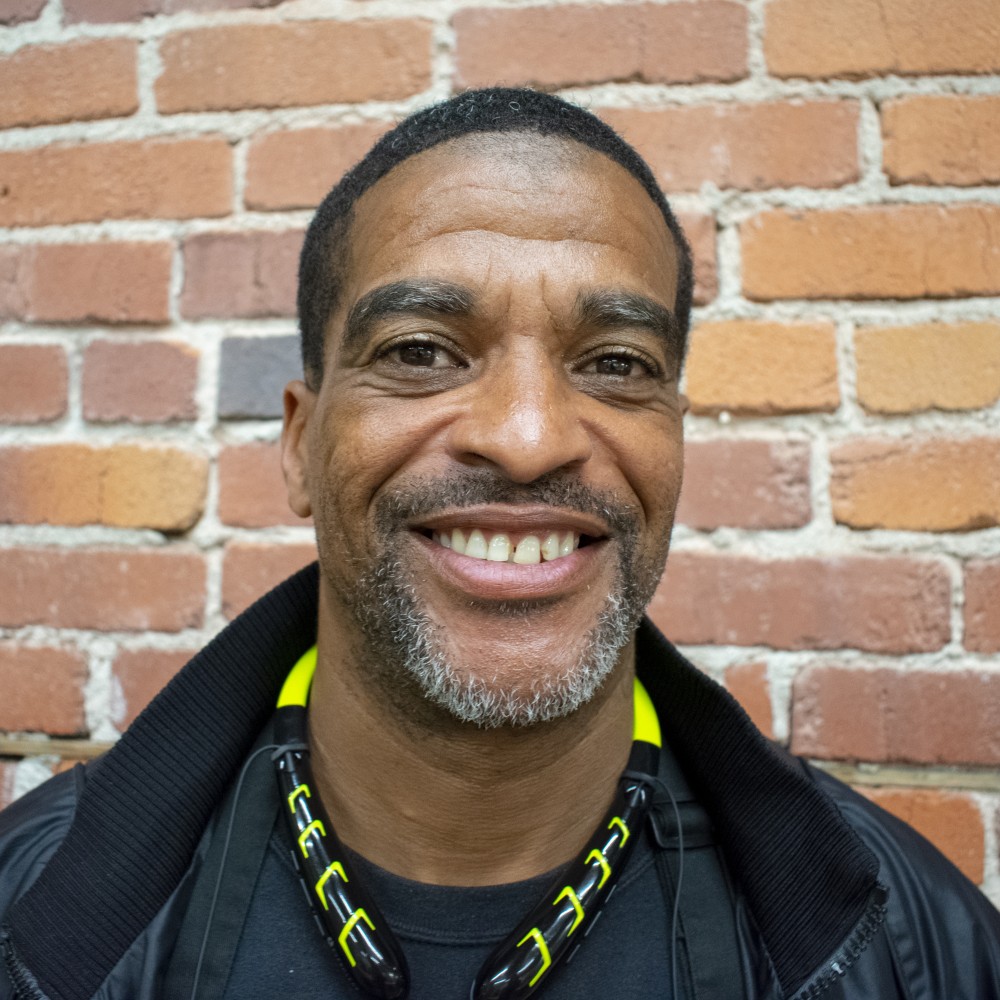
“Everyone has struggles, but when you surround yourself with positivity, you can overcome those struggles,” he says. “I’m so grateful for the Center’s positive environment, all of these positive people, and all of this new information that has brought so many good things into my life.”

Tommy ties most of his success to the people he has kept around him. “I always had emotional support from my family,” he says. “But the Center had my back. They told me I don’t have to go into this alone, and they stayed by my side.”

 “When you get out of jail, it can feel like you are a newborn baby. You’re naked. You have nothing. But you don’t have to see it that way. It’s only temporary. And you don’t have to fall back on your old ways, or with old, negative people.” You have to make a conscious choice.

“I’m an Eagle. And Eagles can fly. There’s a reason Eagles don’t hang out with Turkeys. Turkeys can’t fly. You have to keep people around you that give you strength.”

In other words, he draws energy – and strength – from the Center.

“I’m going to keep coming here until it closes down. And I hope that day never comes.”

Help Rubicon break poverty by donating or explore the full participant journey here.

Read More

The Rubicon Rangers: Tongo Eisen-Martin Fights Oppression and Poverty with the Power of Words

By Ben Rowley August 20, 2018

Source: City Lights Publishers. Image used for editorial purposes only.

The "Rubicon Rangers" series is a first-person account of Rubicon's intern experience, authored by the interns, Jessica, Sandy and Justin, themselves.

A city is a prison, a cigarette is a symbol. Welcome to the unique work of master-poet Tongo Eisen-Martin: a world of imaginative metaphors mixed with cold, hard truth.

A Bay Area native, Tongo Eisen-Martin is an educator, movement worker, and of course, poet. His book, “Heaven is all Goodbyes,” won the 2018 California Book Award for Poetry, and is riddled with hidden stories and imaginative voices, that guide readers and submerge them into his world.

Not only does he write poetry, but he also educates prisoners and takes part in many public literary events. His work often reminds people that there are many issues that might not affect them, but a large proportion of the population have to deal with on a daily basis.

In his books, he doesn’t only describe the way he sees the hidden racial issues and poverty of America through his eyes, but also the way he feels them, experiences them, and the how they affect him and everyone around him. The issues that significantly influence his work the most include poverty, racism, and extrajudicial killings by police. He highlights the burden that comes with being black in America, as well as the struggles of those in poverty.

Often delivering his precise messages through many layers of metaphor, he takes the "ethos approach" of changing people’s minds about the issues that impact Black men. Eisen-Martin speaks from experience and the understanding of someone who has been directly affected by these problems in our communities.

Tongo’s distinct free verse and seemingly all-over-the-place style is easy to read on first glance, but when looked at longer, each poems reveal more and more of what is really being said. The poetry is often written in an original way, where some pages might take three seconds to read. Some sentences take three minutes.

Along with being fun to read, Eisen-Martin’s work also does an excellent job of serving to inform people about racial and poverty issues, inspiring people to fix them, which is what everyone at Rubicon Programs is all about.

As racism and poverty are slowly withered away, we here at Rubicon are happy to be allies with Tongo and his incredibly creative, and idiosyncratic, campaign against racism, hate and poverty. It is because of people like him and our devoted staff here at Rubicon that our country is, hopefully, going to move in the right direction.

Read More

‘Cooking Matters’ in the Food Desert

By Rubicon Admin June 19, 2018

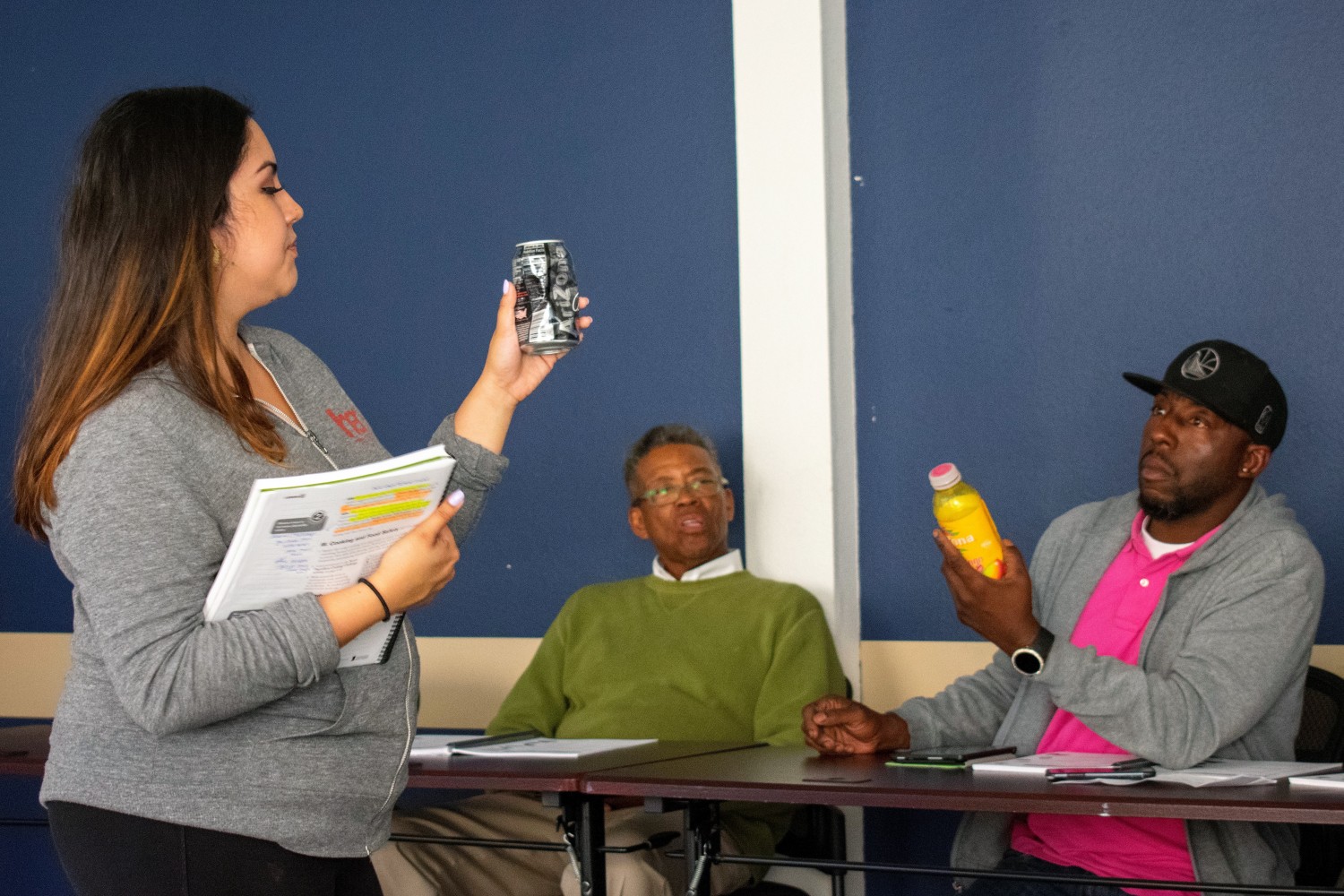
Exzavier looks intently at a tall can of flavored Iced Tea, examining the nutrition facts label and other minute details. He puts it back down, opting not to open it.

“Heck no. That’s no good,” he declares. “75 grams of sugar? No way – I don’t want diabetes.” The rest of the class nods in agreement.

In lieu, they all proceed to make their own “spa waters” and “Fauxitos” with fresh mint, lime and sparkling spring water – all zero calories and half the price.

Soon after, one of the other course participants asks, “Wait…there’s no sugar in this? Are you sure?” The instructor, Alexis Gutierrez, responds, “I told you it was good!”

Just six weeks before, Exzavier and his fellow classmates hadn’t heard of spa water, let alone Fauxitos.

Many of them reported that soda is cheap and easy to access at the local liquor store, as is fast food. They also mentioned that food expenses are rising, exhausting their budgets. What’s worse, they were often feeling hungry and low-energy after eating a typical meal.

In response, Rubicon Programs, an East Bay-based nonprofit that works to end poverty, enrolled them in their new “Cooking Matters” class, an extensive course offered in conjunction with 18 Reasons, another organization that aims to help low-income communities make quick, healthy, affordable, delicious meals every day.

Kimi Barnes, Rubicon’s Health Resource Manager, made the initial connection.
“Our participants were tired of hearing ‘save money, set a budget,’ without concrete information on how to lower the cost of their largest expenditure on top of rent: food,” she says. “They also made it clear that their number one health goal has always been to eat better, so we thought, ‘why not create a cooking class that shows them how to accomplish all these goals?’”

Kimi soon bumped into the folks at 18 Reasons, who already had an entire curriculum and team ready to roll. She and their leadership were both on the same page, so the two organizations agreed to partner-up.

Clara Obstfeld, a coordinator of the course, began working with Kimi to offer the class to Rubicon participants.

“There are so many challenges for people in poverty trying to navigate the food system,” Clara says. “Misconceptions around labels, marketing terms, and what truly is healthy are so common, and time is a limited resource for many of them, making it hard to make informed choices – especially on a tight budget.”

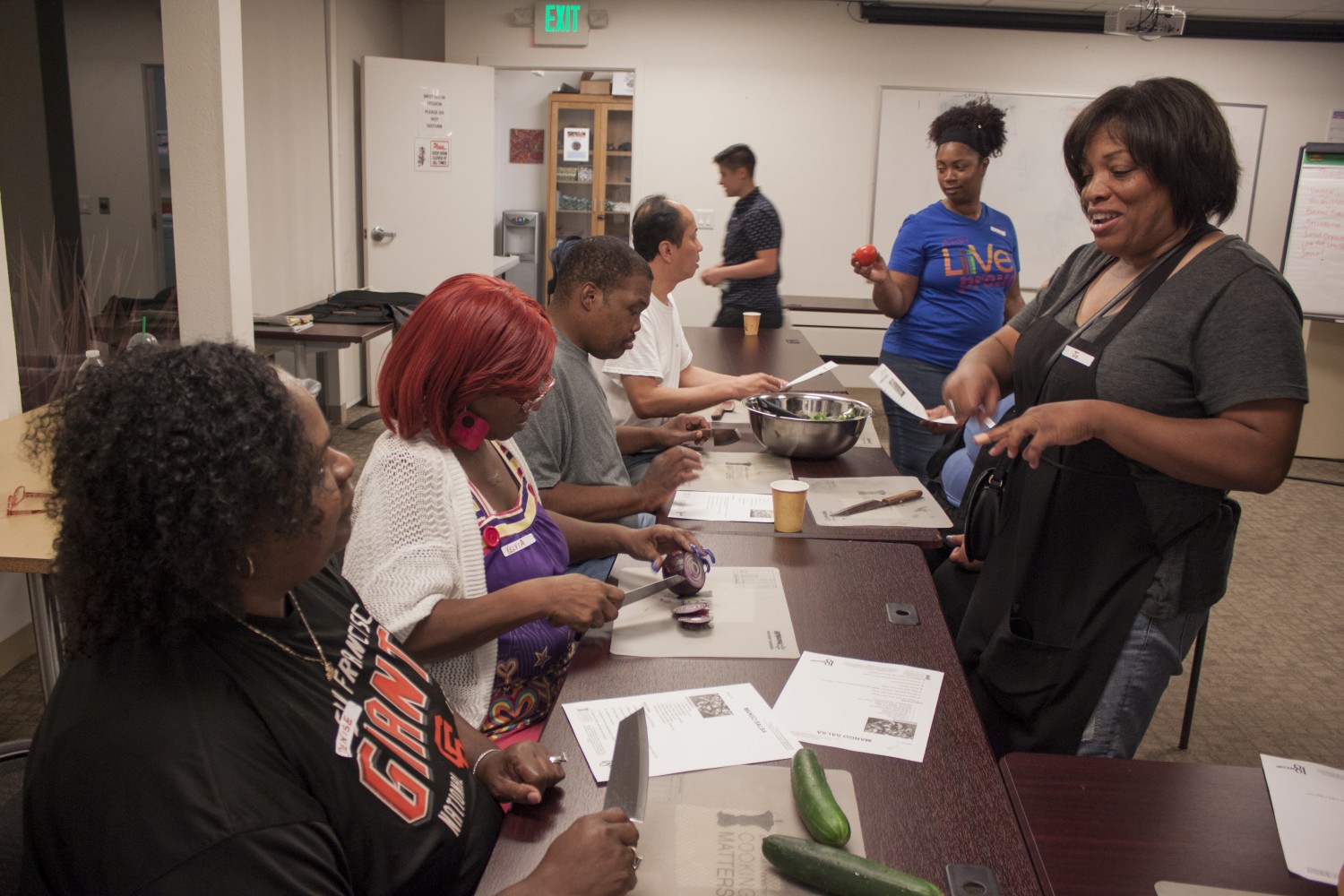
The Cooking Matters course tackles all of these problems in two distinct ways: by teaching practical cooking and shopping skills, and tying those skills to all the information a consumer needs to cook a healthy, low-cost meal.

To maximize the course’s impact, they customize each course with direction from the class and the community – all the recipes are rooted in the students’ interests and cultural preferences. In fact, many of the educators and cooking instructors are from the neighborhood, and know what works.

“In a typical class, we spend the first half on a nutrition lesson – identifying whole grains and counting calories, for example,” Clara says. “Then we have a Chef’s lesson that puts those facts into action.” Participants learn to cook using toaster ovens and portable stoves, as well as develop sous-chef skills like proper knife technique and measurement skills.
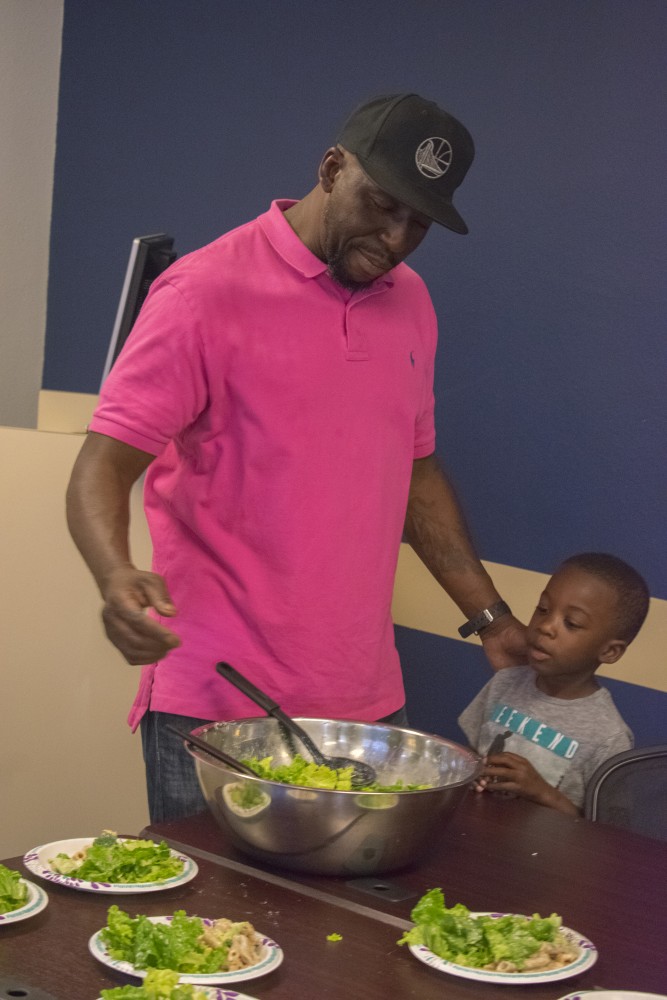
The instructors also provide special assignments to the participants, including a “$10 Challenge” in which participants are asked to buy all the ingredients necessary for a balanced meal for the whole family, all while spending no more than $10. Some contestants prepare recipes from the class, like Fresh Veggie Quesadillas or Low-Fat Chicken Alfredo. Others invent creative new combinations with their newfound culinary instincts.

One participant, Luc, is a fan of seafood and was able to beat the challenge five-fold, making 5 delicious meals at $2 each: sautéed kale, honey-garlic roasted zucchini and smoked sardines – all made in a toaster oven or on a portable burner. He soon fell down the proverbial rabbit-hole, discovering his passion for cooking. After graduation, he continued his culinary education by transferring to The Bread Project, where he learned how to bake in a commercial setting, ultimately launching a new career in baking.

Meanwhile, other participants have improved their home lives in many ways thanks to the class.

Exzavier and his wife Doris, another participant, were both enrolled in the most recent workshop series offered by Rubicon Programs. Both are working with Rubicon to strengthen their careers, build a strong economic foundation, and improve their family’s health and wellness.

“We did the class together as a family – Kimi took care of my five-year-old son Sirod while we focused on cooking – and it was a great experience,” he says. “We reconnected and discovered a new activity for us to bond over. Now, each night, everyone is excited to eat together, even my older kids. We share more at the dinner table. We talk with each other more. We congregate more.”
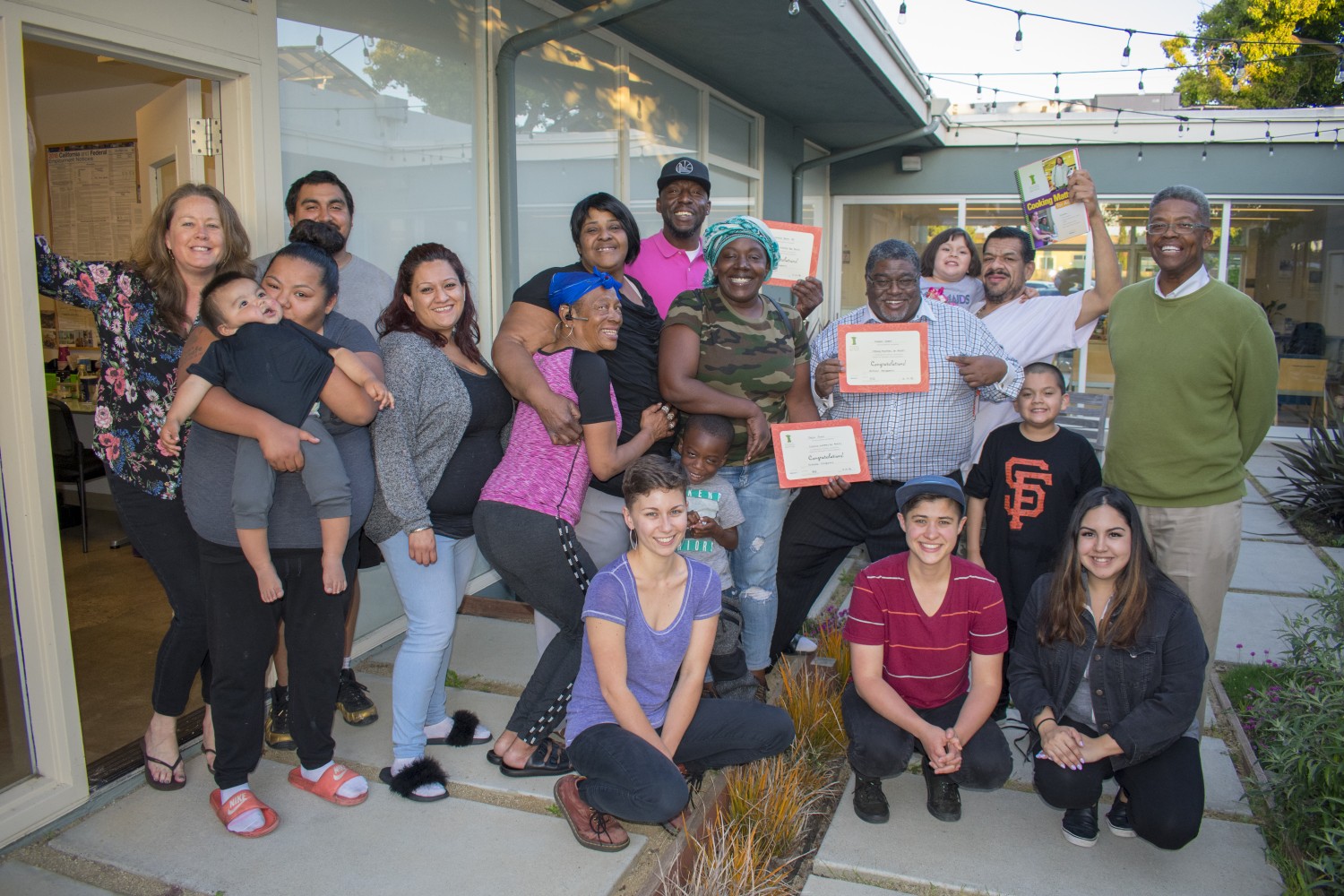

“We also are able to do more with less. We buy healthier and always bargain shop.”

Kimi is proud of the work Rubicon and 18 Reasons has done with the course, but she also says that there is much more work to do changing the food system.

“It’s not all about education,” she says. “People aren’t stupid. The issue is access. The choices we all make are limited by the options we have. If the only options within walking distance of your home are a liquor store and a Drive-Thru, what choice do you really have?”

She says that more equitable urban planning, incentives for grocery stores to move into low-income neighborhoods, and increased access to community gardens, farmer’s markets and other avenues to fresh food will all hopefully move the needle.

But until then, she, Clara, and her team will continue to chip away at the problem one family at a time.

Luc ​kily, the strategy appears to be working.

​“This class changed my life,” Exzavier explains. “After our first meal, I actually felt full. I no longer felt tired. Honestly, I felt like I could go back to work at 8 o’clock at night. I have so much more energy now – when I wake up in the morning, I feel like I’m on fire!”

Your support can help Rubicon continue to bring courses like Cooking Matters to those in need.  Donate today.


Read More

Rubicon’s November 2020 Voter Guide

By Rubicon Admin May 18, 2018

On Tuesday, November 3, voters across California will vote in an election that is, in a word, monumental, with a long, complicated ballot to match. At stake this year for Californians: a dozen statewide propositions that seek to, among other things, raise or lower taxes; expand voting rights; resurrect affirmative action; change gig worker classification; and tighten criminal sentencing laws.

Here at Rubicon, members of our Participant Advisory Board, staff, and Board of Directors, came together as a Voter Guide Task Force to analyze the state propositions and selected Alameda and Contra Costa County measures through a financial equity and racial justice lens. Members of the Task Force are: Adriana Ponce-Matteucci, Adrienne Kimball, Alisha Semplar, Becky Johnson, Claire Levay-Young, Kalani Siegrist, Paul Leonard, Sarah Williams, Tara Cantu-Nishimoto, Taunita Trotter, and Jane Fischberg.  
 
Quite a few measures on the ballot address systemic racism and economic justice. We break them down for you so you can feel confident that you’re casting your vote to end poverty and oppose inequality.  
  
RUBICON'S ENDORSEMENTS

PROPOSITION 15: YES
Schools & Communities First: Prop 15 asks California voters to raise an estimated $6.4 billion to $11.5 billion in funding for local schools and governments by increasing property taxes on commercial and industrial properties based on current market value instead of their much lower original purchase price. The measure is considered one of the largest revisions of Proposition 13, the landmark 1978 initiative that slashed property taxes and limited how much they could go up, providing instant tax relief but devastating government services. The proposition will maintain existing exemptions for small businesses, homeowners, agricultural lands, and renters.

A multibillion-dollar corrective to a decades-old economic injustice, Prop 15 creates an influx of funding for public schools, community colleges, and government services. Our one concern is ensuring oversight around how the funds are allocated, but as long as there is transparency, we are all for it. We should note that oversight and ensuring that the goals of public spending initiatives are met is an ongoing concern for many of these propositions and local measures. 

PROPOSITION 16: YES
Opportunity for All: Proposition 16 would repeal Prop 209, which restricts local and state governments from considering race, sex, color, ethnicity, or national origin in public employment, education, and contracting. If passed, Prop 16 would permit governments to consider those protected categories in order to promote inclusive hiring and admissions programs in California’s public universities, government, and public agencies.

Passed in 1996, Proposition 209 is a regressive measure that has propped up systems of oppression for far too long. Studies show that banning affirmative action led to a marked decrease in Black and Latinx students in the UC system. California is one of only nine states that bans affirmative action, and it is time for us to get on the right side of history and level the playing field for women and people of color. Additionally, all Californians suffer when they are corralled into environments devoid of diverse thoughts and experiences. The evolution of our nation depends on increasing our competency with navigating ourselves and others in multicultural environments. The global economy is here to stay; to remain competitive we all need to practice and be comfortable with diversity, equity, inclusion, and belonging.
 
Proposition 17: YES

Restore Voting Rights: This state constitutional amendment would allow people on parole for felony convictions to vote after their state or federal prison term ends. The state’s constitution currently prohibits people with felony convictions from voting until both their incarceration and parole are finished. The change, proposed by state lawmakers, would restore voting rights to approximately 40,000 Californians, according to a state Senate analysis. 
 

Denying parolees the right to vote is racist. Black Californians make up about 28% of all prison populations despite only making up 6% of California’s total population; the current law is obviously rooted in Jim Crow-era tactics designed to disenfranchise Black voters. Parolees pay taxes and serve on juries; their disenfranchisement is taxation without representation. Parolees are allowed to vote in 14 other states; once again, California is behind the curve on this one, and it is time for us to get with the program. 

PROPOSITION 18: YES
Voting Rights for 17-Year-Olds: This is a constitutional amendment to allow 17-year-olds who will be 18 at the time of the next general election to vote in primary elections and special elections. 
 

This amendment corrects a minor loophole in the system. So many people in the US who are eligible to vote do not; we should not discourage eager voters who are on the cusp of turning 18 from voting in primaries. 
 
PROPOSITION 19: NO

Property Tax Breaks: The ballot measure would change the rules for tax assessment transfers. In California, eligible homeowners can transfer their tax assessments to a different home of the same or lesser market value, which allows them to move without paying higher taxes. Homeowners who are eligible for tax assessment transfers are persons over 55 years old, persons with severe disabilities, and victims of natural disasters and hazardous waste contamination.


After the overwhelming defeat of the eerily similar Prop 5 in 2018, this is the latest attempt by the Association of Realtors to line their pockets by providing property tax breaks for older homebuyers, incentivizing them to move and to buy more expensive properties. Realtor associations have contributed $36,270,000 in support of the proposition. While the measure’s goals of funding fire protection are laudable, these goals can and should be accomplished by more narrowly tailored means that do not create a tax loophole. Rubicon supports investment in our schools and local communities, but we do not believe that broadening tax loopholes is the answer. To recap, Proposition 19 widens the already-existing wealth gap, perpetuates the status quo, and rewards those who seek to “buy a law."

PROPOSITION 20: NO
Rollback on Criminal Justice Reforms: Prop 20 would roll back changes to California’s criminal sentencing laws approved over the past decade, including parts of Prop 57, which made inmates convicted of nonviolent felonies eligible for parole after serving just the term for their primary offense. It would authorize judges to impose felony charges on certain theft or fraud crimes currently chargeable only as misdemeanors. It would also restrict the number of inmates eligible for parole by adding drug, theft and other crimes to the list of violent crimes or sentence enhancements excluded from parole review. Lastly, the measure would require people convicted of drug, theft or domestic violence misdemeanors to submit to DNA collection for the state database.

These are draconian measures proposed, supported, and financed by retrograde politicians and police and sheriff associations, and fed to the public using the same scare tactic “tough on crime” rhetoric that led to the wave of harsh, unjust criminal sentencing laws of 1990s (e.g. Three Strikes). Why, at a time when California’s violent and property crimes rates are still at historic lows, are three police unions the top funders of Prop 20? More “criminals” and longer sentencing means increased unsubstantiated financial gain and power for the criminal justice system and purveyors of private prisons. This is dangerous and irresponsible. 

PROPOSITION 21: YES
Local Governments & Rent Control: Prop 21 allows cities and counties to implement rent control for certain residential properties over 15 years old. The initiative's official summary says it would grant exemptions from new rent control policies for individuals who own no more than two homes. The measure is meant to replace the Costa-Hawkins Rental Housing Act, which prohibited rent control for housing that was built after 1995 as well as for units such as single-family homes, town homes and condos. In addition, Prop 21 would limit rent in rent-controlled properties to increase up to 15 percent over a period of three years with the start of a new tenancy.


If you know anything about the Bay Area you know that increasingly high rents have forced families from their homes, devastated communities, and intensified poverty and homelessness. The measure would allow cities more autonomy in establishing measures on rent increases – it would not in itself create rent control laws. This welcome measure to roll back Costa-Hawkins would let cities put limits on rent increases to protect families who are one rent hike away from being driven out of their homes and neighborhoods. Prop 21 is a much-needed step to curb homelessness and slow gentrification.

PROPOSITION 22: NO
Rideshare & Delivery Drivers: Proposition 22 asks voters to classify drivers for ride-share and delivery companies as independent contractors, not employees. 

Don’t believe the hype! This slickly packaged proposition is a self-serving attempt by rideshare and delivery companies like Lyft, Uber, and DoorDash to further mistreat and underpay their drivers. By classifying drivers as contractors, these corporations will be freed up to carry out the human rights violations of their dreams. Pay less than minimum wage? Check. Deny unemployment benefits, overtime pay, and sick leave? Check, check, and check. AB 5, which Prop 22 is trying to repeal, guarantees paid family leave, paid sick days, and unemployment insurance—essential protections during a global pandemic—to those classified as gig employees. The sick thing is that ads for the proposition try to sell it as giving drivers the flexibility they want. Hey, Uber – flexibility and human decency aren’t mutually exclusive.  

While we are recommending voting against this proposition, some members of our Task Force have depended on gig driving as a source of income, and they brought a different perspective to the table. One committee member liked the flexibility that gig work allowed and wanted to ensure that would still be in place if workers were treated as employees. In addition, gig work is relatively easy to secure compared with other types of jobs, which is especially helpful to people who are facing barriers to employment.

PROPOSITION 25: YES
End Cash Bail: This is a referendum to overturn a 2018 law to replace California’s cash bail system with a new pretrial release system based on public safety and flight risk. The law, SB10, was put on hold after the referendum qualified for the ballot in early 2019. A “Yes” vote on Prop 25 would approve the law taking effect and end cash bail in California, while a “No” vote would keep the current cash bail system the way it is.

The cash bail system is fundamentally unjust—poor people awaiting trial are forced to stay in jail while people of means buy their way out, perpetuating the cycles of poverty and incarceration in disproportionately Black and Brown communities. The bail bond industry has a financial stake in people getting arrested, so a vote for this referendum is a vote against a parasitic business. At the same time, this proposition is far from perfect. We are concerned that the algorithmic assessment tools that will become the primary determinant of pretrial risk are inherently biased against Black and Brown people. With these concerns in mind, while we recommend a “Yes” vote on Prop 25, we urge the legislature to oversee and monitor the outcomes of using these tools and to act swiftly to correct any bias in the assessment process.

ALAMEDA COUNTY MEASURE W: YES
Measure W is an Alameda County-wide half percent general sales tax that will raise $150 million a year for 10 years. Measure W provides funding that Alameda County can use to:  
• Provide housing assistance, mental health resources, and substance use treatment for our most vulnerable residents.  
• Help people who are at risk of homelessness stay in their homes.  
• Increase hygiene and sanitation services.
• Support homeless veterans, seniors and families with services.  
• Increase employment opportunities through job training. 
• Shelter people experiencing homelessness to reduce COVID19 impacts. 
 
We recommend a Yes vote on this measure. At the same time, we want to ensure that the people who will be directly impacted have input in the decision-making process. 

Oakland, California, Police Oversight and Inspector General Charter Amendment: YES
This is an amendment to city charter 604 to strengthen the independence of the Oakland Police Commission by modifying the powers, duties, and staffing of the Oakland Police Commission and the Community Police Review Agency, and creating an Office of Inspector General. A “Yes” vote supports changing the powers, duties, and staffing of the Oakland Police Commission and the Community Police Review Agency and creating the Office of the Inspector General to review policies of the police commission and review agency. A “No” vote opposes changing the powers, duties, and staffing of the Oakland Police Commission and the Community Police Review Agency creating the Office of the Inspector General to review policies of the police commission and review agency. 
 

Oakland’s history of police violence and this historic moment of reckoning make this amendment a resounding YES from us.  

Hayward Measures NN and OO: YES
 
NN - Transient Occupancy Tax 
 

OO - Would amend charter of City of Hayward to eliminate the requirement of being a qualified elector/registered voter to serve on City Council-appointed advisory commissions, and eliminate gender-based designations and titles and instead use neutral, gender-free designations and titles.
 
Contra Costa County Measure X: YES

This measure will raise an estimated $81 million annually through a 20-year, half½ percent sales tax to support severe insecurities in health, housing, food and other vital needs. Developed through the collaboration of local community-based organizations, hospital and healthcare affiliates, and labor unions, representing essential healthcare, fire and emergency professionals, advocates for interpersonal violence prevention and mental health, early childhood programming and other critical safety net services, the Contra Costa County Needs Assessment is the basis for this campaign. 


We support this measure, and once again, we would like to see the people who are directly affected have input and agency.  
 
Richmond Measure U: YES 


Analysis by City Finance Director: Measure U would amend the City’s business tax rate structure to authorize the City to tax businesses based on a range of .06% to 5.00% of gross receipts rather than based on the number of employees. Generally, the highest rates will be charged to businesses with the highest gross revenue, with exemptions for specific businesses and activities as identified in the ordinance. If the measure passes, it would provide an estimated $5.950 million annually in new revenue to the City, based on historical sales tax and rental property data. Staff projects that the City would incur software implementation costs as well as annual costs for additional staff support.  


We recommend a Yes vote on this measure to reduce the tax burden on small businesses, which are hardest hit by COVID. 

Read More

Growth through Service: Rubicon Men’s Group Treats Richmond’s Moms for Mother’s Day

By Rubicon Admin May 10, 2018

By Reggie Boyer, Impact Coach

Sometimes, you just need to get away from it all, decompress, and share your thoughts in a safe place. 
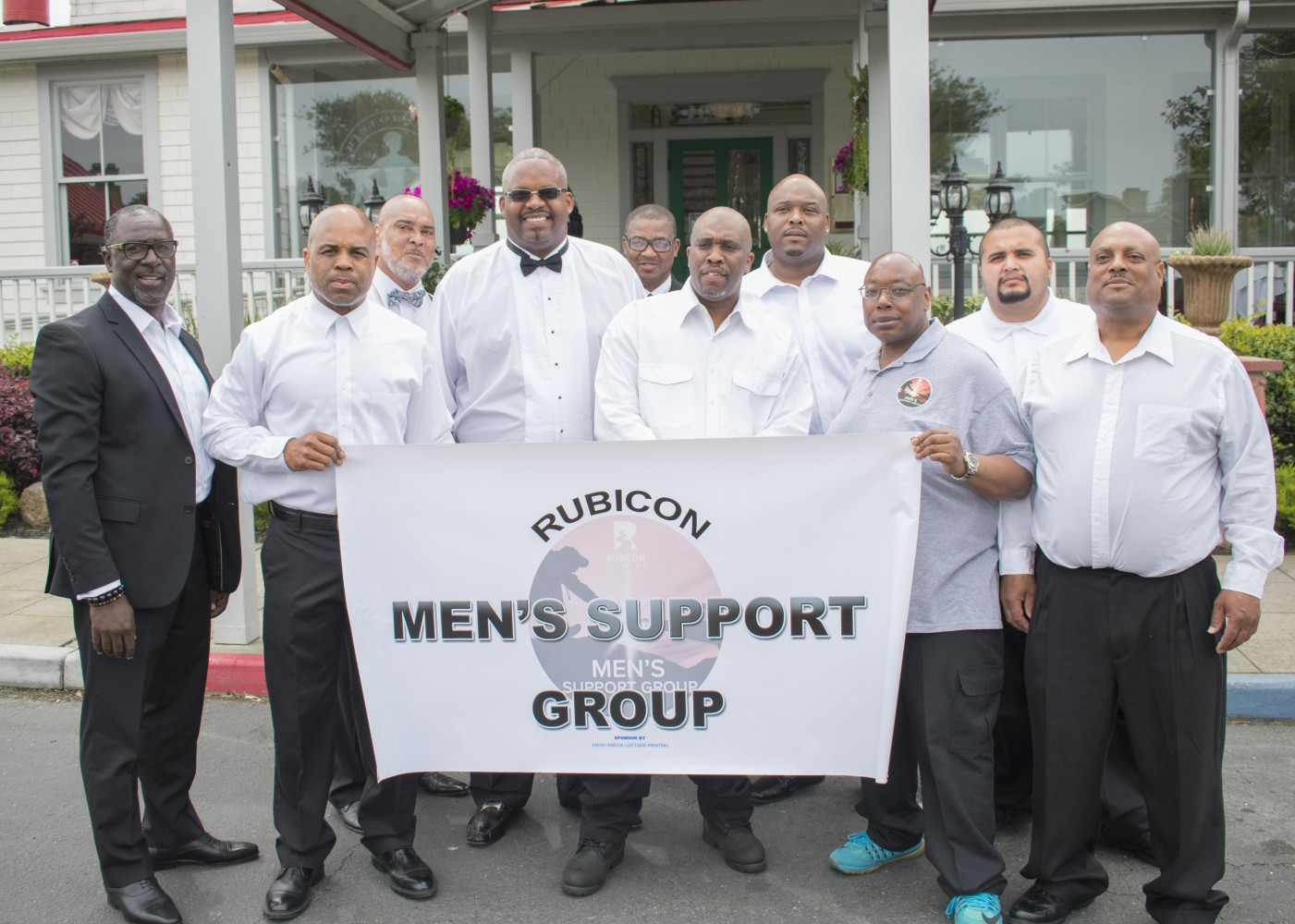
This simple fact of life inspired me to work with my participants at Rubicon Programs to create our first Men’s Support Group.

Men at Rubicon have gone through—and are still going through—a lot, whether that means dealing with personal challenges, launching a career or simply raising a family.

It’s tough to get through all of that without a support system to keep your spirits up. That’s why our participants have been so interested in what this group has to offer.


Fostering Brotherhood

"I joined the Men’s Group to get support from, and communicate with, men who are on my level,” says Theodore, a Group participant. “Since the first day, these men have helped me restore my self-confidence, as well as regain trust in my fellow man.”

Our Men’s Group provides that crucial social support, as well as a whole host of other opportunities for growth. Each Monday evening, nearly two dozen men convene at our Richmond Headquarters to enjoy a meal, talk about their problems and plan community service projects intended to give back.
“It’s a chance to let loose away from work, family, and our day-to-day responsibilities, and share your thoughts and feelings without being judged,” says Michael, another regular participant in the Group. “And it works. As a result, our group has grown even bigger than we ever expected.”

The weekly program has provided a shift in mindset for all of these men. They’re focused on growth and moving towards change, ready to take action to make the community a better place.

Over the holiday season, the men raised money and bought supplies to help the homeless. They gathered hundreds of articles of clothing, dozens of blankets and tons of food. Then they walked the streets of Richmond handing out care packages, as well as information on how to access services like Rubicon. 

That experience was life-changing for them. It brought a great deal of satisfaction and they wanted to continue to pay it forward.


Celebrating Motherhood

In honor of Mother’s Day, they decided to do something special for the moms of the community who aren’t always provided the opportunity to have a day just for themselves.

The Men’s Group settled on a Mother’s Day Brunch to express gratitude to the women who not only raised their own children, but also helped nurture many others’ children.

“What’s better than to support our women and give them a good time, with great food and great service,” Theodore says.

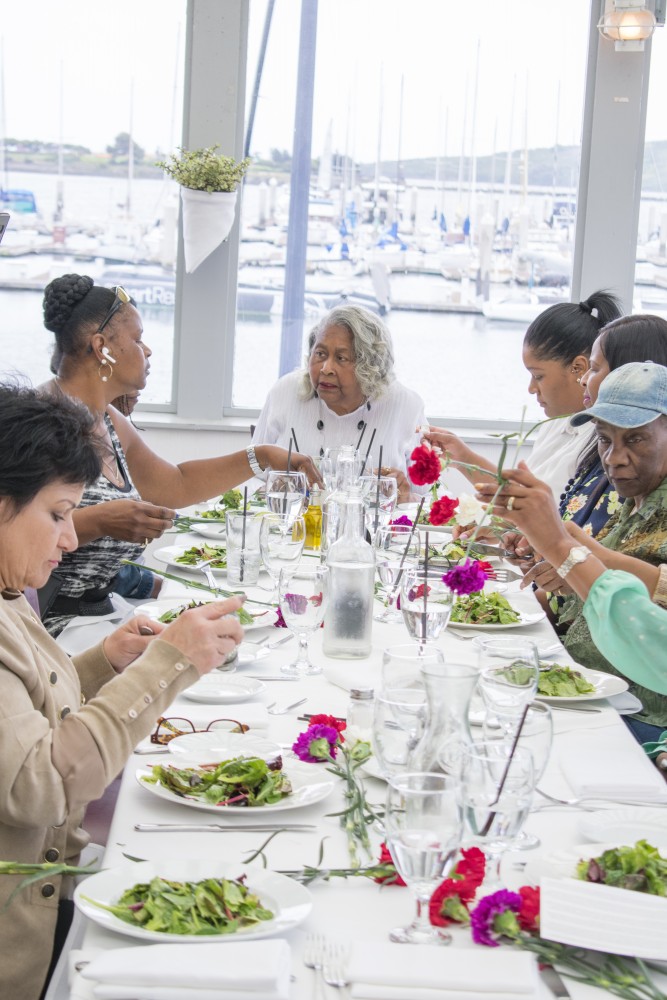
First, we organized a raffle, raising hundreds of dollars to support the event. Then, we reached out to the amazing Menbere Aklilu, owner of Salute e Vita Ristorante. She generously offered to support the project by providing us with first-class meals on the restaurant's beautiful waterfront veranda. 

​The men then bought fresh cut flowers for each of the mothers, dressed up in their fanciest outfits, and donned Men’s Group-branded aprons to provide each of the thirty deserving mothers with impeccable service and a delicious meal of fresh salad, Chicken Marsala, roasted vegetables and a decadent dessert.

“The food was delicious,” says Yolanda, one of the lucky moms. “Each of the men were so sweet, serving us with a smile. I am so proud of them for organizing such a beautiful event, and for providing all of us with food we may never had a chance to taste!”

 

Bringing Love into Our Community

At the end of the meal, Menbere shared her amazing story with all the mothers, and the men by their side.

“I’m one of you. I know how it feels to be lonely, or homeless, or a single mother,” she said. “I, ​once a little girl from Ethiopia, where I walked barefoot and played only with the dirt and the dust, who then came to America, lived on welfare, and gradually rose up, was able to earn my American Dream.”

She continued to speak, nearly bringing each of the moms—and men—to tears.

“Now, even though many people said I couldn’t do it, I own this restaurant. And I get to give back to my community. And gather with my community. And walk side-by-side with my community.”

​“Never forget that you’re worthy. Never forget that you are loved.”

And, that message, at its core, is the message of the Men’s group: love. It’s a space that allows men to love themselves, appreciate each other and grow together. It provides an essential service that’s hard for them to find anywhere else.

Together, we have formed a brotherhood. We’ve become family. And we welcome newcomers with open arms.

Reggie Boyer is an Impact Coach at Rubicon Programs, and the founding organizer of the Rubicon Men’s Support Group. 


Click here to support the Men’s Group with a generous donation.


Read More